
Lieferung heute & morgen

Qualitätsgarantie

Willkommens-Angebote freischalten: KOSTENLOSE Lieferung | Bis zu 80 % RABATT | Kostenlose 30-Tage-JoyPlus-Testphase
App herunterladen
The selection of art pens can be overwhelming. Whether for professional illustrations, hobby journaling, craft projects, or a child's first creative attempts, there seems to be a dedicated pen set for every purpose. However, not every promise on the packaging holds true. Many buyers only discover after unboxing that the pens dry out quickly, the colours lack the expected opacity, or they are unsuitable for the intended surface.
This guide will help you navigate the common pitfalls of buying art pens. We focus on the crucial features that truly matter, so you can make an informed decision and find the perfect tool for your creative projects.
Before diving into the details, it's helpful to know the most common issues that can lead to disappointment.
To avoid a bad purchase, you should focus on three fundamental properties that determine a pen's performance and application.
The ink base determines opacity, blendability, and surface adhesion.
The pen's tip defines the linework and colour application.
These properties are crucial for the longevity of your artwork.
Instead of making a one-size-fits-all recommendation, we have selected products for specific user groups and their needs.
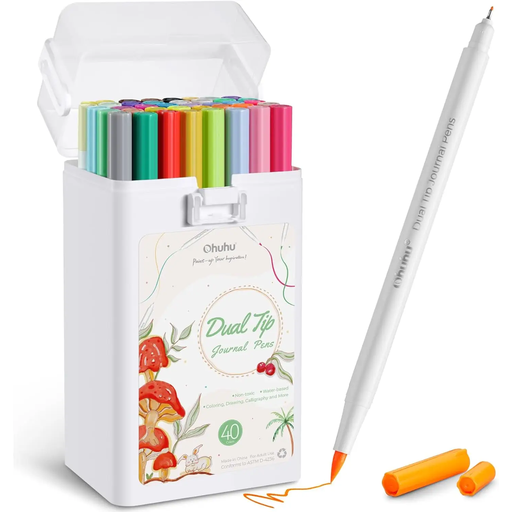
Why This Fits Their Persona: This set offers a balanced combination of a fine tip for notes and details in a bullet journal and a flexible brush tip for lettering and colouring. The water-based ink is easy for beginners to handle.
It's a focused set for paper-based projects and doesn't promise unrealistic "do-it-all" functionality. The ink is formulated to bleed less on suitable paper than budget alcohol markers.
Dual-Tip Design (0.4mm fineliner & 1-5mm brush) for maximum flexibility; colour-coded caps and an included storage box make organisation easy.
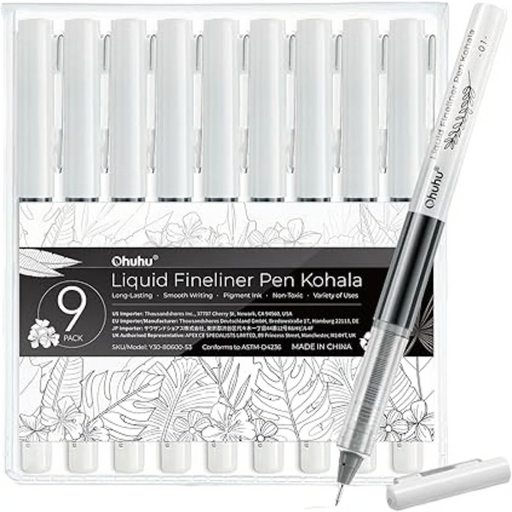
Why This Fits Their Persona: For technical drawings, sketches, and illustrations, precision is key. This set offers a wide range of tip sizes for fine lines, cross-hatching, and outlines. The black pigment ink ensures sharp, permanent results.
The ink is explicitly labeled as water and alcohol-resistant. This prevents smudging when the drawing is later coloured with markers or watercolours—a common problem with low-quality fineliners.
Pigment-Based Ink for permanent, archival-quality drawings; set with 9 different tip sizes (from 0.15mm to a brush tip) for maximum control.
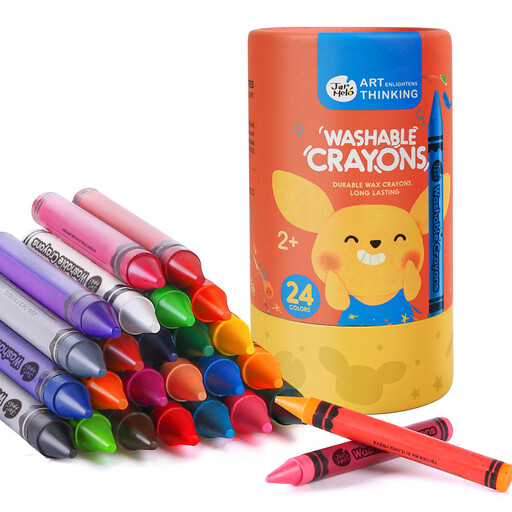
Why This Fits Their Persona: For the little ones, safety, handling, and easy cleanup are the top priorities. These crayons are made from non-toxic material and are ideal for small children's hands thanks to their thick, jumbo shape.
These pens deliver on the "washable" promise. According to the manufacturer, the colours can be easily removed from skin and most textiles, which is not reliably the case for many products advertised as "child-safe."
Non-toxic material and high washability for worry-free creativity; ergonomic jumbo shape that supports motor skill development.
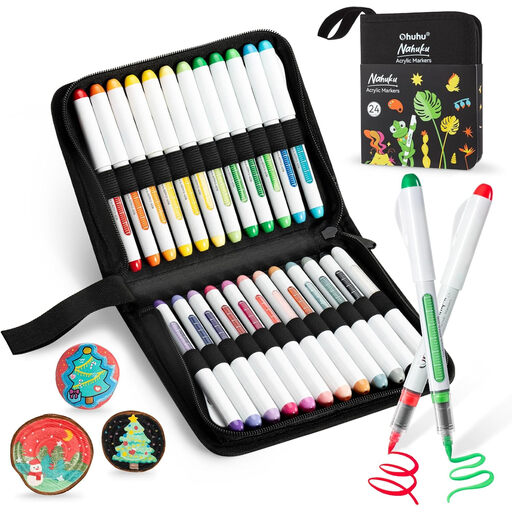
Why This Fits Their Persona: Anyone who wants to paint on rocks, wood, Easter eggs, or textiles needs pens with opaque, adhesive colour. This set of acrylic pens is designed precisely for such versatile surfaces.
Unlike conventional felt-tip pens that fail on smooth or dark surfaces, these acrylic pens offer high opacity. The waterproof ink ensures that artwork on mugs or painted rocks is permanent.
High-Opacity Acrylic Ink for a variety of surfaces; water-resistant and lightfast after drying for long-lasting DIY projects.
We've compiled a complete, up-to-date list of products that fully meet these strict selection criteria and current regulations.
Most manufacturers recommend storing pens—especially dual-tip or brush pens—horizontally. This ensures that the ink flows evenly to both tips and neither side dries out. Always make sure to close the caps tightly after use until they audibly click shut.
"Washable" usually means that the colour can be removed from skin with soap and water and from most common, washable textiles. However, it is not a guarantee. Cleaning can be difficult on delicate fabrics or with dried-in stains. It is recommended to treat stains as quickly as possible and to follow the textile manufacturer's washing instructions.
Yes, this is a common technique, but it requires the correct order. A basic rule is to use waterproof pens as the base. For example, draw outlines with a waterproof fineliner and let them dry completely. You can then colour the areas with alcohol or watercolour markers without the lines smudging. It's best to experiment on a separate sheet of paper to test how the materials behave.