
Lieferung heute & morgen

Qualitätsgarantie

Willkommens-Angebote freischalten: KOSTENLOSE Lieferung | Bis zu 80 % RABATT | Kostenlose 30-Tage-JoyPlus-Testphase
App herunterladen
When you buy art supplies online, you’ll find a wide range of pencils, paints, markers and creative sets. However, product descriptions aren’t always as clear as they might seem at first glance. For example, a high number of pencils doesn’t automatically mean you’ll get a suitable range of colours. Terms such as “professional”, “extra-pigmented” or “water-soluble” should also be checked against specific product features.
This buying guide explains what artists, illustrators, students, hobbyists, crafters and parents should look for when buying drawing supplies.
A set with 120 colours or more may look appealing. But what matters is whether the nibs, ink base and paper are right for the technique you have in mind. For fine sketches, drawing pencils with a precise point are more suitable than broad markers. For hand lettering or varied line work, brush pens are a better choice.
For portraits, a specialised set of skin tones may be more useful than a large, unsorted palette. For children, age-appropriate contents, ease of use and safe storage are more important.
Water-based inks and watercolour pencils can be blended with water. This is useful for watercolour effects, but moisture can also cause the colours to run or smudge. Oil-based coloured pencils, on the other hand, are generally not designed for traditional watercolour techniques.
Before you buy, decide whether you’re mainly looking for dry shading, mixed-media techniques or flowing colour gradients.
For markers, the nib is a key factor. A 0.4 mm fineliner is suitable for details, while a flexible brush nib can create broader lines of varying thickness. If details about the nib, ink base or storage are missing, it’s harder to compare products.
For pastel pencils and coloured pencils, lead diameter, hardness and break resistance are also important considerations for everyday use.
Also look for details such as waterproof, acid-free, lightfast or erasable. These should be treated as product features, not as general claims about quality.
For technical sketches and precise outlines, 0.4 mm or 0.5 mm nibs are handy. Brush pens let you vary line width by changing the pressure you apply. Coloured pencils with leads around 3.8 mm in diameter give you more material for bold areas of colour and detailed layering.
Lead hardness affects the look of your lines: softer leads are easier to blend, while harder ones can create finer, more controlled lines.
Not all paper is suitable for every technique. Water-based markers can bleed through thin paper. Heavier watercolour or mixed-media paper is a good choice for watercolour pencils and water-soluble markers. Special marker paper can help reduce bleeding when using alcohol-based markers.
A sturdy box, metal case or roll-up pencil case makes it easier to organise colours and protects nibs from damage. Make sure caps are firmly closed after use to prevent the ink from drying out too soon.
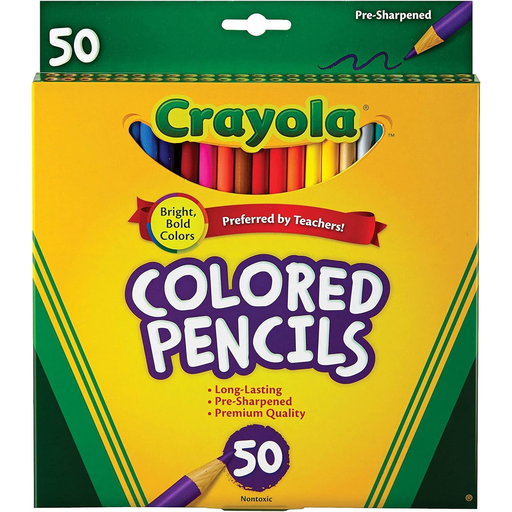
Why this product suits this profile: This 50-piece set is designed for first drawing projects, colouring books and schoolwork. According to the product details, the pencils arrive pre-sharpened.
The number of colours and the contents are clearly specified, making it easier to decide whether the set is enough for regular colouring.
50 colours, pre-sharpened pencils and HB leads designed to resist breakage, according to the product description.
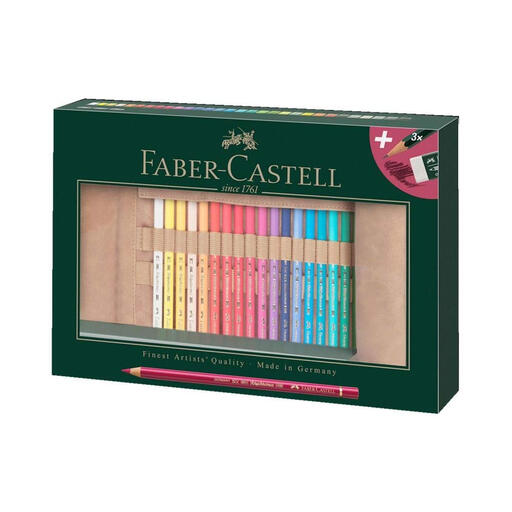
Why this product suits this profile: The oil-based leads and 30 shades are a good match for illustrators, experienced hobbyists and anyone who wants to work in layers.
The product description specifies the lead diameter, oil base, water and smudge resistance, and included accessories.
30 coloured pencils, three Castell 9000 graphite pencils and an eraser in a pencil roll.
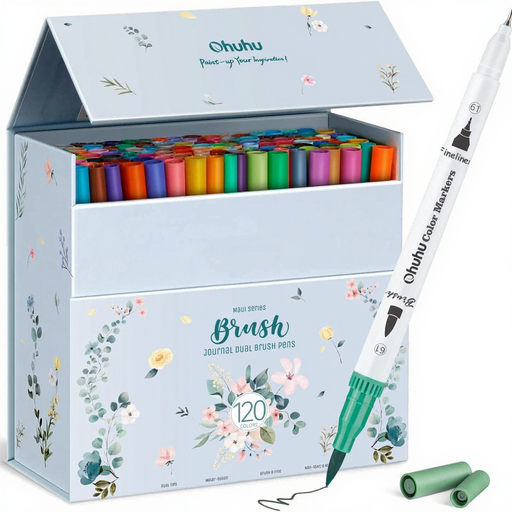
Why this product suits this profile: Frequent users get both a fineliner and a brush nib in one set. That’s handy for lettering, colourful sketches and illustrations with plenty of colour variation.
Both nib types and the water-based ink are clearly specified. A colour chart helps you identify each shade.
120 pens, 0.4 mm fineliner nib, 1–6 mm brush nib, colour chart and replacement nibs.
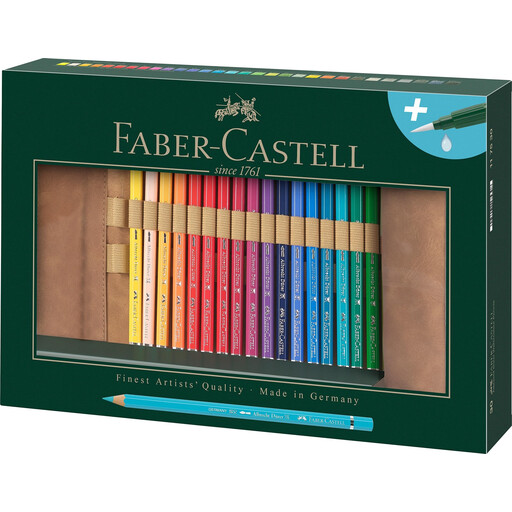
Why this product suits this profile: Use the pencils dry like traditional coloured pencils, or use them with water and the included water brush.
The product description clearly states that the pencils are water-soluble and suitable for both dry and wet techniques.
30 coloured pencils with 3.8 mm leads, a roll-up case and a water brush for drawing on the go.
We’ve put together a complete, regularly updated list of products that meet these strict selection criteria and fully comply with the safety regulations in force in the EU.
To get started, you’ll usually need a sketchbook, a set of pencils, an eraser and a few coloured pencils or felt-tip pens. If you’d like to try different techniques, you could choose a creative set with several types of tools. You don’t necessarily need a large range of colours.
Watercolour pencils contain water-soluble pigments. You can leave your drawing dry or use a damp brush to turn it into a watercolour-style wash. Regular coloured pencils are primarily designed for dry techniques. Check the product description for details of their water solubility.
How long they last depends on how they’re used, stored and what they’re made from. Keeping caps closed, storing supplies in a dry place and protecting them from direct heat can help pencils and markers last longer. Paper, pastel crayons and soft leads should also be stored flat and protected.