
Lieferung heute & morgen

Qualitätsgarantie

Willkommens-Angebote freischalten: KOSTENLOSE Lieferung | Bis zu 80 % RABATT | Kostenlose 30-Tage-JoyPlus-Testphase
App herunterladen
Art supplies today include far more than pencils and paper. Artists, illustrators, hobbyists, school pupils, students and crafters can choose from a wide range of drawing supplies, art pens, brush pens, watercolour pencils, coloured pencils, gel pens and scrapbooking accessories. But having plenty of choice doesn’t necessarily make shopping easier. Unclear colour descriptions, unsuitable nibs or missing information about materials can often lead to the wrong purchase.
This buying guide explains what to look out for before you buy, and which art supplies are best suited to different needs.
A set with lots of colours can look appealing at first glance. What matters, though, is whether the inks or pigments are suitable for the technique you want to use. Water-based brush pens can be blended with water on suitable paper, while alcohol markers dry quickly and are particularly well suited to layering on marker paper. Coloured pencils, on the other hand, are used dry unless they are watercolour pencils.
Before you buy, consider:
The nib shape affects line width, pressure control and what a pen is best used for. Fine-point sketching pencils are ideal for outlines and hatching. Brush pens create lines of varying width depending on how much pressure you apply. Highlighters with a chisel tip cover larger areas, while gel pens with a fine ballpoint are better suited to journalling, notes and detail work.
If you’re buying a dual-tip product, check the exact combination. A fine liner and a flexible brush tip offer different uses from a chisel tip and a round tip.
These descriptions are only useful when considered in relation to the specific product. With water-based ink, ‘quick-drying’ may help reduce smudging as you write, but it doesn’t tell you whether the ink is suitable for wet blending. Alcohol-based markers need to be used in a well-ventilated space, and their ink can bleed through paper.
You should also check the product description for information about lightfastness. For artwork that will be on permanent display, documented pigment or lightfastness details are more useful than general marketing claims.
The ink base affects how it behaves on paper:
Measurements such as 0.4 mm, 0.5 mm or 1–6 mm give you an idea of a pen or pencil’s precision. Smaller diameters are useful for fine notes and outlines. A brush tip with a variable width is better suited to lettering, shading and expressive lines.
For coloured and watercolour pencils, lead diameter also matters. Thicker leads can lay down more pigment when colouring larger areas, but you’ll need a suitable pencil sharpener. A double-hole sharpener for standard and thicker pencils is handy if you use different types of art pencil.
Paper has a significant effect on the finished result. Watercolour or mixed-media paper is recommended for watercolour pencils. For brush pens, heavier paper often helps prevent excessive bleed-through. Keep markers stored with their caps firmly closed. Gel pens and fine liners will stay ready to use for longer if you retract the tip after use or replace the cap securely.
Products with small parts, caps or sharp tips are not suitable for children under three. When using alcohol-based markers, make sure your workspace is well ventilated. Inks and pigments can stain fabrics and surfaces, so use a protective sheet to cover your table and work area.
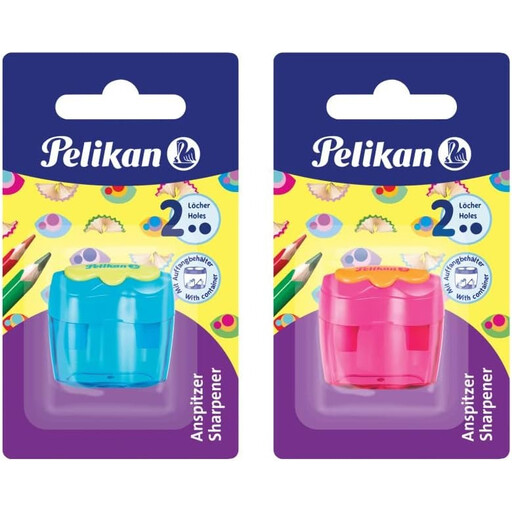
Why this product suits this profile: This double-hole sharpener is a compact addition for school, university and anyone starting out with drawing. It has openings for standard and larger pencil diameters.
The two openings mean you don’t need to buy separate sharpeners for different pencil thicknesses. The built-in shavings container helps keep your workspace tidy.
Two openings, an integrated shavings container and a weight of approximately 31,75 g, according to the product details.
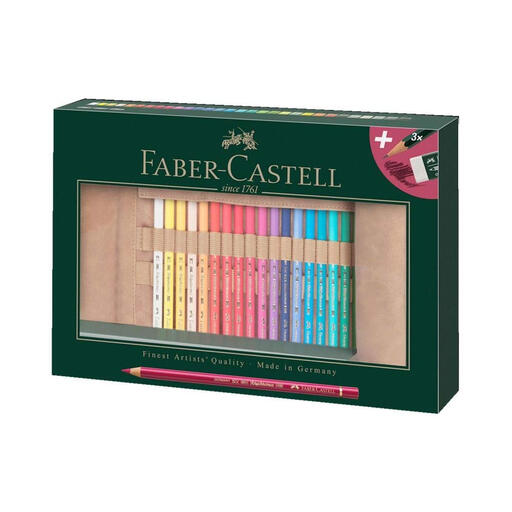
Why this product suits this profile: This set is aimed at illustrators and discerning hobby artists who work with multiple layers of colour and detailed drawings.
The product details specify a 3,8-mm lead, water- and smudge-resistant properties, and a selection of 30 shades rather than an unspecified mixed palette.
The set includes 30 Polychromos pencils, three Castell 9000 pencils and an eraser, all in a roll-up case.
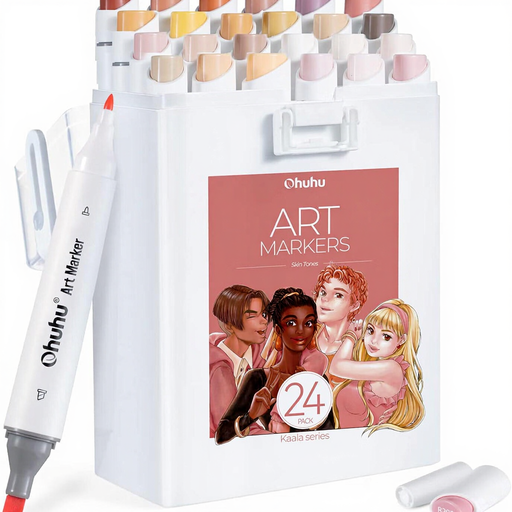
Why this product suits this profile: This set is designed for portraits, fashion illustrations and artwork featuring a range of nuanced skin tones.
The palette is specifically designed for skin tones. The dual-tip design combines a fine tip with a narrow chisel tip for details and larger areas.
24 alcohol-based colours, two tips per marker and a storage case, according to the product description.
For watercolour techniques, consider STAEDTLER Karat watercolour pencils or the Faber-Castell Albrecht Dürer set of 30 water-soluble pencils. If you like combining dry areas of colour with fine details, coloured pencils such as the LAMY Plus range are a good option. Brush pens or 0,5-mm gel pens are useful for lettering, notes and journalling. Scrapbooking fans can add metal die-cutting stencils, templates and decorative metallic gel pens to their set.
When choosing highlighters, look for a clearly defined chisel tip, a generously sized ink reservoir and compatibility with the paper you use. Water-based highlighters are often a straightforward choice for school and university, while art pens and alcohol markers are generally designed for illustration and colouring larger areas.
We’ve put together a complete, regularly updated list of products that meet these strict selection criteria and fully comply with the safety regulations in force in the EU.
To get started, a simple combination of pencils, an eraser, a pencil sharpener, a few coloured pencils or brush pens and suitable paper is all you need. A large set of colours is only worth buying once you’ve settled on your preferred technique.
How long they last depends on the amount of ink, line width, paper and storage. Always close the caps fully after use. Markers with replaceable nibs or refillable ink may last longer, depending on the model; check the relevant product description for specific details.
The price depends mainly on the number of colours, type of nib, ink base, accessories and storage. A small set is enough for school and occasional drawing. If you illustrate, draw portraits or practise lettering regularly, a larger set with a more nuanced colour palette may be a better choice. The key is to make sure the technical features suit your planned project.