
Lieferung heute & morgen

Qualitätsgarantie

Willkommens-Angebote freischalten: KOSTENLOSE Lieferung | Bis zu 80 % RABATT | Kostenlose 30-Tage-JoyPlus-Testphase
App herunterladen
Whether you are creating professional illustrations, school projects, DIY designs or a creative gift, art supplies cover a wide range of product categories. There are clear differences between painting supplies, drawing materials and craft supplies when it comes to materials, uses and durability. A wide choice of colours alone therefore says little about whether a set is right for your project.
Three common purchasing pitfalls occur particularly often:
By checking these points before buying, you can match your art supplies for beginners and artists more closely to their intended use.
Watercolour pencils and watercolour markers contain water-soluble pigments or ink. They can be used dry and then blended with a damp brush. Watercolour paper with a suitable weight is therefore a good choice, as it is less likely to warp.
According to the product description, acrylic paints can, for example, adhere to canvas, wood and paper. An opaque acrylic paint is suitable for solid areas, while gouache paints are often used for matte, opaque colour application on paper. For face paints, on the other hand, pay attention to the application instructions, removal with soap and water, and the details of the responsible person in the EU.
With drawing materials, the shape of the tip and the grade affect the techniques you can use:
A set with lots of pieces is not necessarily the right choice. For a limited project, a smaller selection with clearly defined functions may offer better value.
A closable box, metal case or sturdy bag protects tips and cores during transport. Markers should be closed firmly after use and stored horizontally where recommended by the manufacturer. Brushes should be cleaned immediately after painting and allowed to dry completely.
The relevant age recommendations apply to products containing small parts. According to the product details, several sets are not suitable for children under three years of age, as caps, erasers or small pieces of colour could be swallowed. Pastel and charcoal dust can also dirty surfaces. A covered work area and good ventilation are therefore recommended.
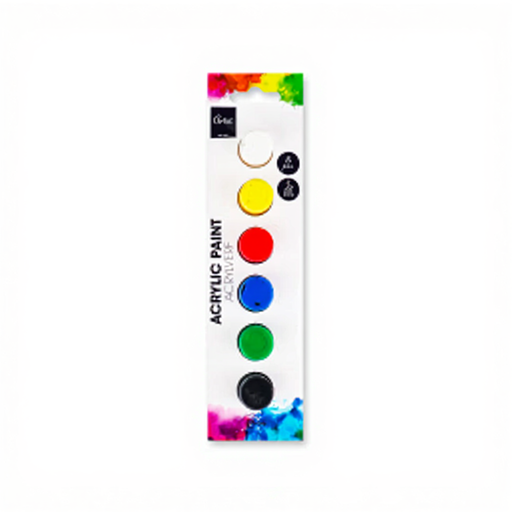
Why this product suits the profile: This compact set contains six 5-ml tubes, offering an accessible introduction to acrylic painting without requiring you to buy a large selection of colours straight away.
The number of colours and fill quantity are clearly stated. This makes it easier to decide before buying whether you will also need primary colours or larger tubes.
Six colours, 5-ml tubes and a compact box; according to the product description, suitable for paper, wood and canvas.
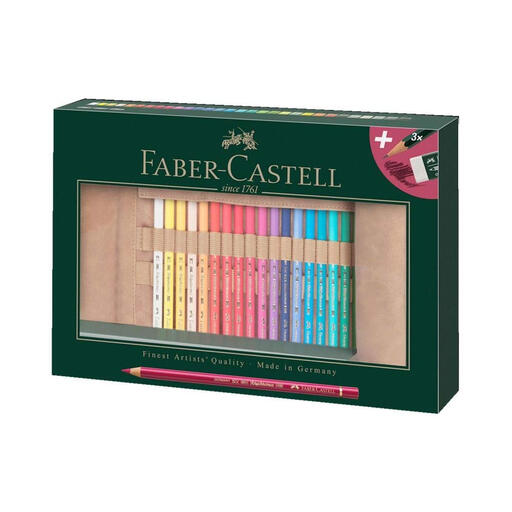
Why this product suits the profile: This selection is aimed at illustrators and enthusiastic hobby artists who want to work with multiple layers of colour and fine details.
The product description specifies a 3.8-mm core, as well as an oil-based, water-resistant and smudge-resistant core. This means important material details are clear before you buy.
30 Polychromos coloured pencils, three CASTELL-9000 pencils in HB, 2B and 8B, plus an eraser in a pencil roll.
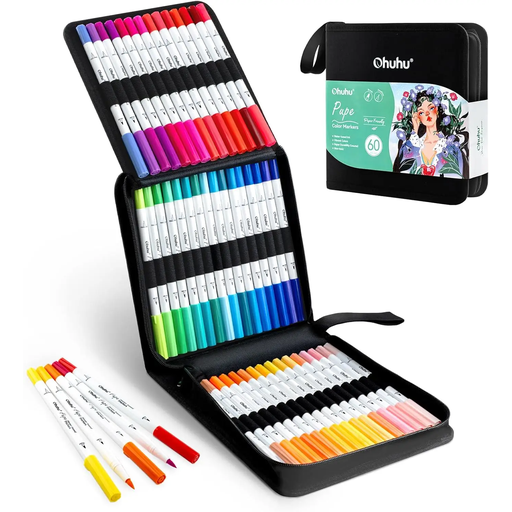
Why this product suits the profile: This set supports journalling, calligraphy, illustrations and colour coding when you regularly need different line widths.
The two tips are clearly specified: a 0.4-mm fineliner and a flexible 1–5-mm brush tip. Nevertheless, test the water-based ink on the intended paper first.
60 pens, including 59 colours and one colourless blender, with a storage case and two different tips.
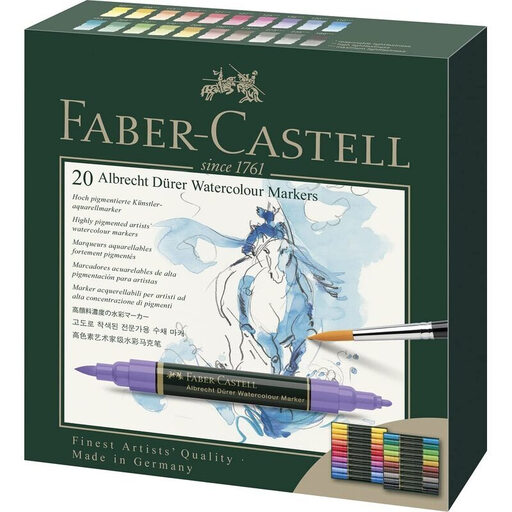
Why this product suits the profile: The compact wallet is ideal for use on the go, in classes and for sketching when you want two tips and water-soluble colour in one set.
The description specifies both tips, water-based ink and the recommended use on watercolour paper. This allows you to plan for the right paper in advance.
20 markers with a soft brush tip and sturdy fibre tip; the wallet keeps them neatly organised.
We have put together a complete, regularly updated list of products that fully meet these strict selection criteria and the safety regulations applicable in the EU.
For classic drawings, drawing charcoal, pastel pencils or coloured pencils are good options. According to the product description, the Faber-Castell Pitt Charcoal Set contains charcoal in several grades, pencils, sticks, a kneadable eraser and blending stumps in a metal box. For pastel techniques, a 72-piece soft pastel mini set with 5B grade and a round tip is available.
For children and families, a 12-piece artist’s brush set with a wooden palette, a Pelikan paint box with 24 colours or a small marble painting set may be suitable. For diamond painting, check the design size, contents and age recommendations. An easel is worthwhile if you want to work on canvas or drawing board at a fixed angle; the ARTICO model is specified as a foldable tabletop easel measuring 51.5 × 24 × 4 cm.
For getting started, a drawing pad, pencils in different grades, an eraser, a few coloured pencils or brush pens, and a small brush set are usually enough. If you want to paint, add acrylic or gouache paints, a mixing palette and suitable paper. A large all-in-one set only makes sense if you will actually use many of the materials included.
How long they last depends on storage, how well they are sealed and how often they are used. Markers should be closed firmly after every use and stored according to the manufacturer’s instructions. Brushes last longer when cleaned immediately after use. A case protects pastel and charcoal pencils from breakage and moisture.
The cost depends on the medium and the size of the set. Small acrylic paint or craft sets provide an affordable way to get started. For regular illustration work, sets with clearly stated pigment, core and tip specifications may be worthwhile. Before buying, check which additional items, such as paper, brushes, fixative or a mixing palette, you still need.