
Lieferung heute & morgen

Qualitätsgarantie

Willkommens-Angebote freischalten: KOSTENLOSE Lieferung | Bis zu 80 % RABATT | Kostenlose 30-Tage-JoyPlus-Testphase
App herunterladen
Selecting the right art supplies can be a challenge. Whether for professional projects, academic studies, or creative hobbies, the quality of your materials directly impacts the final result. However, the market is filled with products whose marketing promises often suggest more than they deliver. This guide will help you navigate common purchasing pitfalls and make an informed decision.
A frequent mistake is buying large, budget-friendly drawing sets. These often contain a wide variety of pencils and accessories, but their quality leaves much to be desired. Brittle leads, unreliable hardness grades, and erasers that smudge more than they remove quickly lead to frustration. Another trap is unclear material specifications, especially for erasers. Products containing PVC or aggressive plasticisers can harden over time and damage the paper.
A good graphite pencil is the foundation of many drawings. Instead of being swayed by the sheer quantity in a set, you should focus on two key parameters that determine quality.
Hardness Grade and Consistency: The marking on a pencil (e.g., 2H, HB, 4B) describes the hardness of the lead. H-grades (Hard) are harder and produce lighter, more precise lines, ideal for technical drawings. B-grades (Black) are softer and allow for dark, rich strokes for shading in artistic work. HB represents a balanced midpoint, suitable for writing and general sketching. In low-quality pencils, these gradations are often unreliable, leading to inconsistent results. Look for established manufacturers known for their precisely graded leads.
Lead Bonding and Break-Resistance: A common annoyance is a lead that is already broken inside its wooden casing. This often happens from being dropped or due to poor manufacturing. High-quality pencils, such as those offered by Faber-Castell or Staedtler, feature a special security bonding (often called SV bonding), where the lead is securely glued to the wood casing along its entire length. This break-resistance significantly increases the pencil's lifespan and ensures uninterrupted work.
An eraser is not a trivial tool. An unsuitable one can ruin a drawing. Here, the material composition is the deciding factor.
Many cheap erasers are made of PVC (Polyvinyl Chloride) and contain phthalates as plasticisers. These substances can evaporate over time, causing the eraser to become hard and brittle. Such an eraser not only smudges but can permanently damage the paper's surface through excessive friction.
A reliable alternative is PVC-free erasers. These are often made of plastic or natural rubber and are designed to lift graphite particles cleanly from the paper without damaging the fibres. They also produce less eraser dust, which keeps the workspace clean. For special applications, like removing ink, there are also special eraser pens with a more abrasive composition.
Instead of making a blanket recommendation, we have identified products that are well-suited for specific user profiles and their needs.
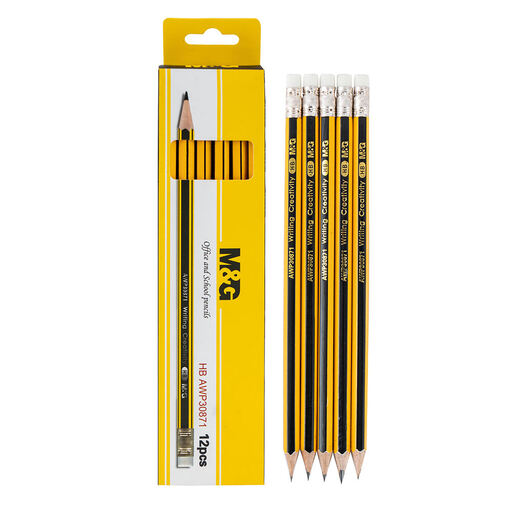
Why it's a good fit: Ideal for students and office workers who need a reliable supply of standard pencils. The universal HB hardness grade is perfect for notes, homework, and initial sketches.
This set avoids the "useless filler" trap. It focuses on a single, proven specification (HB) in sufficient quantity, rather than offering a variety of unusable hardness grades.
The hexagonal shape prevents it from rolling off the table. The integrated eraser makes it a convenient all-in-one tool for everyday use.
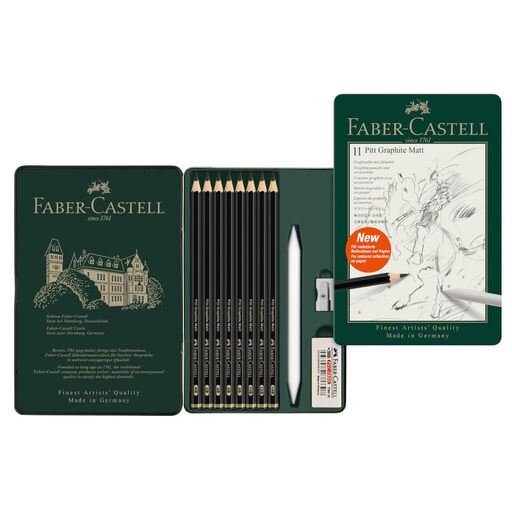
Why it's a good fit: Designed for artists and illustrators who value the highest quality and special features. This set offers a targeted selection of tools for expressive, professional drawings.
This is a curated artist's set that bypasses the trap of unreliable hardness grades. Every component, from the pencil to the eraser, is tailored to professional standards and comes from a renowned manufacturer.
The Pitt Graphite Matt pencils produce an extremely matt laydown that reduces light reflections. This is particularly beneficial when digitising or photographing artwork.
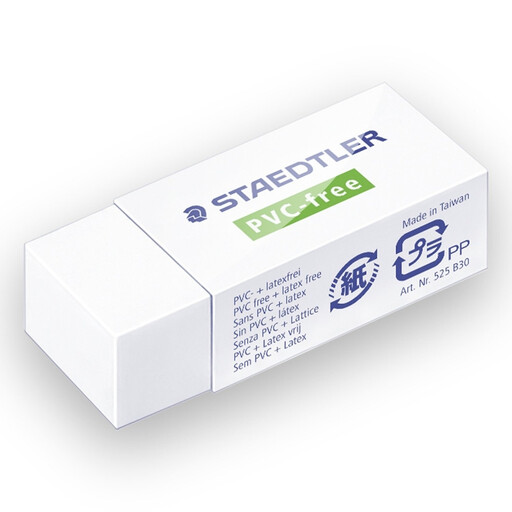
Why it's a good fit: For anyone who depends on clean corrections without compromise—from architects and technical drafters to artists working on high-quality paper.
This product directly addresses the pitfall of paper-damaging erasers. Its PVC, phthalate, and latex-free formula ensures the eraser won't harden and is gentle on paper.
It produces very little residue ("minimal crumbling"), which keeps the workspace clean. The protective sleeve ensures clean handling and protects the eraser from dirt.
We've compiled a complete, up-to-date list of products that fully meet these strict selection criteria and German safety regulations.
The letters indicate the hardness grade of the graphite lead. H stands for "Hard" and produces light, fine lines. The higher the number before the H (e.g., 4H), the harder the lead. B stands for "Black" and denotes a soft lead for dark, bold strokes. The higher the number before the B (e.g., 6B), the softer and darker the laydown. HB is the standard hardness, located right between H and B.
Store your pencils lying flat, ideally in a case or box, to protect the leads from breaking. Erasers should be kept in their protective sleeves or separate from other plastic items to avoid chemical reactions. Keep all materials away from direct sunlight and extreme temperatures.
Not necessarily. While most standard pencils fit into a standard sharpener, there are pencils with larger diameters (jumbo pencils) or special shapes that require a matching sharpener. The quality of the blade is also crucial: a sharp blade sharpens the wood cleanly without damaging the lead, whereas a dull blade is more likely to break it. For high-quality art supplies, a quality metal sharpener is recommended.