
Lieferung heute & morgen

Qualitätsgarantie

Willkommens-Angebote freischalten: KOSTENLOSE Lieferung | Bis zu 80 % RABATT | Kostenlose 30-Tage-JoyPlus-Testphase
App herunterladen
An art supplies set can make it easier to get started with drawing, painting or crafts. At the same time, many offers appear more comprehensive at first glance than they are in practice. A large number of items does not automatically mean that the materials included will suit your project. Artists, illustrators, students, schools, nurseries and parents should therefore take a close look at the contents, recommended age and storage options.
With a painting set or DIY craft set, it is not just the number of products included that matters. The key question is whether the important components work well together. A set with lots of colours but no suitable brushes, mixing palette or appropriate paper may mean you need to make additional purchases.
So check the following:
An art supplies set for adults is not automatically suitable for children. Lids, pastel pencils, modelling tools and small accessories may present a choking hazard. For products intended for children, pay attention to the recommended age, warnings and intended use.
For children aged 3 and over, larger crayons, child-friendly felt-tip pens or school paints may be suitable options. Younger children should use them with age-appropriate supervision. “Washable” also does not necessarily apply to every surface: skin, textiles, wood and furniture may react differently.
Descriptions such as “brilliant artist colours”, “lightfast” or “professional quality” should be assessed alongside specific product information. More meaningful details include:
Coloured pencils, soft pastels and charcoal are suitable for dry drawings. Watercolour pencils and watercolour markers can be used dry and then activated with water. A water brush or separate brush is useful when working with a watercolour pencil.
Depending on the product, acrylic paints may adhere to surfaces such as paper, wood or canvas. Gouache and school paints are often diluted with water and used on paper, card or other suitable surfaces. Before buying, check whether the material you want is intended for your specific project.
With markers, the nib and type of ink affect how they can be used. A brush nib supports broad or dynamic strokes, while a fibre tip may be suitable for outlining. For children’s felt-tip pens, different line widths are practical, provided the cap is closed securely.
Several hardness grades are useful with drawing charcoal and soft pastels if you want to create both soft transitions and dark lines. With coloured pencils, the lead diameter and binding agent provide clues about durability and layering potential. The number of colours alone, however, says little about how easy the set is to use.
A good case protects nibs and leads from pressure. A roll-up pencil case saves space and is suitable for classes or taking your supplies with you. A metal box protects delicate drawing materials and makes sorting easier. For a comprehensive art supplies set, a wooden case with compartments can be practical, although it requires more storage space.
Also pay attention to the care instructions: water-soluble markers should be closed tightly after use. Depending on the manufacturer’s recommendation, pencils should be stored horizontally or in their case. Drawing charcoal can smudge; applying fixative to finished work can help reduce smearing.
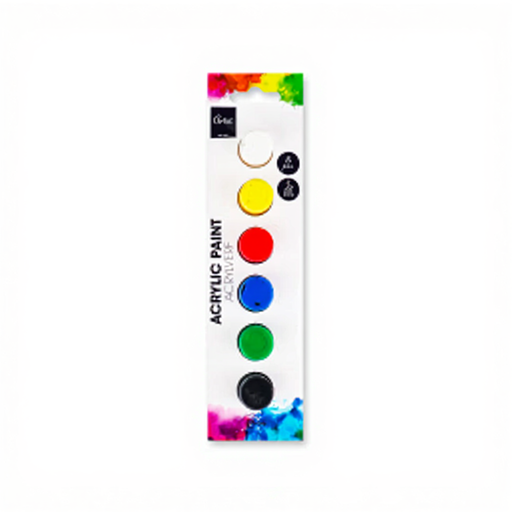
Why this product suits the profile: The six 5 ml tubes offer a manageable introduction to acrylic painting on paper, wood or canvas.
The contents are clearly defined. This makes it easier to realistically assess whether you will need brushes and suitable surfaces before buying.
Compact packaging and six shades for first acrylic projects on several suitable surfaces.
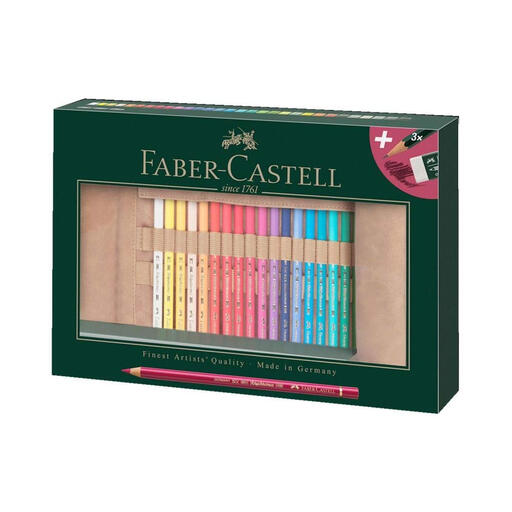
Why this product suits the profile: The 30 oil-based coloured pencils with 3.8 mm leads are designed for layered work and detailed illustrations.
The product information specifies the binding agent, lead diameter, and water and smudge resistance rather than simply promoting the number of colours.
30 shades, three Castell 9000 pencils in HB, 2B and 8B, plus an eraser in a transport case.
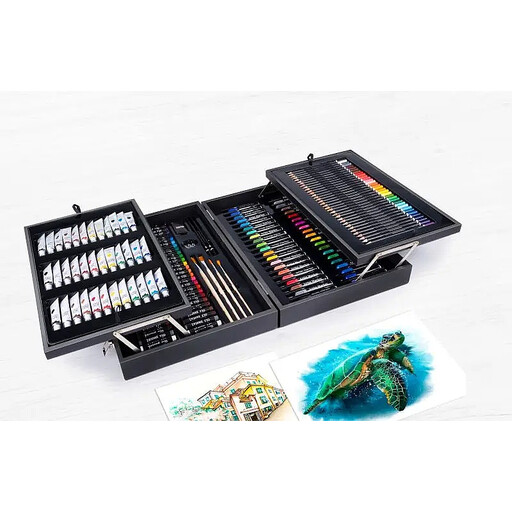
Why this product suits the profile: The set combines coloured pencils, watercolour markers, oil pastels, and watercolour, acrylic and oil paints for anyone who wants to try out different techniques.
The contents list the individual material types and accessories. This makes it easier to check whether the variety really suits your own working style.
34 coloured pencils, 42 watercolour markers, 54 oil pastels, twelve paint tubes and four brushes in an FSC-certified wooden case.
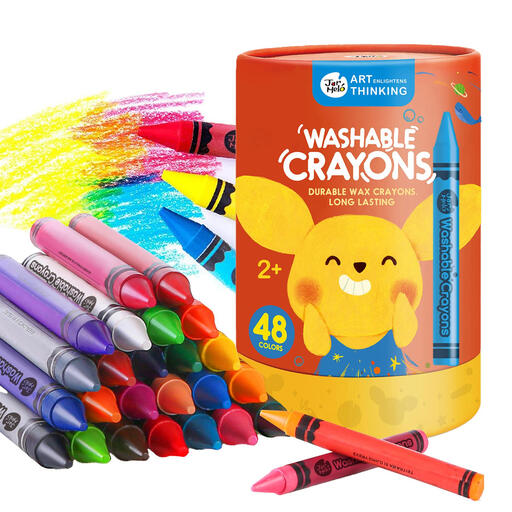
Why this product suits the profile: The chunky crayons are designed for small hands and can be used at home, in nurseries or in the classroom.
The product description states that it is suitable for ages 3 and over and uses washable materials. Parents should nevertheless follow the specific safety instructions.
48 jumbo crayons with a broad colour palette and material information focused on easy cleaning.
We have put together a complete, regularly updated list of products that fully meet these strict selection criteria and the safety regulations applicable in the EU.
The lifespan of an art supplies set depends greatly on how it is stored and used. Close markers and felt-tip pens immediately after use. Watercolour markers should be stored according to the relevant manufacturer’s instructions; for many products, horizontal storage prevents the colour from distributing unevenly. Coloured pencils are protected from breakage in a sturdy case.
Paints should be stored dry, closed and protected from significant temperature fluctuations. Clean brushes after use with the appropriate cleaning product or water. For soft pastels and drawing charcoal, a closed box and protected workspace are recommended, as pigments and dust can transfer onto surfaces.
For getting started, a few coloured pencils, graphite pencils, an eraser and paper are enough, depending on your aim. Anyone who wants to paint will also need paints, brushes and a mixing surface. A versatile set makes sense if you want to try several techniques. For a specific project, a smaller, more precisely matched set is often easier to manage.
Products with a clear age recommendation, larger individual parts and easy-to-understand warnings are suitable. Washable crayons, child-friendly felt-tip pens and school paints may be appropriate options. Children should not use small parts, sharp points or artist paints that have not been expressly approved for them without supervision.
That depends on how much of the set you will actually use. Compare the price per usable component and factor in additional costs for paper, brushes, water containers or replacement materials. A comprehensive set is worthwhile above all when several of the included techniques will be used regularly.