
Lieferung heute & morgen

Qualitätsgarantie

Willkommens-Angebote freischalten: KOSTENLOSE Lieferung | Bis zu 80 % RABATT | Kostenlose 30-Tage-JoyPlus-Testphase
App herunterladen
Choosing the perfect Christmas tree is an essential part of holiday preparations. While real firs have their own unique charm, artificial Christmas trees offer a range of practical advantages: they don't shed needles, require no water, are suitable for allergy sufferers, and represent a one-time investment that brings joy for many years.
This article serves as your guide. It is designed to help you understand the features and differences between various models, enabling you to make an informed decision for your home or business. We will present a selection of options and provide you with objective criteria.
The variety of artificial trees is vast. To find the right model for you, three key aspects should be considered: size, material and density, and the desired style.
Before you decide on a tree, it's wise to measure the intended location carefully. Consider not only the ceiling height but also the diameter of the tree. Plan for enough clearance to the ceiling for a tree topper and sufficient distance from walls and furniture.
The appearance of an artificial tree is largely determined by the number of branch tips and the material used. A higher number of tips results in a fuller, denser look. Most models are made of PVC (polyvinyl chloride), a durable and shape-retaining material. The branches are often flexible, allowing you to shape the tree individually after assembly to achieve the most natural look possible.
In addition to the classic green artificial fir tree, there are numerous style variations that set specific accents:
Based on the criteria above, we have compiled a selection of models that meet different requirements for size, style, and function.
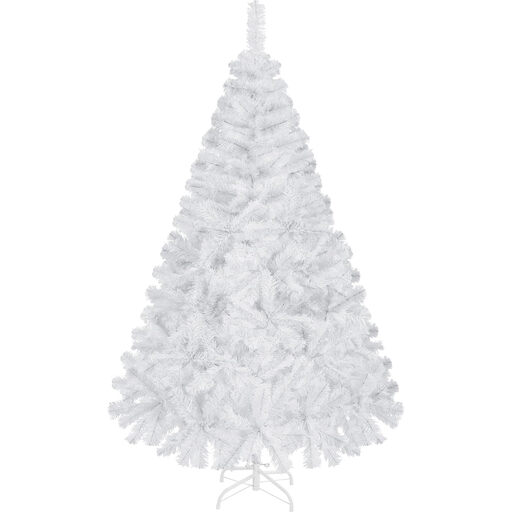
Why It Stands Out: With its pure white colour, this model from Yaheetech offers a modern alternative to classic green. At a height of 183 cm (6 ft) and a diameter of 110 cm, this tree fits well in most living spaces. The 598 PVC tips can be flexibly shaped to achieve an appealing fullness. Assembly is straightforward thanks to the three-section plug-in system and a foldable metal stand.
Pros:
Who Is It For? Those who want to add a contemporary and stylish accent to their holiday decor and are looking for a low-maintenance solution in a popular size.
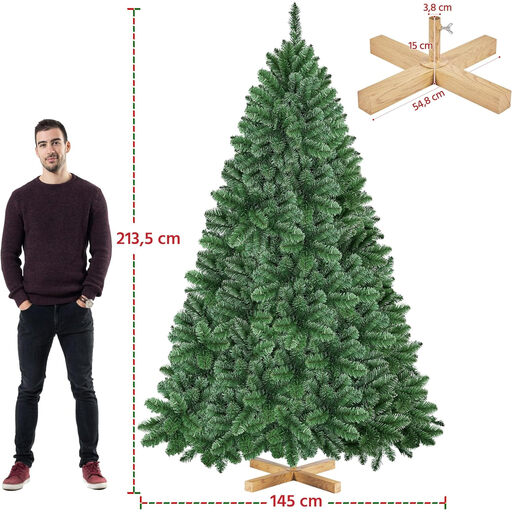
Why It Stands Out: With an impressive height of 213 cm (7 ft) and 1347 branch tips, this Yaheetech Christmas tree creates an exceptionally full and lush appearance. The hinged construction of the branches simplifies assembly, as they are already attached to the trunk and only need to be folded into position when the tree sections are connected. The wood-effect metal stand gives the tree extra stability and an elegant touch.
Pros:
Who Is It For? Homes and businesses with high ceilings that prefer a large, classic green, and particularly voluminous tree.
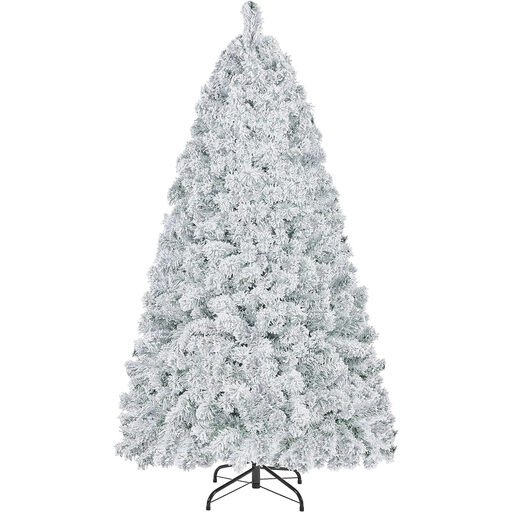
Why It Stands Out: This small Christmas tree, with a height of 153 cm (5 ft), is ideal for smaller rooms. Its special feature is the dense flocking, which gives the impression of freshly fallen snow and creates a cosy, wintery ambiance. Despite its compact size, the tree looks appealingly full thanks to its 532 mouldable PVC tips. The included foldable metal stand ensures a secure footing.
Pros:
Who Is It For? Anyone who doesn't want to miss out on a festive tree, even in smaller apartments or offices, or as a complement to their main decorations.
If the models presented here don't exactly match what you're looking for, you can find a wider range of sizes, colours, and styles in our category. Discover more alternatives to find the perfect tree for your celebration.
? Explore more Christmas branch trees here
1. How long does an artificial Christmas tree last? With proper handling and storage in a cool, dry place, a high-quality artificial Christmas tree can be used for 5 to 10 years or even longer. Its longevity depends on the quality of the material and construction.
2. What is the best way to assemble an artificial Christmas tree? Start by setting up the stand on a level surface. Then, connect the tree sections from the bottom up. Work from the inside out and from the bottom to the top to unfold and shape the branches. Wearing gloves can make this process more comfortable.
3. What is the difference between PVC and PE trees? Most artificial Christmas trees use branches made of PVC (polyvinyl chloride). This involves cutting flat sheets of foil into "needles." This method is cost-effective and allows for dense trees. PE (polyethylene) is produced using an injection moulding process, which creates three-dimensional needles that often look more similar to real fir needles. PE trees are typically at a higher price point. Many models combine both materials to achieve a full look with realistic tips.