
Lieferung heute & morgen

Qualitätsgarantie

Willkommens-Angebote freischalten: KOSTENLOSE Lieferung | Bis zu 80 % RABATT | Kostenlose 30-Tage-JoyPlus-Testphase
App herunterladen
An artificial Christmas tree promises a hassle-free, reusable solution for your festive decor, year after year. No needle shedding, no complex disposal, and a consistently perfect look are compelling arguments. However, the market can be overwhelming, and not every model delivers on its promise. Before you make a decision, it's crucial to understand the common pitfalls that often only become apparent after your purchase.
As your Joybuy Product Recommendation Officer, I'm here to help you identify the key features and avoid marketing traps. This guide focuses on the objective criteria that are essential for making a choice you'll be happy with for years to come.
Many buyers rely on product images and the advertised number of branch tips. But the true markers of quality are in the details. Pay close attention to these three critical points to avoid disappointment:
To avoid a bad purchase, you should focus on verifiable technical specifications. These three parameters reveal the true quality and user-friendliness of an artificial fir.
The look and feel of a tree are largely determined by the needle material.
The assembly process can vary greatly depending on the system.
A solid base is essential. A folding metal stand is typically the most stable solution. Ensure the stand is sufficiently large for the tree's size. Additional rubber protective caps on the stand's feet prevent scratches on sensitive floors like hardwood or laminate and increase slip resistance.
Based on these objective criteria, we have identified several models suitable for different needs and spaces.
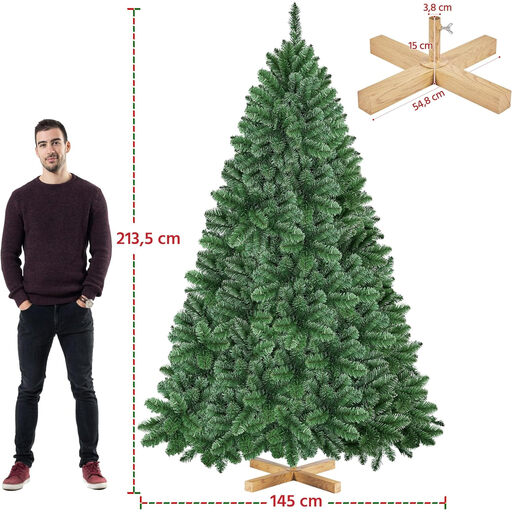
Why This Fits Their Persona: With a height of approx. 213 cm (7 ft) and a dense structure, this model is ideal for rooms with high ceilings, such as period apartments or entrance halls, where a statement tree is desired.
The high count of 1347 branch tips and the hinged construction ensure a dense, gap-free appearance without tedious shaping. The metal stand with a wood-grain finish provides the necessary stability for this size.
Very full and voluminous appearance; quick assembly thanks to the hinged system; stable and decorative stand.
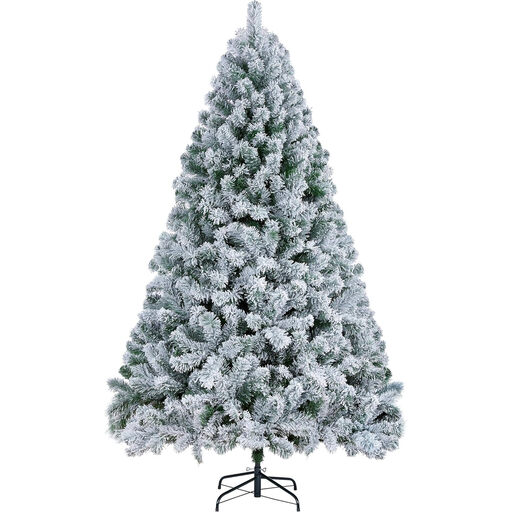
Why This Fits Their Persona: Perfect for anyone wanting to create a snowy, winter forest atmosphere. The 180 cm size (effectively 183 cm or 6 ft) is a popular standard for most living rooms, offering a good balance of presence and footprint.
According to the manufacturer, the flocking is durably applied to minimise excessive shedding. The folding metal stand with rubber feet ensures a secure base, preventing the typical instability issue.
Dense snow flocking for an authentic winter look; simple assembly due to its three-part design and hinged branches.
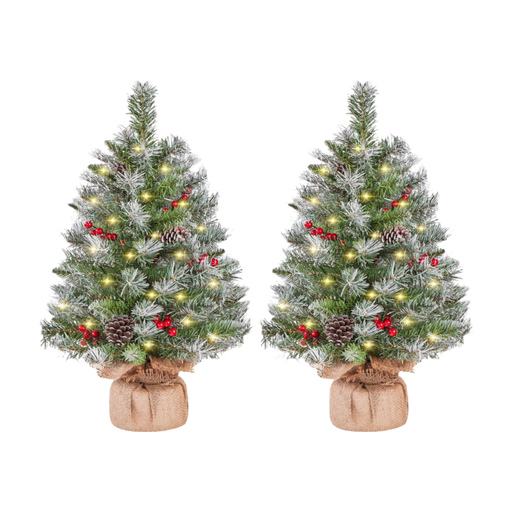
Why This Fits Their Persona: This set is an excellent solution for decorating windowsills, desks, reception counters, or as a complementary accent in larger rooms. As a small artificial Christmas tree, it is incredibly versatile.
Instead of a wobbly plastic stand, a solid foam-concrete base wrapped in burlap provides a firm footing. The trees come pre-assembled and are already decorated with lights and ornaments, ensuring high quality out of the box.
Battery-operated for wireless placement; set of two trees for symmetrical decorating; includes LED lighting and decorative elements.
We have compiled a comprehensive, up-to-date list of products that meet these strict selection criteria.
To preserve the shape and quality of your tree, carefully disassemble it and store the parts in the original box or a dedicated Christmas tree storage bag. A dry, cool place like a basement or attic is ideal. Avoid placing heavy objects on top of the box to prevent bending the branches.
The lifespan heavily depends on the material quality and storage. A well-made artificial fir tree from high-quality materials can easily last 5 to 10 years or more with proper care. Models with hinged systems are often more durable because the branch connections are subject to less stress than those on hook-on systems.
Take your time "fluffing" the tree—the process of fanning out and shaping the branches. Start with the branches closest to the trunk and work your way outwards to the tips. Bend each individual small branch in a different direction (up, down, sideways) to fill in gaps and achieve maximum volume. This step is crucial for a full, natural look.