
Lieferung heute & morgen

Qualitätsgarantie

Willkommens-Angebote freischalten: KOSTENLOSE Lieferung | Bis zu 80 % RABATT | Kostenlose 30-Tage-JoyPlus-Testphase
App herunterladen
An artificial Christmas tree promises a hassle-free and durable alternative to the traditional Nordmann fir. No needle drop, no complicated disposal, and a one-time purchase that brings joy for years. However, the market can be overwhelming, and not every model lives up to its promise. Before you make a decision, it's crucial to understand the common pitfalls that often only become apparent after your purchase.
As your Joybuy Product Recommendation Officer, I'm here to help you identify the key features and distinguish marketing hype from genuine signs of quality.
Many buyers focus solely on price or on product images, which are often digitally enhanced. Pay close attention to these three critical points to avoid disappointment:
To avoid a bad purchase, you should focus on objective and verifiable criteria. These three parameters are decisive for the quality and longevity of your tree.
The appearance of an artificial fir tree is largely determined by the material and the number of branch tips.
A good artificial Christmas tree should not only stand securely but also be easy to assemble and disassemble.
Extra features can significantly increase convenience but also require a close look at the details.
Based on these criteria, we have identified several models that are well-suited for different needs and living situations.
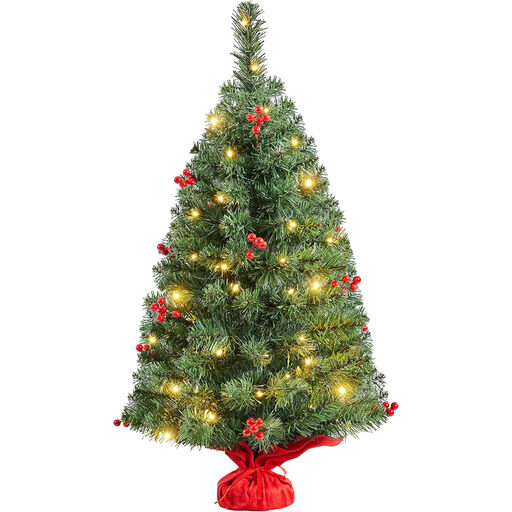
Why This Fits Their Persona: Ideal for apartments, offices, or as a secondary tree on a sideboard. This small Christmas tree provides a festive atmosphere without taking up much space. Its battery operation allows for flexible placement, independent of power outlets.
The heavy concrete base ensures high stability and prevents the wobbling problem common with small trees that have lightweight plastic stands.
Integrated LED lighting and decorative berries make additional decorating optional. The flexible PVC branches can be shaped individually for a dense look.
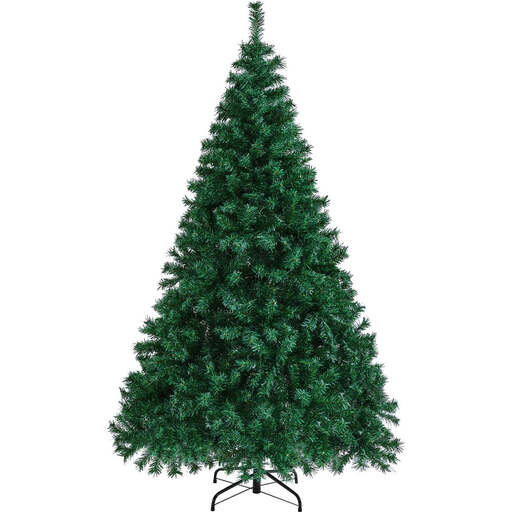
Why This Fits Their Persona: For anyone seeking a traditional, full Christmas tree in the popular 180 cm size. This model serves as the perfect unlit canvas for your own collection of decorations gathered over the years.
With 1000 branch tips on a 183 cm frame, this tree offers high density, avoiding the problem of a bare, sparse appearance. The foldable metal stand ensures the necessary stability.
The hinged system allows for quick assembly. The flame-retardant property of the PVC material (according to manufacturer specifications) provides additional safety.
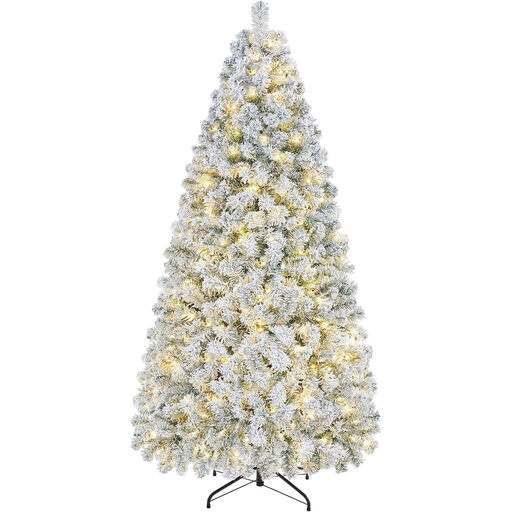
Why This Fits Their Persona: This all-in-one package is designed for those who want maximum impact with minimal effort. The tree comes pre-lit and pre-flocked, allowing for quick and atmospheric decorating.
The flocking is designed to be durable, minimising shedding. The integrated LEDs eliminate the need to buy and install separate light strings, whose cables are often difficult to hide.
The 250 warm white LEDs offer 8 different lighting modes that can be changed at the touch of a button. The hinged system and metal stand ensure easy setup and a secure footing.
We have compiled a complete, real-time list of products that fully satisfy these strict selection criteria and UK safety regulations.
1. How do I store an artificial Christmas tree correctly? For maximum longevity, the tree should be carefully disassembled after the holidays. It's best to store it in its original box or a dedicated storage bag in a cool, dry place like a cellar or attic. This protects it from dust, moisture, and deformation.
2. How long does an artificial Christmas tree last? The lifespan heavily depends on its quality and how it's cared for. A high-quality model with a sturdy metal stand and dense PVC or PE branches can easily last 10 years or more with proper storage. Cheaper models often show signs of wear after just a few seasons.
3. How many tips should a good artificial Christmas tree have? There's no single answer, as the density also depends on the length and shape of the needles. As a general guideline: a 180 cm tall tree should have at least 800 tips to look full. For an especially lush appearance, models with 1000 or more tips at this height are a great choice. For smaller trees, the absolute number is lower, but the ratio of height to tip count remains an important indicator.