
Lieferung heute & morgen

Qualitätsgarantie

Willkommens-Angebote freischalten: KOSTENLOSE Lieferung | Bis zu 80 % RABATT | Kostenlose 30-Tage-JoyPlus-Testphase
App herunterladen
An artificial Christmas tree can be used for several seasons and is suitable for homes, offices, shops and event spaces. However, not every low-priced option will be right for you. Small details often determine whether a tree stands securely, is easy to store and works well in your space.
A tree that is 180 cm or taller needs more than enough headroom. You’ll also need to consider the diameter of the lower branches and the distance from furniture, doors and radiators. For example, an artificial fir tree that is 183 cm tall may need a footprint around 120 cm in diameter. For smaller homes or student flats, a small Christmas tree measuring 45 to 90 cm may be a better fit.
The word ‘pre-lit’ doesn’t tell you how the tree is powered. An artificial Christmas tree with lights may run on batteries or use a mains adapter. Battery-powered models are easy to position wherever you like, while mains-powered options don’t need their batteries replacing during longer periods of use. Also check whether the LEDs are built in and how the cable needs to be routed.
A fibre-optic Christmas tree uses optical fibres and LEDs to create a glowing effect. This is different from a separately fitted string of lights. Details such as the number of LEDs, light colour, power consumption and available lighting modes make it easier to compare models.
A flocked Christmas tree has coated branch tips for a brighter, wintry look. However, small amounts of the coating may come loose during assembly. Shape the branches gently and avoid rubbing them hard against sharp edges. Use a dry cloth or a brush attachment on a low vacuum setting to clean the tree. Water and liquid cleaning products are not recommended for the models mentioned here.
Measure the space where you plan to put the tree, allowing for clearance from walls and walkways. Use these sizes as a guide:
As well as the tree’s height, check the base diameter. A 183 cm model with a diameter of 120 cm needs considerably more floor space than a slimmer tree of the same height.
PVC branches are easy to care for and don’t need watering. The number of branch tips can give you an idea of how full the tree will look, but it isn’t the only measure of quality. A well-designed construction, a suitable stand and clear assembly instructions are more important.
Trees made up of several sections are usually easier to transport and store. A folding metal stand can help reduce the space needed to store the tree after the season. Rubberised feet help protect delicate floors, such as laminate or parquet, from scratches.
For an LED Christmas tree, check the stated voltage, power consumption and recommended use. For example, the model with 90 warm white LEDs uses a 220–240 V adapter, has a power consumption of 3.6 W and offers eight lighting functions. By contrast, a 45 cm battery-powered tree needs three AA batteries, which are sold separately.
Unless the manufacturer states otherwise, artificial trees and electrical decorations are for indoor use only. Keep them away from candles, naked flames, radiators and other sources of heat. Check the cable and adapter before use, and unplug the tree when it’s unattended.
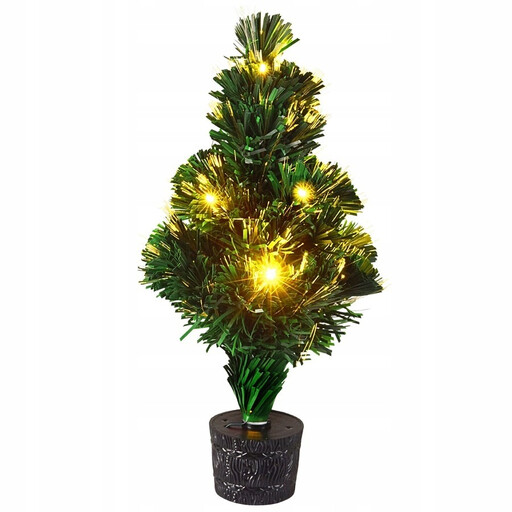
Why it suits this profile: At 45 cm tall, this tree is ideal for desks, shelves, small homes and student flats. Battery power means you can place it without needing a socket nearby.
The height and 22 cm diameter are clearly stated. It uses three AA batteries, which are not included.
13 warm white LEDs, 45 artificial branches and a jute pot; for indoor use only.
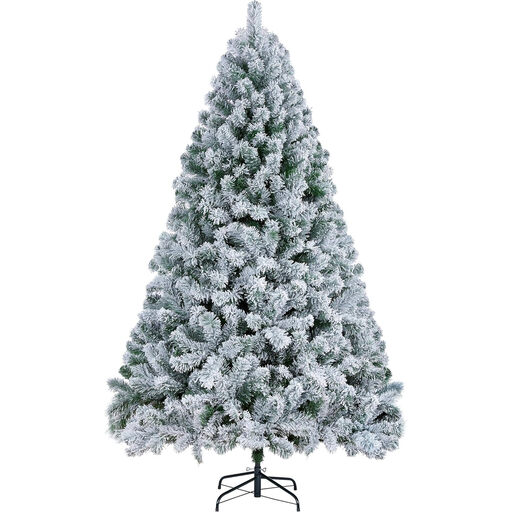
Why it suits this profile: At 183 cm tall, this tree has a classic room-friendly height, white-coated branch tips and a three-section design for seasonal use.
The height, 120 cm base diameter and PVC material are all specified. The tree comes without lights, so you can choose separate lighting to suit your needs.
820 PVC branch tips, bendable branches and a folding metal stand with protective rubber feet.
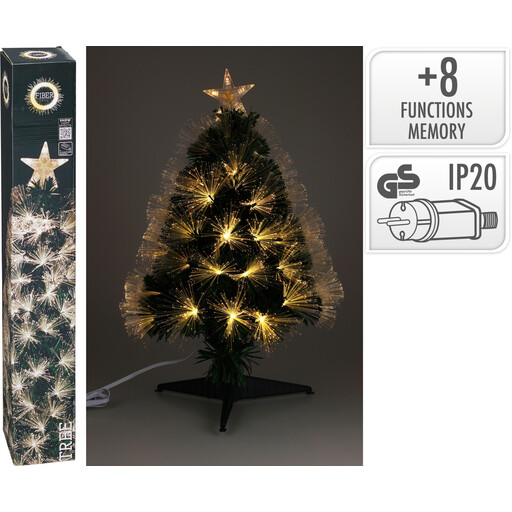
Why it suits this profile: This 90 cm model is a good choice for reception areas, offices or tables if you want built-in lighting without a separate string of lights.
The 220–240 V power supply, 3.6 W power consumption and indoor-use specification are all clearly stated.
90 warm white LEDs, 85 fibre-optic branches, a star topper and eight lighting functions with a controller.
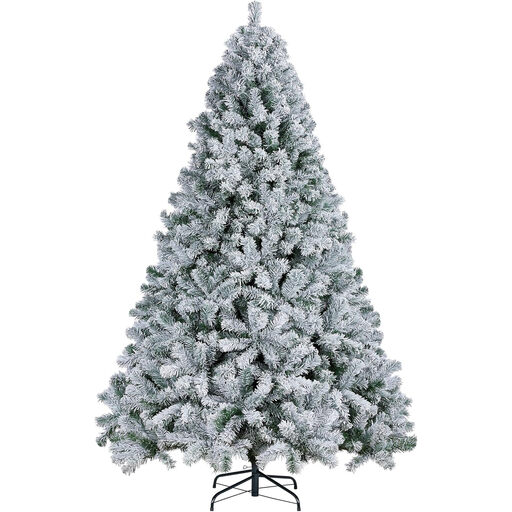
Why it suits this profile: At 228 cm tall and 140 cm in diameter, this model is designed for high-ceilinged indoor spaces, retail areas and event venues with enough room for it.
The product dimensions make clear how much floor space it needs. It comes in three sections, and the folding stand makes it easier to store.
1,284 PVC branch tips, coated branches, a metal trunk and a stand with a diameter of 55.5 cm.
After assembly, shape the branches slowly, working from the inside out. We recommend wearing gloves when handling flocked models. Place the tree on a level, stable surface and check that it stands securely before decorating it.
For storage, take the tree apart completely and keep it somewhere dry, away from direct sunlight. A breathable storage bag or the original packaging can help protect the branches from dust. If you won’t be using a battery-powered model for a while, remove its batteries.
We’ve put together a complete, regularly updated list of products that meet these strict selection criteria and the safety regulations in force across the EU.
Many models come in two or three sections, along with a stand. The parts fit together without the need for special tools. Then gently pull out and shape the branches. For pre-lit models, connect the adapter or controller, or insert the batteries, following the product instructions.
How long it lasts depends on the materials, how it’s stored and how carefully it’s assembled. Keeping it dry and away from light helps prevent unnecessary wear. Avoid rubbing or bending flocked branches too much. Check electrical components regularly for visible damage.
That depends on its power consumption and how many hours a day it’s switched on. The 90 cm fibre-optic model mentioned above is rated at 3.6 W. A battery-powered 45 cm tree doesn’t use mains electricity while it’s running, but it does need three AA batteries. Running costs therefore depend on how long it’s used, its power source and its lighting functions.