
Lieferung heute & morgen

Qualitätsgarantie

Willkommens-Angebote freischalten: KOSTENLOSE Lieferung | Bis zu 80 % RABATT | Kostenlose 30-Tage-JoyPlus-Testphase
App herunterladen
An artificial Christmas tree offers clear advantages: it's reusable, doesn't shed needles, and saves you the annual search for the perfect specimen. However, the market can be overwhelming, and not every model lives up to its product photos. Before you buy a new Christmas tree, you should be aware of the common weaknesses that often only become apparent after unboxing.
Many buyers are swayed by appealing photos and marketing promises. In reality, however, three specific flaws often lead to disappointment and render the tree unusable.
To avoid these pitfalls, you should focus on three objective features that determine the longevity and functionality of your tree.
The quality of an artificial Christmas tree depends heavily on the material of the needles and the stability of the branches.
Before buying, measure the available height and width at the installation site. An 180 cm artificial Christmas tree is a popular size for living rooms with standard ceiling heights (approx. 2.50 m). Plan for at least 15-20 cm of clearance to the ceiling to leave room for the tree topper. For smaller apartments, offices, or as a secondary tree, a small Christmas tree with a height of 120 cm to 150 cm is suitable. Also, pay attention to the maximum diameter of the tree so that it doesn't jut out into the room and block passageways.
A solid base is essential for safety. A foldable metal stand is the most reliable option. It not only offers high stability but can also be stored compactly after the holidays. Models with rubber feet also protect the floor from scratches.
Based on these objective criteria, we have identified several models that are suitable for different needs and room concepts.
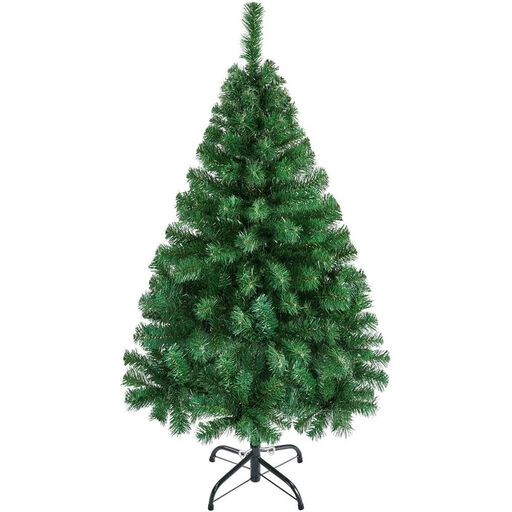
Why it's a great fit: With a height of 124 cm, this tree is ideal for smaller apartments, children's rooms, or offices. Its compact size makes handling and storage significantly easier, making it a practical choice for first-time buyers.
This model comes with a foldable metal stand, which avoids the pitfall of unstable plastic stands and ensures a secure base.
Assembly is straightforward thanks to the two-part design and folding stand. Protective rubber feet on the stand prevent scratches on the floor.
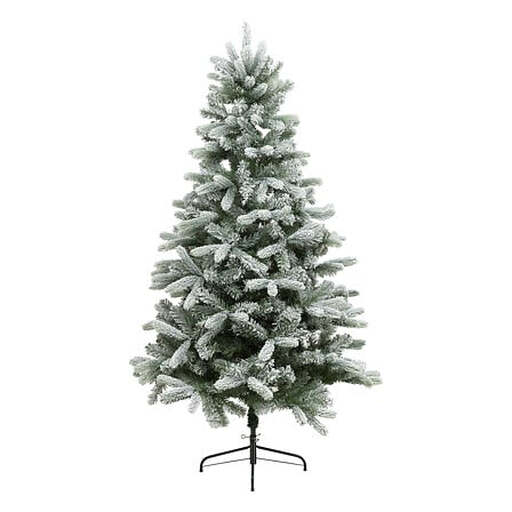
Why it's a great fit: For anyone who wants a wintery look. This snow-flocked tree creates the impression of freshly fallen snow with its flocked surface. At 180 cm high, it has an impressive presence for most living rooms.
The steel and PVC construction ensures shape retention. Unlike cheap flocked trees that shed heavily, the material here is processed to maintain its appearance.
The realistic flocking and stately height of 180 cm make the tree a decorative centrepiece without needing much additional ornamentation.
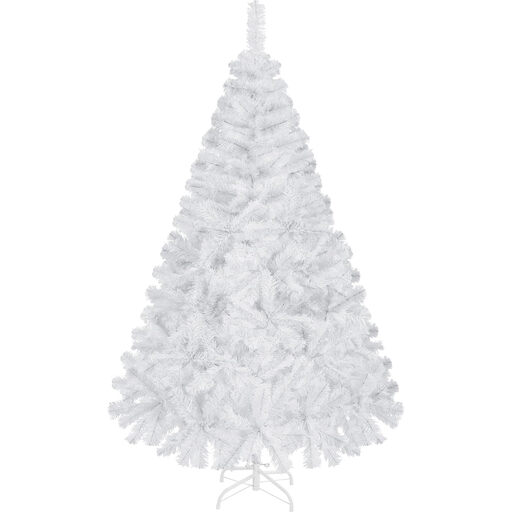
Why it's a great fit: An artificial Christmas tree in white offers a modern and elegant alternative to classic green. At 183 cm tall with a generous diameter, it's perfect for high-ceilinged rooms and as a stylish statement piece.
With 598 shapeable branch tips, this model addresses the "Density Trap." The branches can be individually fanned out to create a full and gapless silhouette.
The combination of its impressive size, high branch density, and modern white colour allows for diverse decorating styles, from minimalist to opulent.
We have compiled a complete, up-to-date list of products that fully meet these strict selection criteria and UK safety regulations.
For maximum lifespan, the tree should be carefully disassembled after use. It's best to store it in its original box or in a special storage bag for artificial Christmas trees. A cool, dry place like a basement, attic, or garage is ideal to protect the material from deformation and discolouration.
Most artificial Christmas trees available on the market, especially those made of PVC, are made from fire-retardant materials. This means they won't immediately catch fire if they come into contact with a spark. However, they are not completely fireproof. Therefore, always keep the tree away from open flames such as candles, fireplaces, or faulty fairy lights.
The lifespan largely depends on the quality of the tree and the care taken during storage and assembly. A well-made model can easily last 5 to 10 years or even longer with proper handling. This makes the purchase an economical and practical alternative to buying a real tree every year.