
Lieferung heute & morgen

Qualitätsgarantie

Willkommens-Angebote freischalten: KOSTENLOSE Lieferung | Bis zu 80 % RABATT | Kostenlose 30-Tage-JoyPlus-Testphase
App herunterladen
An artificial Christmas tree promises a hassle-free and clean alternative to a real fir: no shedding needles, no annual purchase, and simple assembly. In practice, however, overlooked details often lead to disappointment. Certain design flaws or misleading product descriptions can render the tree unusable after a short time or dampen the festive spirit. Before you make a decision, you should be aware of the three most common buying pitfalls.
To avoid buyer's remorse, you should focus on objective and verifiable criteria. These three parameters are crucial for the quality and longevity of your artificial Christmas tree.
The needles determine how realistic your tree looks. There are two main material types:
The assembly method is a key convenience factor. A hinged or folding system is the most practical solution. The branches are permanently attached to the central trunk and, after setting up the individual tree sections, only need to be folded into position and fluffed. This saves significant time and effort compared to a hook-in system.
Before buying, measure your ceiling height and the available space. An artificial Christmas tree that is 180 cm or 210 cm tall also requires a corresponding diameter. Pay attention to the specified diameter at the widest point to ensure the tree isn't too bulky for the room.
Additional features can further enhance convenience:
Here are some models tailored to specific needs and room situations.
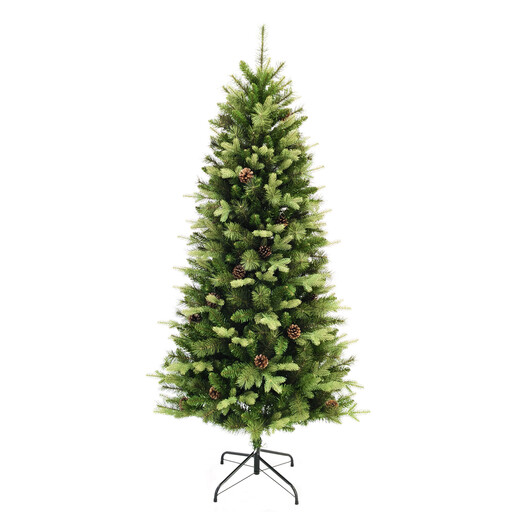
Why This Fits Their Persona: Ideal for those seeking the most realistic look possible. The combination of PE, hard needle, and PVC branches ensures a textured, lifelike appearance from every angle. Real pinecones enhance the authentic impression.
Thanks to its material mix, it avoids the trap of purely PVC-based trees that look artificial. The hinged system and metal stand address the problems of tedious assembly and instability.
Realistic Material Mix: A combination of PE, hard needle, and PVC. Easy Assembly: Equipped with a convenient hinged system.
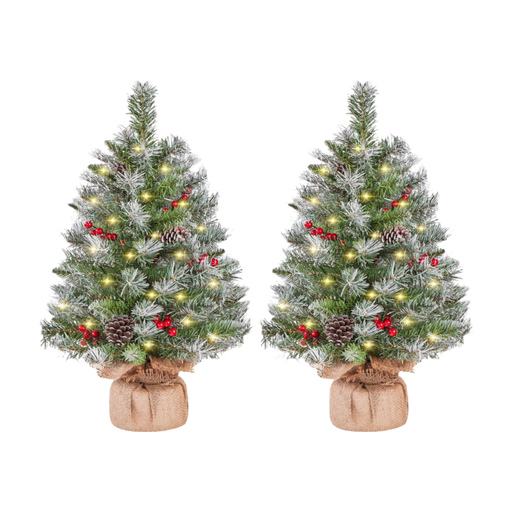
Why This Fits Their Persona: Perfect for apartments, offices, or as a tabletop Christmas tree. At 60 cm tall and battery-operated, these trees can be placed anywhere. The set of two allows for symmetrical decoration on windowsills or side tables.
These small trees don't require a large, potentially unstable stand. The foam concrete base ensures a secure footing. Since they come pre-assembled, all assembly effort is eliminated.
Battery-Operated and Cordless: Flexible placement without needing a power outlet. Compact and Stable: Includes a jute-wrapped concrete base for a secure hold.

Why This Fits Their Persona: For users who prefer a flocked artificial Christmas tree with integrated lighting. At 183 cm tall with 780 branch tips and a dense flocking, this tree creates an instant winter wonderland in the living room.
This model combines several convenience features: it's pre-lit, has a hinged system for quick assembly, and comes with a sturdy metal stand that prevents tipping.
Pre-Lit with 8 Modes: 250 warm white LEDs with various light effects. Dense, Flocked Look: 780 PVC tips create a full, wintry appearance.
We have compiled a complete, up-to-date list of products that meet these strict selection criteria and German safety regulations.
To preserve the shape and quality of your tree, dismantle it carefully and ideally store it in its original box. Alternatively, a special storage bag for artificial Christmas trees is suitable. Store the tree in a cool, dry place like a basement or attic to protect the material from moisture and extreme heat.
The number of tips is an indicator of the tree's density, but not the sole guarantee of quality. A tree that is 180 cm tall should ideally have between 800 and 1,500 tips to look full and bushy. However, more important than the sheer number is the quality and arrangement of the branches, as well as the material mix of PE and PVC used.
Yes, as long as they comply with current safety standards. When purchasing, look for a CE marking, which confirms that the product meets EU safety requirements. Only use the tree as intended by the manufacturer (e.g., indoors only if specified) and do not connect it to damaged cables or sockets. For battery-operated models, the batteries should be removed during long periods of non-use.