
Lieferung heute & morgen

Qualitätsgarantie

Willkommens-Angebote freischalten: KOSTENLOSE Lieferung | Bis zu 80 % RABATT | Kostenlose 30-Tage-JoyPlus-Testphase
App herunterladen
A reusable Christmas tree promises a worry-free holiday season: no shedding needles, no complicated disposal, and a one-time purchase that brings joy for years. But the market can be overwhelming, and not every model lives up to its product photos. Many buyers are disappointed after unboxing to find a tree that looks sparse or is unstable.
This guide will show you the three critical features you need to look for to avoid a bad purchase and find an artificial fir tree that meets your expectations.
Before we dive into quality features, let's highlight the typical problems that often only become apparent after the purchase:
To avoid the problems mentioned above, focus on three verifiable parameters. These are crucial in determining the longevity and appearance of your tree.
The appearance of an artificial tree is determined by the material of its needles. There are two main types:
Modern, high-quality trees often combine both materials: PE needles on the visible outer branches for a natural look and PVC needles on the inside near the trunk for added fullness.
The construction is a critical factor for durability and ease of use.
Size is a personal choice, but the standard height of an artificial Christmas tree at 180cm fits most living rooms with standard ceiling heights. In addition to the height, pay attention to the tree's diameter to ensure it has enough space. The number of branch tips gives an indication of density. A 180 cm tree should ideally have over 800 tips to ensure good fullness.
Here are some models that, based on the criteria above, are suitable for different needs and room sizes.
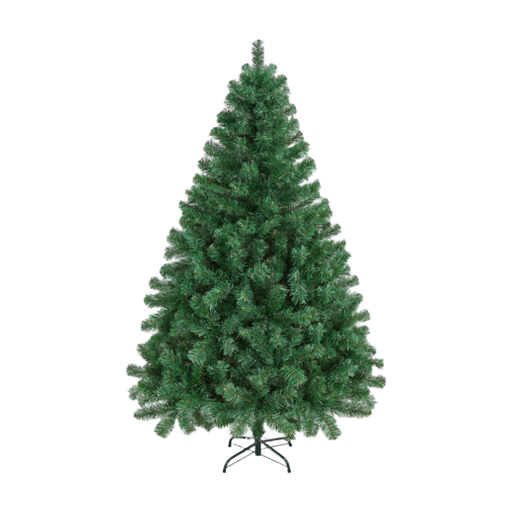
Why This Fits Their Persona: With a height of approx. 152 cm (5 ft), this model is ideal for smaller apartments, offices, or as a secondary tree. It offers a solid foundation for anyone looking for a durable and straightforward solution without sacrificing much space.
Equipped with a foldable metal stand and a hinged system, this model bypasses the common problems of instability and complicated assembly.
Compact size and quick setup. The 437 branch tips provide a good base density for a tree of this height.
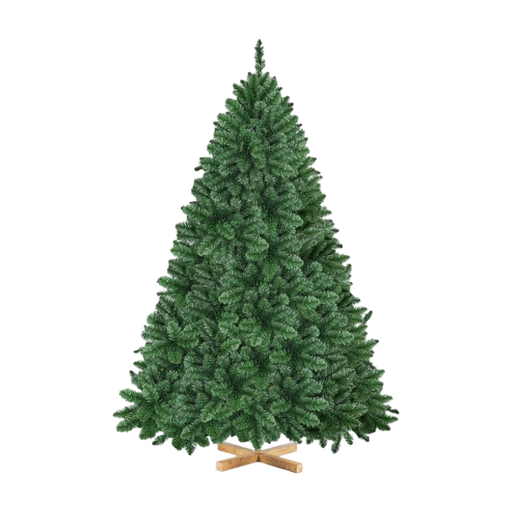
Why This Fits Their Persona: At approximately 183 cm (6 ft) tall, this tree is the ideal size for most living rooms. It offers plenty of space for family ornaments and becomes the centrepiece of your festive decorations.
With 903 branch tips, this tree appears sufficiently dense, avoiding the problem of a sparse look. The metal stand with a wood-grain finish ensures stability and an attractive appearance.
High branch density for a full look and the popular 180 cm size. The hinged system allows for straightforward assembly.
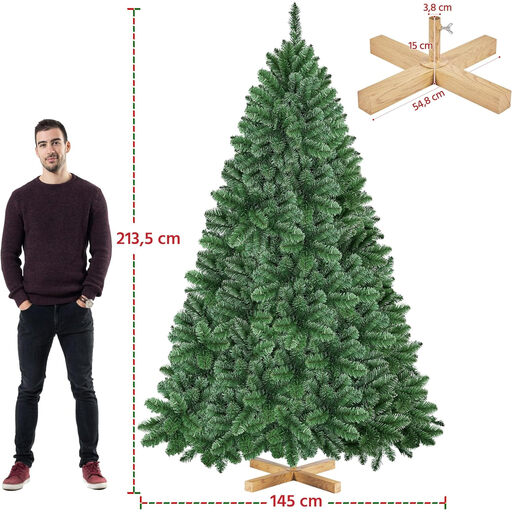
Why This Fits Their Persona: For period homes with high ceilings, entrance halls, or professional reception areas, this 213 cm tall model is the right choice. It fills the space and creates an impressive, festive atmosphere.
With a very high count of 1347 branch tips, it achieves exceptional density that leaves no gaps, even at this size. The sturdy metal stand ensures the necessary stability.
Maximum height and density for an impressive presence. Despite its size, assembly remains simple thanks to the hinged system.
We've compiled a complete, up-to-date list of products that meet these strict selection criteria and applicable safety standards.
After the holidays, disassemble the tree into its individual parts (usually 2-3 segments plus the stand). Carefully fold the branches upward towards the trunk. To protect its shape, storing it in the original box is ideal. Store the box in a cool, dry place like a basement or attic to protect the material from moisture and extreme heat.
The lifespan heavily depends on the quality of the materials and construction. A model with a sturdy metal stand, a hinged system, and high-quality PE/PVC needles can easily last 10 years or more with proper storage. Cheaper models with plastic parts and hook-in systems often show signs of wear after just a few seasons.
Modern artificial Christmas trees can look surprisingly realistic. The key is a high proportion of PE injection-moulded needles, which are modelled after real fir needles. An irregular arrangement of branches and a mix of different needle shapes and colours also contribute to a natural appearance that makes an artificial fir tree look just like the real thing.