
Lieferung heute & morgen

Qualitätsgarantie

Willkommens-Angebote freischalten: KOSTENLOSE Lieferung | Bis zu 80 % RABATT | Kostenlose 30-Tage-JoyPlus-Testphase
App herunterladen
An artificial Christmas tree promises a hassle-free, reusable alternative to a real fir, one you can enjoy for years to come. No shedding needles, no annual purchase stress, and simple storage. However, the market is flooded with models of widely varying quality. Many buyers only realise after unboxing that the tree doesn't meet their expectations. To help you make an informed decision, we'll show you the most common pitfalls and the crucial quality features to look for.
The three most common problems when choosing a tree are:
To avoid buyer's remorse, you should focus on three core technical features instead of being swayed by marketing promises.
The material of the needles is the primary factor determining the tree's appearance and longevity.
The handling and safety of your tree depend directly on its construction.
The number of branch tips is often used as a key selling point. However, a high number alone does not guarantee a dense tree. An artificial fir tree with 1000 tips can look sparse if the branches are poorly structured. Instead, pay attention to the interplay between tip count, the length and arrangement of the branches, and the material used. A well-constructed tree with fewer, but higher-quality, PE tips can look fuller and more realistic than a pure PVC tree with a higher tip count.
Based on these objective criteria, we have identified several models suitable for different needs and living situations.
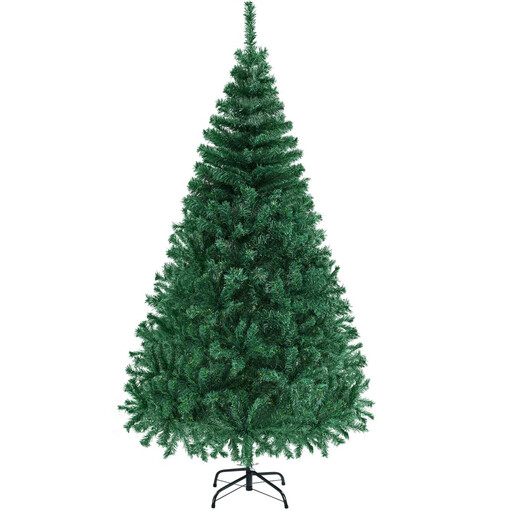
Why This Fits Their Persona: Ideal for families or first-time buyers looking for a solid, durable base for their own decorations. The standard size of 183 cm (6 ft) fits into most living rooms without being overwhelming. It offers a blank canvas for personal creativity.
This model avoids the unstable stand pitfall by including a foldable metal stand with protective caps. It provides a secure base that won't wobble, even when fully decorated.
Solid value for money. The tree is flame-retardant and its flexible branches can be shaped individually after assembly to achieve a dense appearance.
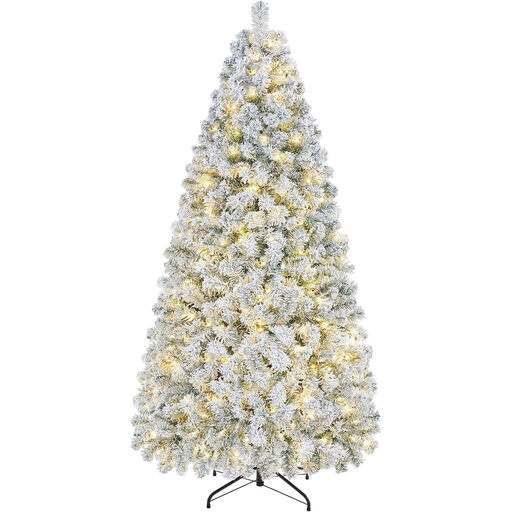
Why This Fits Their Persona: Perfect for anyone seeking a quick and atmospheric solution. This snow-flocked artificial Christmas tree with integrated lighting saves the tedious task of stringing lights and instantly creates a winter wonderland vibe.
The combination of 780 tips and the flocking counteracts the "sparse look" trap. The layer of snow visually fills in gaps, ensuring a dense, high-quality appearance.
The pre-lit tree features 250 warm white LEDs with 8 different lighting modes, selectable at the touch of a button. The hinged system allows for quick and easy setup.

Why This Fits Their Persona: This small artificial Christmas tree is the perfect solution for anyone with limited space. At 91 cm (3 ft) tall, it fits perfectly on tables, sideboards, or in offices to create a festive atmosphere even in small rooms.
It solves the problem of instability with a heavy, fabric-wrapped cement base. This base ensures an absolutely secure footing, even when the tree is decorated.
The branches are made from higher-quality PE (injection-moulded) material, which provides an exceptionally realistic look. Its compact size makes storage and setup extremely easy.
Whether you prefer a classic green, a modern white Christmas tree, or a striking pink model, the range of styles is vast. The most important thing is that the fundamental quality features are right.
We've compiled a complete, up-to-date list of products that fully meet these strict selection criteria and safety standards.
For maximum longevity, you should carefully disassemble the tree after the holidays. It's best to store the individual sections and the stand in the original box or in a special Christmas tree storage bag. A cool, dry place like a basement or attic is ideal to protect the material from warping and discolouration.
The lifespan heavily depends on the quality of the material and how it's cared for. A budget PVC model will last about 5 years with good storage before it starts to lose its shape and colour. Higher-quality models, especially those with PE injection-moulded parts and a robust construction, can easily be used for 10 years or more.
After assembling the tree, take your time "fluffing" it. Start with the bottom branches and work your way up. Shape each individual branch by fanning out the attached tips in different directions—up, down, and to the sides. This fills the gaps between the branches and gives the tree a full, natural volume. Wearing gloves can make this process more comfortable.