
Lieferung heute & morgen

Qualitätsgarantie

Willkommens-Angebote freischalten: KOSTENLOSE Lieferung | Bis zu 80 % RABATT | Kostenlose 30-Tage-JoyPlus-Testphase
App herunterladen
An artificial Christmas tree is a practical and, in the long run, cost-effective alternative to buying a real fir tree every year. However, the market can be overwhelming, and not every model lives up to its product photos. Before you make a decision, it's crucial to understand the common pitfalls that often only become apparent after your purchase.
This guide will walk you through the three most common traps when buying an artificial tree and explain which technical features to look for to find a durable and beautiful model.
Many buyers are swayed by appealing product photos, but the reality can be disappointing. Pay close attention to these three points to avoid making a bad purchase:
To find a tree that will bring you joy for years to come, you should check three core parameters. These are the primary determinants of appearance, handling, and longevity.
The appearance of an artificial tree is primarily determined by the material of its needles. There are two main types:
Height is the most obvious criterion. Standard sizes like a 150 cm tree for smaller rooms, a 180 cm artificial Christmas tree as a classic family size, or an impressive 210 cm Christmas tree for high ceilings are widely available. However, the tree's diameter is just as important. For narrow hallways, corners, or smaller apartments, a slim Christmas tree with a reduced diameter is the ideal choice as it doesn't take up too much space. Be sure to measure your available space accurately before buying.
A reusable Christmas tree should, above all, be practical to handle. Look for these two construction features:
Here is a selection of models tailored to different needs and room situations.
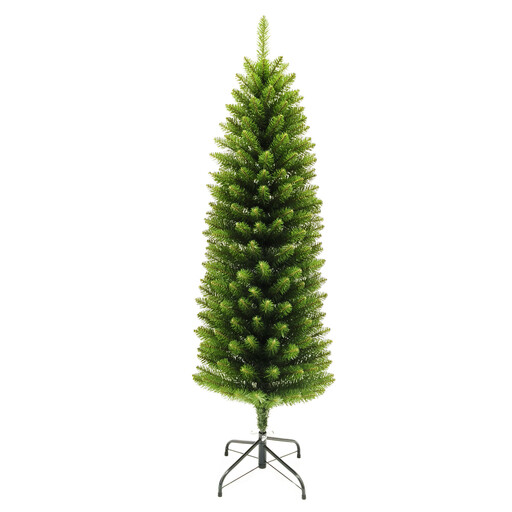
Why This Fits Their Persona: With a height of approx. 150 cm and a slim diameter of just 51 cm, this model is ideal for apartments, hallways, or as a second tree in the office. It offers a festive presence without taking up valuable living space.
The wrapped construction ensures a uniform shape and prevents gaps from forming. The included metal stand provides a solid base, avoiding the risk of unstable plastic parts.
Slim, space-saving design; sturdy metal stand included.
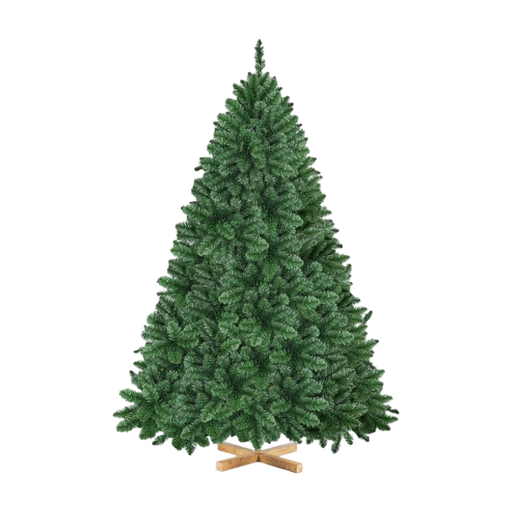
Why This Fits Their Persona: At a height of approx. 183 cm (6 ft), this tree fits perfectly into most living rooms. It offers a full, dense profile that provides an excellent base for lavish Christmas decorations.
The hinged system makes assembly straightforward. With 903 branch tips, the tree looks dense, avoiding a "sparse" appearance. The wood-effect metal stand is both stable and aesthetically pleasing.
User-friendly hinged system; high density with 903 branch tips; sturdy metal stand.
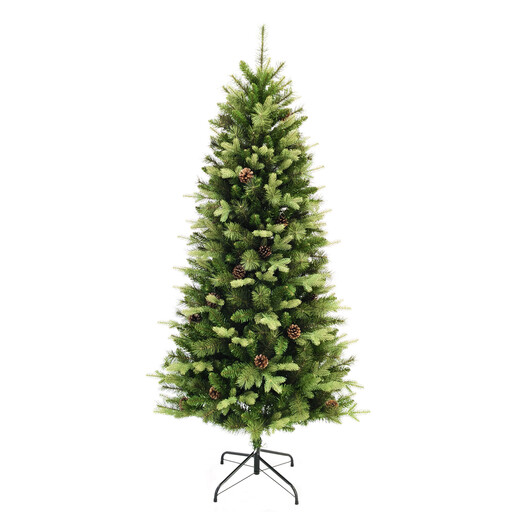
Why This Fits Their Persona: For anyone looking for an artificial tree that is nearly indistinguishable from a real one. The combination of different needle types creates a particularly authentic texture and appearance.
The material mix of PE, hard needle, and PVC avoids the trap of a "plasticky" look. The hinged system and metal stand meet quality standards for assembly and stability.
Very realistic look due to material mix; hinged system for easy assembly; real pine cones for a natural detail.
We have compiled a complete, up-to-date list of products that fully meet these strict selection criteria and German safety regulations.
For maximum lifespan, the tree should be stored carefully after the season. Disassemble it in reverse order and gently press the branches of the hinged system against the trunk. Ideally, store the parts in the original box or in a special storage bag for Christmas trees. A dry and cool place like a cellar or attic will protect the tree from dust, moisture, and deformation.
The lifespan of an artificial Christmas tree depends heavily on the material quality and care. A high-quality model with PE needles and a sturdy metal construction can easily last 5 to 10 years or more with proper storage. Cheaper PVC models may lose their shape and density more quickly.
"Shaping" or "fluffing" the branches is the most important step for achieving a dense look. After assembling the sections, start from the bottom up. Work your way from the inner branches at the trunk out to the tips. Bend each individual small branch in a different direction—some up, some to the side, some down. This will fill in any gaps and create a natural, voluminous appearance. Wearing gloves can be helpful during this process.