
Lieferung heute & morgen

Qualitätsgarantie

Willkommens-Angebote freischalten: KOSTENLOSE Lieferung | Bis zu 80 % RABATT | Kostenlose 30-Tage-JoyPlus-Testphase
App herunterladen
An artificial flower garland wedding can beautifully enhance welcome signs, flower arches, walls or photo backdrops, without the need for watering or replacing wilted blooms during the celebration. At first glance, the choice seems straightforward. In practice, however, unclear length specifications, unsuitable materials and a misjudgement of how to attach them often lead to unnecessary extra costs.
This shopping guide shows what brides and grooms, wedding planners, event agencies and private hosts should look out for before making a purchase.
A garland that is two metres long is not automatically enough for a complete flower arch. What matters is whether it is hung straight, loosely draped or wrapped around a frame. Curves and folds reduce the actual visible length.
Before buying, you should therefore calculate:
The packaging information is also important. “Pack of 2” or “3 pieces” does not necessarily mean a continuous garland, but several individual parts.
Many artificial flower vines look more voluminous in photos than they do when unpacked. What is more, not every model comes with hanging rings, wire or sturdy ends. Flexible, plastic-coated wires, for example, can be bent around a frame, whereas pure plastic vines are better suited to lightweight decorations.
For secure mounting on a sign, arch or railing, depending on the surface, the following are suitable:
Adhesive should not be used on delicate fabrics, painted surfaces or hired furniture without first testing the surface.
Artificial flowers are low-maintenance, but they are not automatically suitable for every type of weather. Several of the models mentioned here are not recommended for heavy rain, strong wind, open flames or high heat. Prolonged, direct sunlight can also alter colours.
For a garden wedding, you should therefore clarify:
With a silk flower garland, the blooms are often made of fabric, while the leaves, vines and stems are made of plastic. Silk or fabric flowers can create a softer look. Plastic elements, on the other hand, often provide the necessary flexibility for curved decorations.
More important than general marketing claims are specific details about:
An artificial rose and peony garland, for example, suits romantic and classic themes. A eucalyptus garland has a more understated look and can be combined with white flowers, wooden signs or neutral fabrics. For rustic celebrations, a sunflower garland with yellow blooms and green leaves is a great choice.
A long artificial flower garland is ideal for walls, railings, photo backdrops or longer table surfaces. A compact swag is more practical if you only want to decorate the top corners of a welcome sign or a small ceremony arch.
Before buying, check:
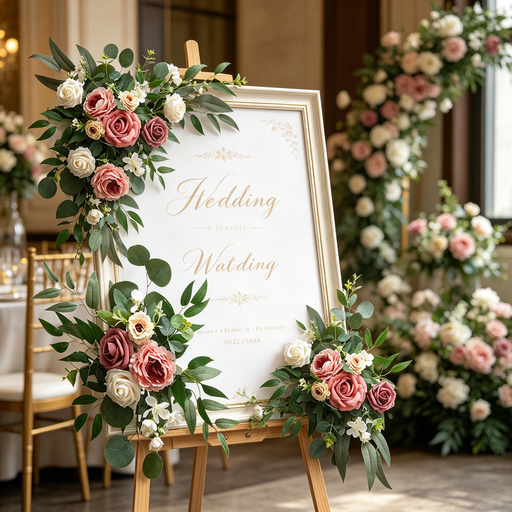
Why this product fits the profile: Two compact swags, each around 50 cm, are ideal for small welcome signs, entrance areas and simple table decorations.
The specific set size and length make quantity planning easier. You won’t accidentally plan a single short vine for a complete flower arch.
Set of two pieces, fabric flowers and intended use on signs, backdrops and entrance areas.
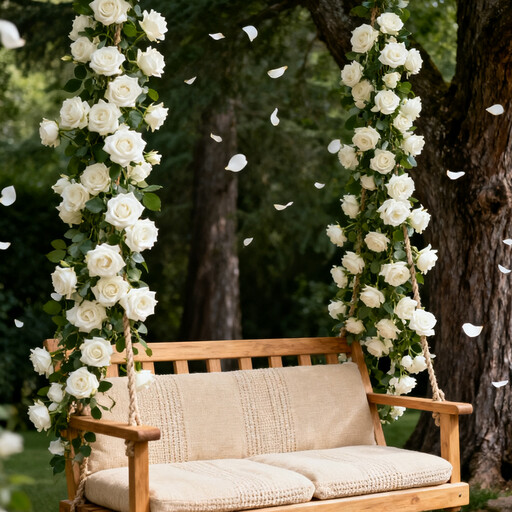
Why this product fits the profile: Three white garlands, each around two metres long, are intended for larger walls, photo backdrops, gardens or ceremony areas.
The details on quantity, length and material make the actual scope of decoration clear. This reduces planning errors for larger areas.
Rose and peony look, three pieces each around two metres, and reusable design according to the product description.
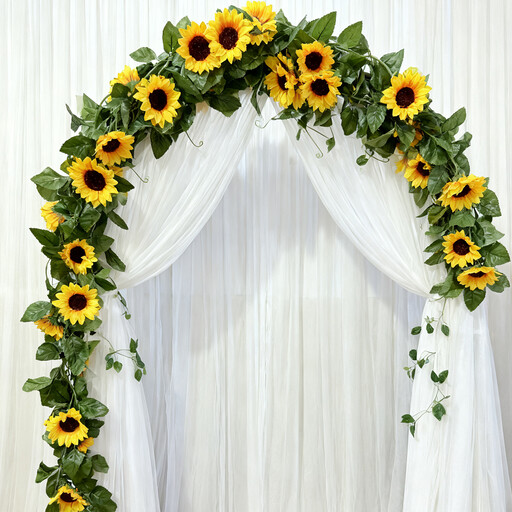
Why this product fits the profile: Four flexible sunflower and daisy vines, each around 2.4 metres, are suitable for arches, railings, photo walls and DIY decorations.
The flexible wire structure allows adaptation to different frames. The total length and pack quantity are clearly stated.
Four vines, each around 240 cm long, with artificial sunflowers, daisies and a bendable wire core.
We have put together a complete, regularly updated list of products that fully meet these strict selection criteria and the safety regulations in force in the EU.
After unpacking, carefully separate the blooms and leaves. For models with a wire core, the shape can then be adjusted to fit a sign, arch or wall. Before the event, a trial assembly with the intended fixing materials is recommended.
For storage, simple basic rules apply:
Flexible garlands can be fixed to the frame with florist’s wire, cable ties or suitable hooks. For an even appearance, first mark the positions and attach the garland at several points only. This distributes the weight better and allows the vine to be repositioned if necessary.
The lifespan depends on the material, storage and location. With dry storage, careful handling and limited sun exposure, reusable models can be used for further celebrations. Outdoors, rain, wind and UV radiation have a greater effect on fabric and plastic elements.
Compared to fresh flowers, there are no costs for water, refrigeration or regular replacement of wilted blooms. However, you should consider the purchase price, suitable fixing materials and an appropriate storage option. For multiple events, reuse can simplify planning, provided the garland is checked and stored dry after each use.