
Lieferung heute & morgen

Qualitätsgarantie

Willkommens-Angebote freischalten: KOSTENLOSE Lieferung | Bis zu 80 % RABATT | Kostenlose 30-Tage-JoyPlus-Testphase
App herunterladen
Artificial flowers and plants are ideal for decorating homes, offices, shops, weddings and sheltered outdoor spaces. They don’t need regular watering or a spot with plenty of daylight. However, not every decorative item is suitable for every purpose. The key considerations are the materials, dimensions, stability and intended setting.
If you buy based only on colour or a low unit price, it’s easy to overlook important details. The tips below will help you compare artificial flowers, plants, vases and decorative accessories more carefully.
An artificial plant may look full and lush in product photos, yet turn out to be much smaller in a vase or on a wall. Always check:
For example, short artificial bouquets are a better fit for a narrow windowsill than long stems. A hanging plant nearly 46 cm long, on the other hand, needs enough clearance from furniture and doors.
The term ‘silk flowers’ often describes the material the flowers are made from; it doesn’t automatically mean they’re weatherproof. Direct sunlight, rain, frost and major temperature changes can all affect fabric, plastic and colours differently.
If you’re decorating a balcony, patio or entrance, check that the product is specifically intended for that setting. Many products are suitable only for indoor use or sheltered outdoor spaces. For outdoor weddings and events, it’s also important to set them up somewhere protected from the wind.
Bendable stems make it easier to shape arrangements, but they’re no substitute for a stable vase or secure pot. A container that’s too light can tip over, particularly when holding long artificial flowers. For hanging plants, make sure the wall, screws and wall plugs are suitable for the surface.
Artificial flowers are often made from fabric, plastic, wire or a combination of these materials. Fabric flowers may have a textile finish, while plastic leaves tend to hold their shape better. A wire core in the stem makes it easier to bend and trim.
For many products, all you need to clean them is a soft, dry cloth. Avoid rubbing delicate flowers too hard. A cool hairdryer can remove dust from hard-to-reach gaps. Avoid harsh cleaning products and hot water unless the manufacturer says otherwise.
For artificial flowers for vases, the stem length should suit the height of the vase. As a useful guide, the visible part of the flower can be around one and a half to twice the height of the vase. It’s not a hard-and-fast rule, but it can help you plan.
For table decorations, several small flower heads often look more compact than a few very long stems. For example, an artificial hydrangea with seven flower heads can add a pop of colour on its own or form part of a mixed arrangement.
Glass vases should be placed on a flat, stable surface. In homes with children or pets, keep them out of reach. Small decorative items such as a solar lucky cat aren’t suitable for children under three if they contain small parts that could be swallowed.
For wall-mounted decorations, the strength of the surface is important. Use suitable wall plugs to secure an artificial hanging plant indoors. Moisture in a bathroom or on a covered balcony can affect the lifespan of decorative materials.
Why this product suits this profile: This set includes twelve artificial wheat stems, each around 32 cm long, making it ideal for simple arrangements in vases and planters, or for DIY projects.
The stated quantity and length make it easier to plan your arrangement. The product description also recommends careful dusting and confirms there’s no need to water or prune the stems.
Twelve individual stems, synthetic materials and a length of 32 cm give you plenty of options for window, table and wedding decorations.
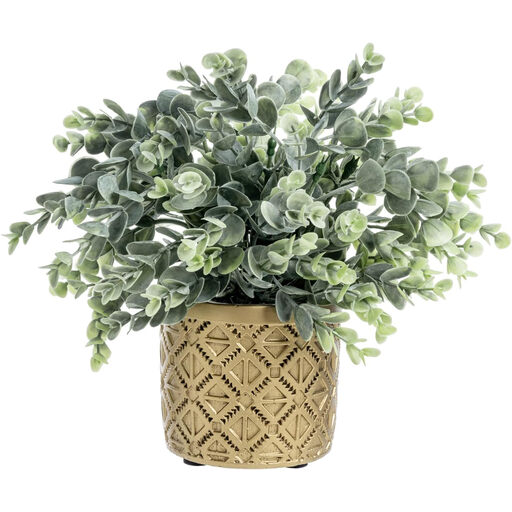
Why this product suits this profile: According to the product information, the artificial eucalyptus plant arrives ready assembled in a cement pot and can be displayed on desks, shelves or windowsills.
The pot dimensions are listed as approximately 9.4 cm high and 9.1 cm in diameter, and it comes with four pads for the base. This makes it easier to check whether you have space before buying.
A combination of plastic foliage and a cement pot; according to the product information, it doesn’t need watering or sunlight.

Why this product suits this profile: The two hanging trails, each around 78 cm long, are suitable for walls, hanging baskets, stairways, cafés or sheltered outdoor spaces.
According to the product description, the flexible stems can be bent, trimmed or adjusted. Even so, they should be kept out of direct exposure to the weather.
Two trails, several branches and bendable wire-and-plastic stems make it easy to create larger displays.
For seasonal arrangements, try the 1 m artificial forsythia with its bendable stem. It can be displayed in a tall vase, used as part of a table decoration or included in wedding décor. A purple artificial hydrangea with seven flower heads, on the other hand, is a good fit for smaller arrangements.
A glass vase measuring 20 cm high and 8.5 cm in diameter is designed for individual artificial flowers, tulip-style stems or dried branches. Place it on a flat surface and avoid overloading it with heavy branches.
A solar lucky cat makes a small gift or an accessory for a desk, car or shop counter. According to the product information, it moves when exposed to daylight or artificial light, so no batteries are needed. This model is intended for indoor use or sheltered areas.
We’ve put together a complete, regularly updated list of products that fully meet these strict selection criteria and the safety regulations in force in the EU.
In most cases, gently dusting them with a soft cloth is enough. For delicate fabric flowers, you can use a cool hairdryer from a distance. Only use moisture if the material information says it’s suitable.
Their lifespan depends on the materials, craftsmanship and where they’re displayed. Indoor spaces without direct sunlight help protect colours and finishes. Outdoors, artificial flowers should be kept out of the rain and frost, and protected from intense UV rays.
Artificial plants don’t need water, fertiliser or grow lights. According to the product description, a solar lucky cat doesn’t need a battery either. Ongoing costs are therefore mainly limited to occasional cleaning and, where necessary, secure mounting.