
Lieferung heute & morgen

Qualitätsgarantie

Willkommens-Angebote freischalten: KOSTENLOSE Lieferung | Bis zu 80 % RABATT | Kostenlose 30-Tage-JoyPlus-Testphase
App herunterladen
Artificial plants offer an attractive way to add lasting greenery to any space without the maintenance of real plants. However, the market can be overwhelming, and not every product delivers on its promise. Many buyers are disappointed by low-quality items that quickly lose their appeal. This guide highlights the most common pitfalls and explains which features to look for to make an informed decision.
An impulsive purchase often leads to frustration. Certain flaws only reveal themselves after a short time, negating any initial savings. Pay close attention to these three points:
To avoid buyer's remorse, you should check three key parameters before making a decision. These largely determine the quality and realistic appearance of the decorative plants.
The choice of material is crucial for the look and feel. Modern artificial plants are often made from PE plastic (polyethylene) or high-quality textile fibres.
Look for fine details like varying shades of green, slight irregularities in leaf shape, and a matte finish. These features make artificial plants look lifelike.
The pot is more than just a container; it is an integral part of the design object. Potted artificial plants should have a solid base.
Consider exactly where the plant will be placed. A small artificial plant is perfect for an office desk or a narrow shelf. An artificial hanging plant can liven up empty walls or high corners. For the floor, larger specimens work well as standalone decorative elements. The proportions of the plant to the room are crucial for a harmonious effect.
Here are some recommendations tailored to specific needs and use cases.
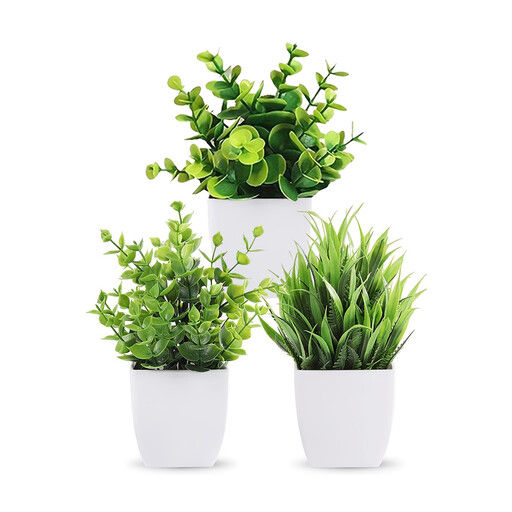
Why This Fits Their Persona: Ideal for those who want to add several small accents in different rooms without committing to a single, large model. The set offers flexibility for windowsills, side tables, or the bathroom.
The simple, white pots are neutral and complement many decor styles, thus avoiding the common pitfall of a mismatched pot design.
The set of three different plants (eucalyptus, wheatgrass) provides visual variety. The compact size of approx. 17 cm is highly versatile.
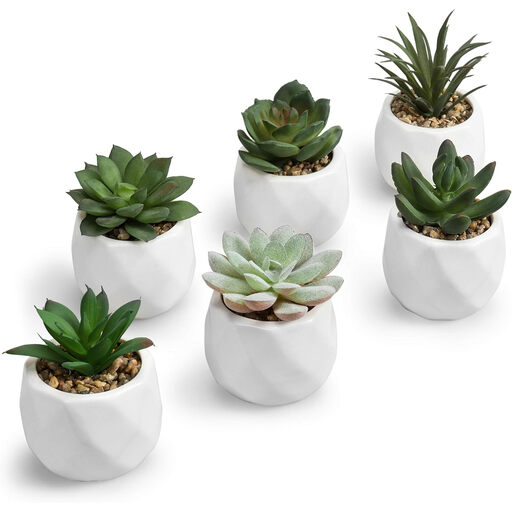
Why This Fits Their Persona: Perfect for decorating desks, shelves, or reception areas in an office. These low-maintenance plants require no light and are ideal for work environments.
Instead of cheap plastic pots, this set comes with solid, geometric pots made of white ceramic, conveying a modern and high-end aesthetic.
Six different succulent designs in one set. Their compact size makes them ideal for small spaces and for arranging as a group or individually.
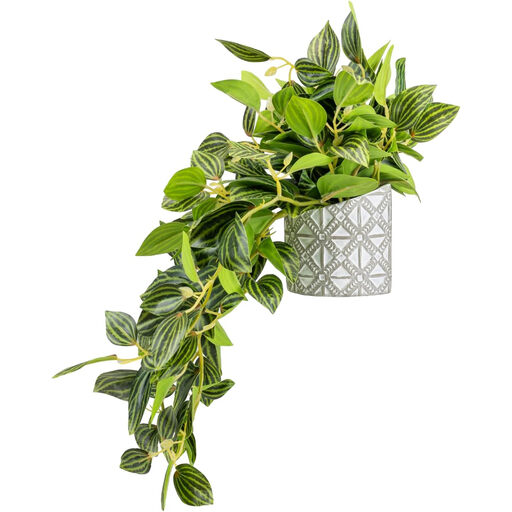
Why This Fits Their Persona: Suitable for anyone looking to liven up high shelves, cabinets, or empty wall spaces with greenery. The trailing vines create a dynamic and natural atmosphere.
Unlike many hanging plants with cheap plastic pots, this model comes in a sturdy cement pot with an embossed pattern, designed for secure wall mounting.
Mounting hardware (screws and wall anchors) is included. The realistic replica of a Peperomia Angulata looks especially lifelike.
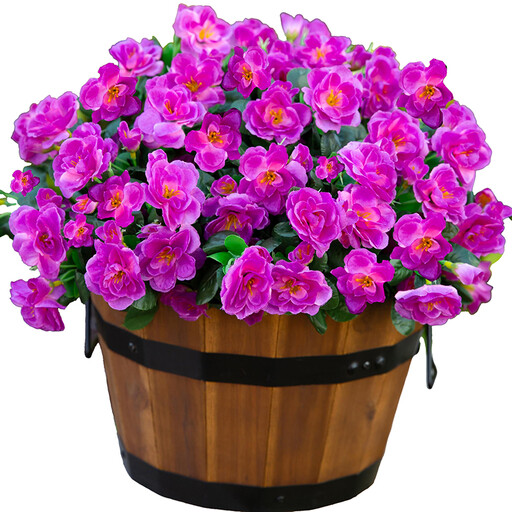
Why This Fits Their Persona: For users who want to adorn balcony boxes, patio planters, or entrance areas with colourful flowers year-round, without worrying about the elements.
According to the manufacturer, these artificial flowers are explicitly made from UV-resistant silk material to counteract fading from sun exposure and other weather conditions.
Delivered as individual stems, allowing for flexible arrangements in various containers. The material is weatherproof and retains its colour and shape in sun and rain.
We have compiled a complete, up-to-date list of products that fully meet these strict selection criteria and safety standards.
1. How do you clean artificial plants properly? Most artificial plants can be easily dusted with a dry or slightly damp microfibre cloth. For heavier dirt, the leaves can be gently rinsed with lukewarm water. Allow the plant to air dry completely before returning it to its spot.
2. Do artificial plants fade in the sun? Yes, many artificial plants can fade with prolonged, direct exposure to sunlight. If the plant is to be placed in a sunny spot, it is important to choose a model that is explicitly labelled by the manufacturer as UV-resistant. These products are treated with special protective agents that significantly extend their colour stability.
3. How can I identify high-quality artificial plants that look real? Look for matte finishes instead of glossy plastic. Check the details: are there leaf veins, different colour shades, and a natural texture? A stable, heavy pot made of ceramic or cement is also a good indicator of quality. High-quality products also imitate the small "imperfections" of real plants.