
Lieferung heute & morgen

Qualitätsgarantie

Willkommens-Angebote freischalten: KOSTENLOSE Lieferung | Bis zu 80 % RABATT | Kostenlose 30-Tage-JoyPlus-Testphase
App herunterladen
Green accents in living and working spaces create a pleasant atmosphere, but not everyone has the time or resources to care for real plants. Artificial plants are a practical alternative. However, the market is overwhelming, and the differences in quality are vast. The wrong choice often leads to disappointment with unnatural-looking decor that looks more like plastic than nature.
This guide will help you navigate the most common pitfalls of buying artificial plants. We'll show you which crucial features to look for to find durable and aesthetically pleasing artificial plant decor that will bring lasting joy to your spaces.
Many buyers focus solely on price or product images, overlooking critical quality flaws. You should avoid these three mistakes:
To select a convincing and long-lasting artificial plant, you should check three core parameters. These will help you identify products that make artificial plants look real and are a worthwhile investment.
The material is the most important factor for a realistic appearance. Look for the following terms:
In addition to the material, check the level of detail. Good low-maintenance plants feature fine leaf veins, subtle colour irregularities, and different shades of green—just like their natural counterparts.
A realistic stem is often constructed in multiple parts and shows textures that resemble bark or natural growth marks. For artificial grass or ferns, the individual blades or fronds should be flexible yet retain their shape.
The pot serves not only as a base but also as an important counterweight. Models with pots made of cement, ceramic, or solid wood offer significantly more stability than simple plastic containers. Ensure that the pot's size and style match the plant and complete the overall look harmoniously.
Think carefully about where the plant will be placed. Are you looking for a small piece of artificial table decor for your desk or a set of artificial succulents for a shelf? Or do you need a tall plant as a statement piece for an empty corner? Check the total height and width in the product specifications to ensure the plant fits in the intended space. For office artificial plants, compact, stylish arrangements that don't take up much space are often suitable.
Based on the quality criteria mentioned, we have selected a few products for different user profiles and applications.
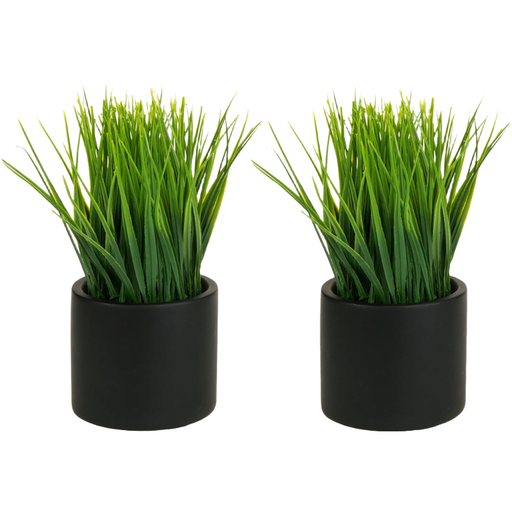
Why This Fits Their Persona: Ideal for professionals looking for stylish, space-saving greenery for their office or home office. The set allows for symmetrical decoration on a desk or shelf without being distracting.
The heavy, cylindrical cement pots provide high stability and a modern aesthetic, thus avoiding the trap of cheap plastic pots.
A compact set of 2 for flexible arrangement. The minimalist design complements modern office interiors.
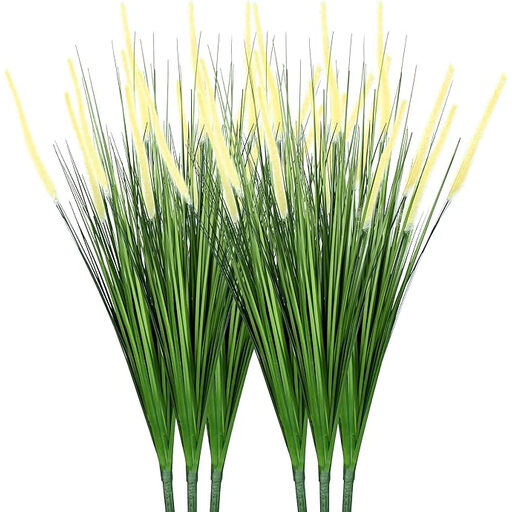
Why This Fits Their Persona: Perfect for anyone looking to fill a tall floor vase in a corner of the living room, hallway, or office. The set of six individual stems allows for a voluminous and customisable arrangement.
The stems are made of flexible yet sturdy PVC plastic that won't become brittle. The matte finish and natural colour transitions prevent the unnatural shine of cheap products.
The height of 80 cm creates a strong visual impact. The stems are bendable, allowing for creative arrangements.
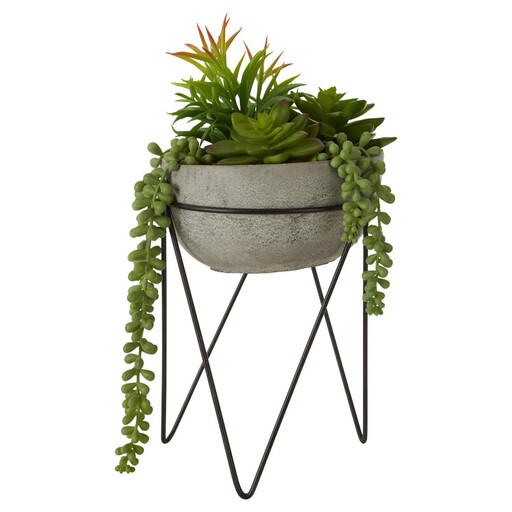
Why This Fits Their Persona: For decorators looking for a ready-made decorative object that combines modern materials with greenery. The combination of a ceramic pot and a geometric metal stand makes it a standalone design element.
This arrangement avoids the pitfall of unstable bases by using a heavy concrete-ceramic pot and a sturdy iron stand. It is designed as a high-quality, durable decorative object.
The combination of different artificial succulents in one arrangement creates a varied look. The modern stand elevates the plant, creating an interesting visual layer.
We have compiled a complete, up-to-date list of products that meet these strict selection criteria and quality standards.
Cleaning is straightforward. For most plants, simply dusting them regularly with a soft, dry cloth or a feather duster is sufficient. For heavier soiling, you can gently wipe the leaves with a slightly damp cloth. Avoid harsh cleaning agents, as they can damage the materials.
Colour fastness depends on the quality of the material. High-quality artificial plants, especially those made from UV-resistant PE plastic, are better protected against fading from sun exposure. Cheaper PVC models are more likely to lose their colour over time. For locations with direct, intense sunlight, you should specifically look for products with UV protection.
Look for a matte leaf surface, fine details like leaf veins, and varied colour nuances. The stem should have a realistic texture, and the plant must be firmly anchored in a heavy, well-proportioned pot. If the material feels brittle or has a strong chemical smell, it is often a sign of poor quality.