Joybuy Insights

Artificial Plant Buyer's Guide: Avoiding Common Pitfalls

Green accents bring any room to life, but not everyone has the time or ideal lighting conditions to care for real plants. Artificial plants offer a practical alternative. However, the market is overwhelming, and the differences in quality are vast. Many products disappoint with an unrealistic appearance or poor durability.

This guide helps you recognise the most common purchasing traps and shows which features truly count for finding a long-lasting and aesthetically pleasing decorative plant for your home or office.

The 3 Most Common Mistakes When Buying Artificial Plants

Before you make a decision, you should be aware of the common problems that often only become apparent after the purchase. Knowing these allows you to specifically look for products that avoid these weaknesses.

  1. The tell-tale plastic sheen: Many budget-friendly artificial plants are made from low-grade, shiny plastic. This material reveals from a distance that the plant isn't real. High-quality models use matte surfaces, detailed leaf embossing, and subtle colour gradients to create a realistic appearance.
  2. Rapid fading due to lack of UV protection: An artificial plant placed near a window is constantly exposed to UV radiation. Products without adequate protection will lose their colour, turn yellow, or become brittle within a few months. This is especially true for intensely coloured flowers and leaves.
  3. Unstable and unsuitable pots: Manufacturers often cut corners on the pot. A pot that is too light or too small will cause the plant to tip over at the slightest touch. Furthermore, a cheap plastic pot rarely matches the desired interior style, leading to an additional purchase and extra costs for a suitable planter.

What Really Matters: Decisive Quality Features

To make an informed purchasing decision, you should focus on objective criteria. These three parameters are crucial for the quality and longevity of your new low-maintenance plants.

H2: Material and Attention to Detail

The choice of material is a key determinant of how realistic an artificial plant looks.

  • PE Plastic (Polyethylene): This material is flexible and allows for a very realistic replication of leaves and stems, often with fine veins and textures. It is robust and frequently used for hyper-realistic artificial plants, such as artificial succulents or artificial eucalyptus.
  • Textile fibres (e.g., silk): Used primarily for flower petals, they offer a delicate, true-to-life feel. However, they are more susceptible to dust and moisture.
  • Colouration: Look for nuanced colouration. Real plants are rarely monochromatic. Slight variations, darker bases on the stems, and lighter leaf tips are a sign of high-quality craftsmanship.

H2: Construction and Stability

A good artificial plant is more than just a collection of plastic leaves.

  • Weight and material of the pot: A pot made of cement, ceramic, or solid wood provides the necessary stability. It not only prevents tipping but also significantly contributes to the high-end overall impression.
  • Plant mounting: The plant should be firmly anchored in the pot, often in a filler material like artificial moss or fixed pebbles. This prevents it from wobbling or coming loose.
  • Flexible branches: Wire cores in the branches and stems allow you to individually shape the plant after transport, giving it a more natural, less rigid appearance.

H2: Suitability for the Intended Location

Not every artificial plant is suitable for every location.

  • Plants for windowless offices: In rooms without daylight, artificial plants are the ideal solution. Here, you don't have to worry about UV resistance and can focus entirely on aesthetics.
  • Locations with direct sunlight: If the plant is to be placed by a window, an explicit mention of UV resistance from the manufacturer is a crucial quality feature to prevent fading.
  • Bathrooms and humid rooms: In environments with high humidity, pure plastic plants (PE/PVC) are more suitable than those with textile components, as the latter could absorb moisture.

Our Product Recommendations

Here are some recommendations tailored to different needs and interior styles.
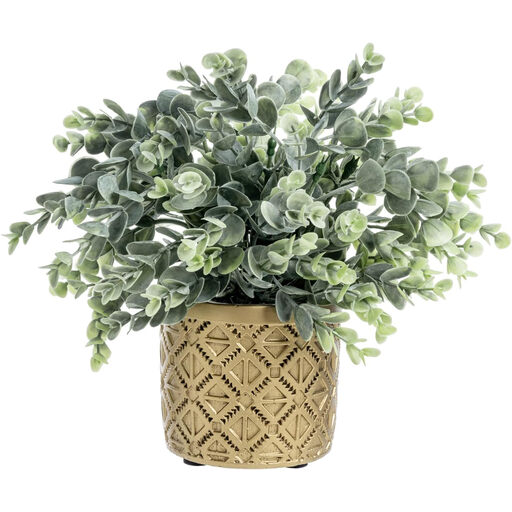
MATCH FOR: Style-Conscious Decorators
MyGift Artificial Eucalyptus Plant in Modern Geometric Gold Cement Pot

MyGift Artificial Eucalyptus Plant in Modern Geometric Gold Cement Pot

Why This Fits Their Persona: Perfect for modern living concepts. The gold-coloured cement pot with its geometric embossing is a design object in its own right, adding an elegant accent to desks, shelves, or side tables.

How It Avoids the Trap

The heavy, solid cement pot ensures excellent stability and looks significantly more high-end than standard plastic pots. The matte texture of the eucalyptus leaves avoids any artificial sheen.

Key Advantage & Pros

A combination of a trendy plant (eucalyptus) and a decorative pot. Includes protective foot pads to prevent scratching furniture surfaces.
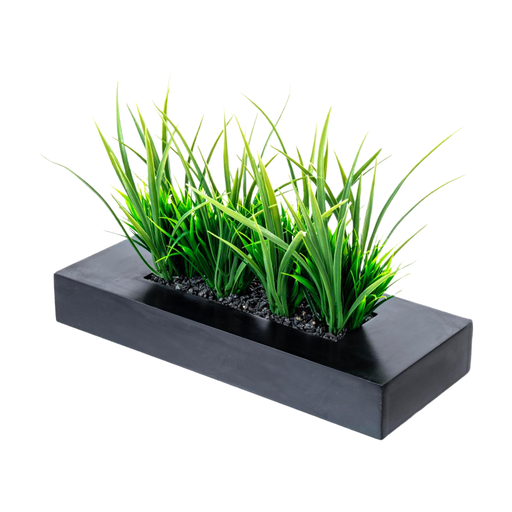
MATCH FOR: Offices and Windowless Areas
MyGift Large Artificial Green Grass Plants Potted in 14-Inch Matte Black Wood Decorative Planter

MyGift Large Artificial Green Grass Plants in Matte Black Wood Planter

Why This Fits Their Persona: Its elongated shape is ideal for sideboards, reception counters, or as a centrepiece in conference rooms. It creates a green, calming atmosphere in places where real plants wouldn't stand a chance.

How It Avoids the Trap

The solid, matte black wooden planter provides a stable and stylish base that is a far cry from a cheap plastic pot. The grass tufts are realistically arranged and do not have an artificial shine.

Key Advantage & Pros

Large-scale greenery in a low-maintenance format. The minimalist design complements almost any modern office decor.
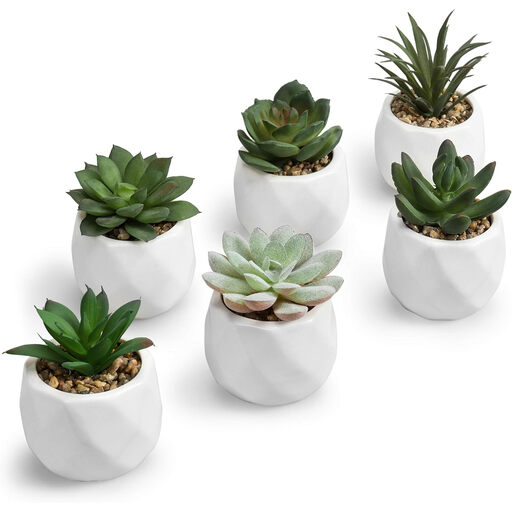
MATCH FOR: Flexible Decoration Fans
MyGift Mini Assorted Artificial Succulents in White Ceramic Pots, Set of 6

MyGift Mini Assorted Artificial Succulents in White Ceramic Pots, Set of 6

Why This Fits Their Persona: This set offers maximum flexibility. The six small, varied artificial succulents can be arranged as a group or distributed individually throughout the house—on a windowsill, in the bathroom, or as a small pop of colour on a bookshelf.

How It Avoids the Trap

Instead of one large, potentially unrealistic plant, this set focuses on small, detailed replicas. The high-quality, geometric ceramic pots are a clear upgrade from simple plastic pots.

Key Advantage & Pros

High versatility with six separate plants. The modern, white ceramic pots match many interior styles and are decorative in their own right.

Looking for more options?

We have compiled a complete, up-to-date list of products that fully meet these strict selection criteria and safety standards.

Frequently Asked Questions (FAQ)

What is the best way to clean indoor artificial plants?

Cleaning is straightforward. For light dust, gently wipe the leaves with a soft, dry microfibre cloth or a feather duster. For heavier dirt, you can clean the leaves with a slightly damp cloth. Avoid aggressive cleaning agents, as they could damage the colours or the material. A hairdryer on a cool setting can also help remove dust from hard-to-reach areas.

Do artificial plants really fade in the sun?

Yes, this is a real risk with lower-quality products. UV radiation breaks down the colour pigments in the plastic, leading to fading. However, high-quality artificial plants are made from UV-resistant materials or treated with a special coating that significantly slows down this process. If you plan to place a plant in a sunny spot, look for the manufacturer's specifications regarding UV resistance.

How can I identify high-quality, realistic-looking artificial plants?

Pay attention to the details. High-quality products are distinguished by several features:

  • Matte surfaces: Avoid overly shiny leaves.
  • Colour gradients: Natural plants rarely have a uniform colour. Look for models with subtle colour variations.
  • Textured leaves and stems: Do the leaves have a texture? Are leaf veins visible?
  • Weight and material of the pot: A heavy pot made of ceramic, cement, or wood is a good sign.
  • No visible moulding seams: Cheaper production methods often leave unsightly seams from the moulding process on stems and leaves.