
Lieferung heute & morgen

Qualitätsgarantie

Willkommens-Angebote freischalten: KOSTENLOSE Lieferung | Bis zu 80 % RABATT | Kostenlose 30-Tage-JoyPlus-Testphase
App herunterladen
Greenery in living and working spaces creates a pleasant atmosphere, but not everyone has the time or ideal lighting conditions to care for real plants. Artificial plants offer a practical alternative. However, the selection is vast, and the differences in quality are significant. A poor purchase often leads to disappointment with an unnatural-looking decoration that quickly disappears into a cupboard.
Before you make a decision, it's helpful to know the most common pitfalls that can lead to an unsatisfying purchase:
To avoid these problems, you should pay attention to a few key features when making your selection.
The quality of an artificial plant depends heavily on the materials used and their craftsmanship. Two to three core parameters are crucial for finding a durable and visually appealing decorative artificial plant.
The choice of material determines how realistic the plant looks. Common materials include:
Even if you're looking for low-maintenance indoor plants, their placement is crucial. If the plant will be on a windowsill or in a sun-drenched room, UV resistance is an important feature. Products labelled as UV-resistant are made with materials that slow down fading caused by sunlight. This is particularly relevant for artificial plants for the office or in your living room at home.
The pot is more than just a container; it's part of the overall design object. A heavy pot made of cement, ceramic, or solid wood not only ensures stability but also enhances the value of the entire decoration. In contrast, a simple, thin-walled plastic pot can make even the most realistic faux plant look cheap. Check the material and, ideally, the weight of the pot to assess its stability.
To make your choice easier, we have compiled a few products that are well-suited for different use cases and style preferences.
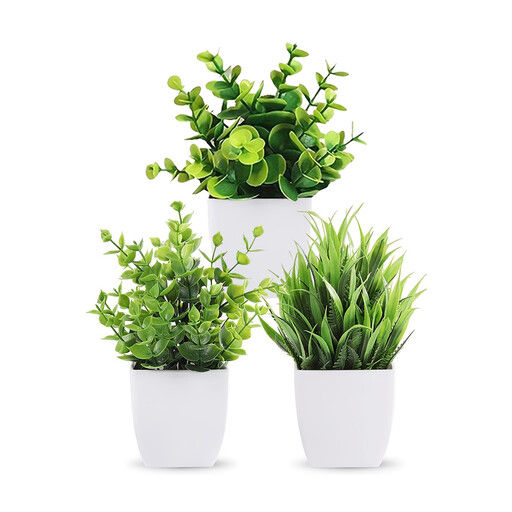
Why This Fits Their Persona: Ideal for anyone looking to add greenery to multiple areas like a desk, bathroom, and shelf on a limited budget. The set provides a cohesive and straightforward solution for starting out with artificial plant decor.
Purchasing a set creates a harmonious overall look. The compact size of the plants ensures that the plastic texture is less noticeable from a normal distance, and the simple white pot complements many interior styles.
Three plants to decorate multiple locations with a single purchase. The neutral look makes them versatile.
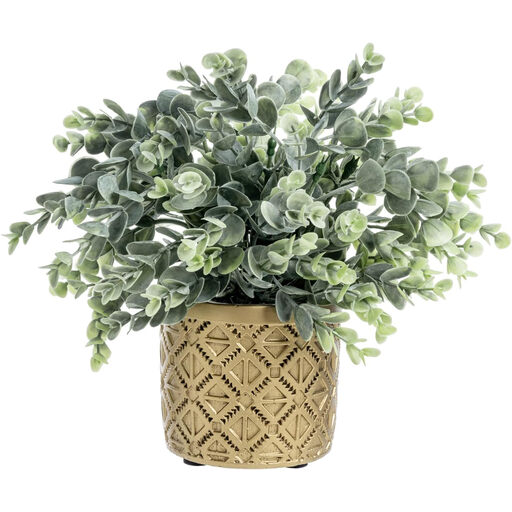
Why This Fits Their Persona: For design enthusiasts who use a plant as a deliberate style statement. The gold-toned cement pot with a geometric pattern is an eye-catcher on sideboards, shelves, or as a table centrepiece.
The heavy, high-quality cement pot solves the problem of instability and a cheap appearance. The focus is on the stylish object as a whole, making the plant feel like part of a thoughtful design.
Combines trendy artificial eucalyptus with a solid, decorative pot. Bottom protectors prevent scratches on furniture.
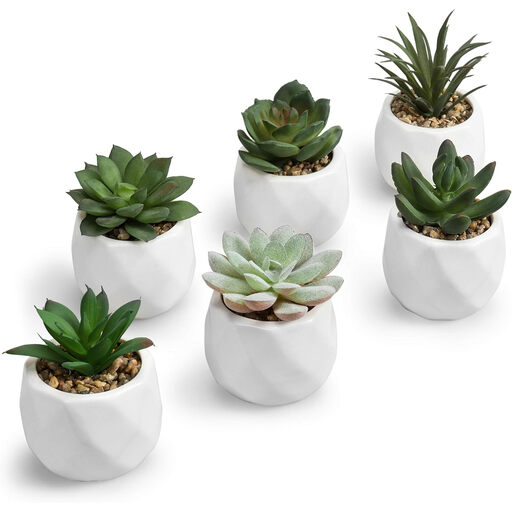
Why This Fits Their Persona: Perfect for decorating workspaces, narrow windowsills, or bookshelves. The set allows you to distribute small green accents without taking up valuable space or looking cluttered.
Artificial succulents often look especially realistic in a smaller size. The six different but coordinated plants in high-quality ceramic pots create a curated, modern overall look.
Six different designs in one set for varied decoration. The compact dimensions are ideal for limited spaces.
We've compiled a complete, up-to-date list of products that fully meet these strict selection criteria and UK regulations.
For regular cleaning, it's sufficient to remove dust with a soft, dry cloth, a brush, or a hairdryer on a cool setting. For heavier dirt, the leaves can be gently wiped with a slightly damp cloth. Avoid aggressive cleaning agents, as they can damage the surface.
Yes, plants without explicit UV protection can lose colour over time from the sunlight that passes through windows. If the plant is intended for a sunny spot like a windowsill or a conservatory, you should specifically look for "UV-resistant" in the product description.
A higher price is often an indicator of higher-quality materials, both for the plant itself and the pot. Factors such as the use of cement or ceramic instead of plastic for the pot, a more detailed replication of the leaves with colour gradients, and a more robust construction can influence the price. However, it's advisable to look not only at the price but also at specific product features like material, size, and UV protection.