
Lieferung heute & morgen

Qualitätsgarantie

Willkommens-Angebote freischalten: KOSTENLOSE Lieferung | Bis zu 80 % RABATT | Kostenlose 30-Tage-JoyPlus-Testphase
App herunterladen
Artificial plants and decorations are ideal for homes, offices, shops, weddings and seasonal events. They don’t need regular watering or a spot with plenty of natural light. However, not every decorative piece delivers the look you’re after. Small details such as proportions, materials and fixings can make all the difference to whether a decoration looks right in your space over time.
Photos can distort how an item will look in a room and how large it is. A wreath with a diameter of 45 cm might look understated on a large front door, while an 81 cm wreath could overwhelm a narrow hallway. Before you buy, compare its height, width, depth and weight with the space you have in mind.
Stability is also important for artificial floor plants. Tall plants in lightweight pots can tip over if placed in a walkway or near a door. You may want to use an additional decorative planter or a weighted base.
Materials such as UV-resistant plastic can help reduce fading in sunlight. However, that doesn’t automatically mean a decoration should be left out in the rain, frost, wind or high humidity all year round. If you’re choosing a product for outdoor use, check the manufacturer’s specific guidance.
An artificial wreath for your front door should be securely fastened. In strong winds, even a product described as weather-resistant may need extra securing. Battery-powered lights, such as those on an LED Christmas wreath, are often designed for indoor use only.
Many product descriptions state the number of tips, leaves or individual pieces. This is useful information, but it isn’t the only thing to consider. Branch structure, how easily the branches can be shaped and the distribution of colour matter just as much. Artificial plants and wreaths often need a little shaping after unpacking.
If you’re choosing artificial flowers, check whether the stems are flexible enough to arrange in a vase or display. For hanging plants, consider the length of the trailing stems and the strength of the wall fixing.
Plastic, PVC, PE, metal, rattan and cement each have different uses. PVC is often used for branches and needles. PE plastic can give leaves and flowers a textured surface. Metal rings or rattan bases provide structural support for wreaths.
For indoor spaces, appearance, weight and ease of cleaning are usually the main priorities. For outdoor areas, check details about UV resistance, moisture and the weather conditions the product can withstand. Don’t assume that ‘weatherproof artificial plants’ are suitable for year-round exposure to storms or frost.
Before ordering, make sure you know:
An artificial hanging plant with a wall bracket can brighten up a bare wall or shelving. Before installing it, check that the screws and wall plugs are suitable for your wall material. The fixings supplied with the product may not be suitable for every type of wall.
When choosing an LED Christmas wreath, check the power source, battery compartment, intended use and cable routing. Remove the batteries before storing the wreath for an extended period. Keep illuminated decorations away from naked flames, heaters and other strong sources of heat.
Even flame-retardant materials are still decorative plastics. Follow the manufacturer’s safety warnings. If a wreath has metal wires, take care when installing it so that no sharp ends are left exposed.
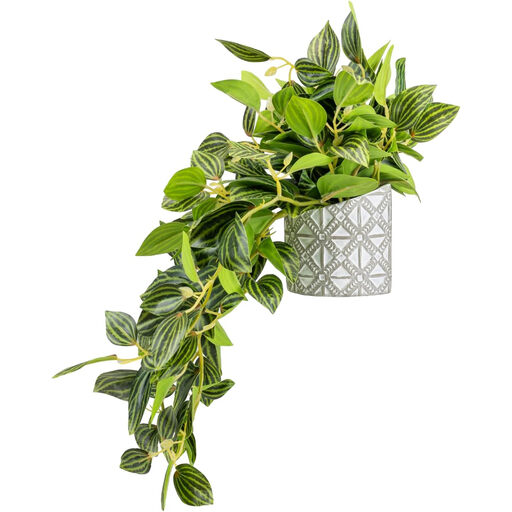
Why it suits this need: This compact artificial hanging plant is designed for indoor use and comes with a decorative cement pot and fixings. It’s ideal for walls, living rooms, bedrooms or offices.
The stated dimensions of around 7.9 × 30 × 46 cm make it easier to plan where to hang it. Its clear indoor-use labelling helps you avoid expecting it to withstand outdoor conditions.
No watering or pruning needed; a round cement pot with an embossed pattern and standard fixings included.

Why it suits this need: This eucalyptus wreath combines eucalyptus leaves, boxwood and berries on a rattan base. With an outside diameter of around 61 cm, it’s a good fit for larger doors, entranceways and interior walls.
The details about its PE plastic and rattan materials, along with the UV-resistance information, make it easier to choose with confidence. Additional securing is still recommended in extreme weather.
A generous size, adjustable leaves and berries, and easy hanging using the integrated rattan base.
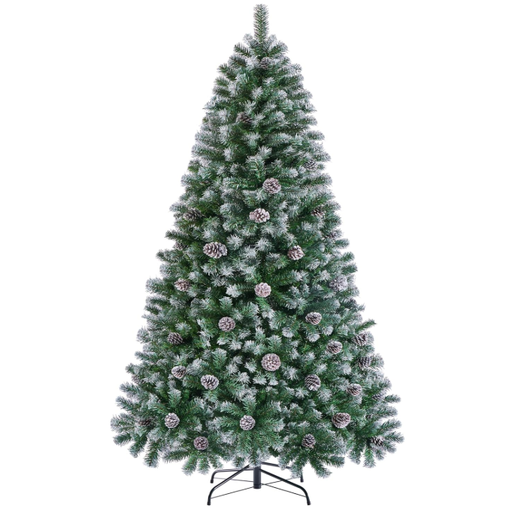
Why it suits this need: This artificial Christmas tree is 228 cm tall and has 1,346 tips, pine cones and a foldable metal stand. It’s a practical choice for seasonal displays you bring out year after year, as well as event spaces.
The specific height, number of tips and stand size make it easier to plan where the tree will go. The manufacturer lists PVC and metal as materials and notes that the product must be kept away from heat sources and naked flames.
Decorative details already in place, no watering needed and a foldable metal stand for easy storage after the season.

Why it suits this need: This 81.2 cm boxwood wreath is designed for personalised displays. Add extra leaves, pine cones, ribbons or seasonal decorations to suit the occasion.
Its generous diameter makes it easier to picture how it will look on a wide door or wall. UV resistance is listed, but prolonged exposure to extreme weather conditions is not recommended.
A base design that works all year round, integrated hooks and iron rings, and the flexibility to customise it for different occasions.
Easy-care decorations don’t need watering, but they should still be dusted regularly. Use a soft cloth or a hairdryer on a low, cool setting to clean delicate leaves and branches. Harsh cleaning products can damage plastic surfaces.
To help your decorations last as long as possible:
We’ve put together a complete, regularly updated list of products that meet these strict selection criteria and the safety requirements in force in the EU.
For lightweight wreaths, a suitable hook should be enough, depending on the surface. For larger designs, consider their weight, the door material and how much wind they’ll be exposed to. Position the fixing so that the wreath can’t fall down or get in the way of opening the door.
Their lifespan depends on the material, construction, storage and where they’re used. Indoor spaces without direct sunlight tend to put less strain on colours and plastics than outdoor areas. UV-resistant materials can help reduce fading, but they don’t replace protection from extreme weather conditions.
Battery-powered LED wreaths don’t need to be plugged in. Their running costs mainly come from battery use, which depends on how long the lights are on, the type of batteries and the number of LEDs. If you won’t be using the wreath for a while, remove the batteries to prevent damage from leaks.