
Lieferung heute & morgen

Qualitätsgarantie
App herunterladen
Kategorien
The primary function of decorative objects is to visually enhance a space. Artificial plants offer a consistent aesthetic quality without the biological requirements of their living counterparts. Factors such as insufficient light, a lack of time for care, or the need for a permanently consistent look in commercial spaces make faux plants a functional decor solution. This article analyses the criteria for selecting artificial plants and presents specific models based on their material and design characteristics.
The quality and suitability of an artificial plant can be assessed based on objective characteristics. An informed decision is based on an analysis of the material, workmanship, and overall design of the arrangement.
The choice of material directly influences the plant's look, feel, and durability.
The planter is an essential component of artificial plant decor and significantly defines its style.
High-quality faux plants for the office and home are distinguished from simpler models by their precision of detail.
Based on the criteria mentioned, we present three products that are suitable for different areas of application due to their specific material combinations and design.
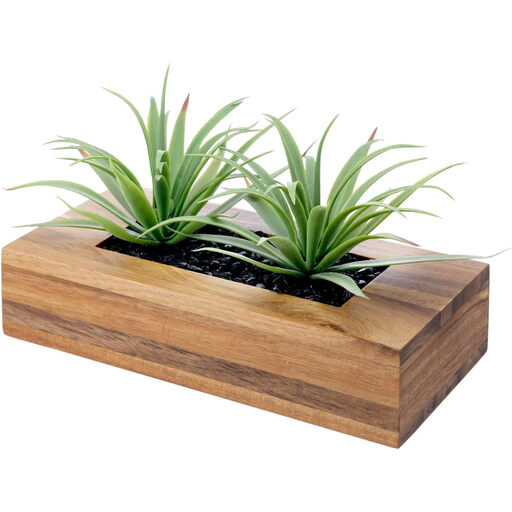
Why We Recommend This Product The combination of a solid acacia wood planter box and detailed faux grass sprigs creates a balanced aesthetic between natural warmth and modern design. The elongated, low-profile shape, with a length of 23.9 cm, is specifically designed for use on narrow surfaces like windowsills, mantelpieces, or as modern table decor.
Advantages (Pros)
Who It's For This product is suitable for individuals and businesses looking for a subtle yet stylish green accent for desks, reception counters, or shelves, who also value a natural material aesthetic.
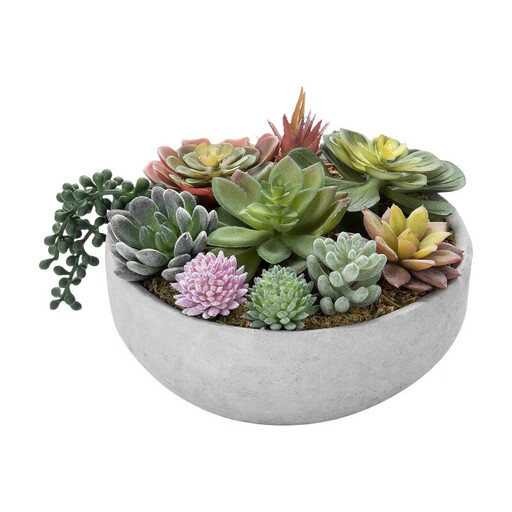
Why We Recommend This Product This arrangement combines a variety of artificial succulents in a round, grey concrete bowl. The material contrast between the green plants and the cool concrete creates a distinct industrial-modern look. With a diameter of around 20 cm, it serves as a compact yet prominent focal point.
Advantages (Pros)
Who It's For Suitable for decorating modern living and working environments. The arrangement fits well on coffee tables, side tables, or in reception areas that follow a minimalist or industrial design style.
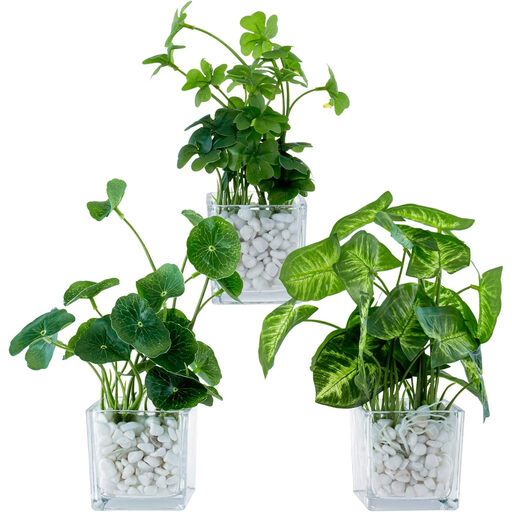
Why We Recommend This Product This set consists of three individual potted artificial plants (in glass vases), allowing for great flexibility in decoration. They can be arranged as a group or distributed in different locations throughout a room. The transparent glass vases with white decorative stones create a bright, clean, and fresh aesthetic.
Advantages (Pros)
Who It's For Ideal for users who want to create several small accents, for example, on a tiered shelf, a bathroom counter, or a wide windowsill. The set is also a practical solution for reusable table decor at events.
The products featured cover specific use cases and design styles. If you are looking for different sizes, plant types, or planter materials, our range offers a wider selection. For an overview of more models, from small artificial plants to larger floor plants, please visit our artificial decorative flowers category.
1. How realistic is modern artificial plant decor? The degree of realism in modern artificial plants depends significantly on the materials used and the quality of workmanship. High-quality models often use PE plastics or coated textile fabrics, which allow for a true-to-life feel and appearance. Features like multi-tonal colour gradients on the leaves, replicated leaf veins, and intentionally incorporated small irregularities are crucial for an authentic look.
2. How are artificial plants cleaned and maintained? Maintenance is minimal. Regular dusting with a soft cloth, a brush, or a duster is usually sufficient. For heavier soiling, a slightly damp microfibre cloth can be used. You should avoid using harsh cleaning agents, as they could damage the colours and materials.
3. What are the advantages of faux plants for the office and home? The functional advantages are numerous: