
Lieferung heute & morgen

Qualitätsgarantie

Willkommens-Angebote freischalten: KOSTENLOSE Lieferung | Bis zu 80 % RABATT | Kostenlose 30-Tage-JoyPlus-Testphase
App herunterladen
Artificial plants and flowers can bring lasting decoration to living rooms, offices, balconies and event venues, without the need for watering, repotting or finding a suitable spot with natural daylight. However, not every product will be right for you. Product images can make colours and foliage look fuller than they do in a room. Material descriptions such as ‘silk-like’ or ‘realistic’ also reveal little on their own about size, flexibility or suitability for different settings.
The most common buying pitfalls usually come down to three things:
Check these points before you buy and you’ll find it easier to choose a decoration that suits your room, how you plan to use it and your budget.
When choosing artificial potted plants, consider not just the overall height but also the pot diameter, width and footprint. Compact artificial succulents are a good choice for shelves and desks. An artificial plant measuring 85 or 90 cm tall, on the other hand, needs enough space beside a sideboard, reception desk or TV unit.
For hanging arrangements, length and width are key. An artificial hanging flower measuring around 75 cm long can be draped over a balcony planter, wall or hanging basket. Flexible stems make it easier to adapt the arrangement to different fixtures.
Plastic leaves, fabric flowers and so-called silk flowers are often used indoors. Look for a clear description of the material and consider the look you want:
For artificial plants for outdoors, check whether the product is specifically described as suitable for outdoor use, UV-exposed spots or covered areas only. Even with UV-resistant materials, a sheltered position is recommended, as weather, moisture and frost can affect how long the plant lasts.
Low-maintenance artificial plants don’t need watering or regular feeding. However, dust can collect on leaves and flowers. A soft, dry cloth is enough for many products. Some outdoor arrangements may also be carefully rinsed, according to the product description.
After unpacking, stems and leaves often need to be gently pulled apart or shaped by hand. This isn’t a fault; it’s normal for products packed compactly for delivery. Check whether the stems are reinforced with wire or flexible, and whether you can use the arrangement without any additional assembly.
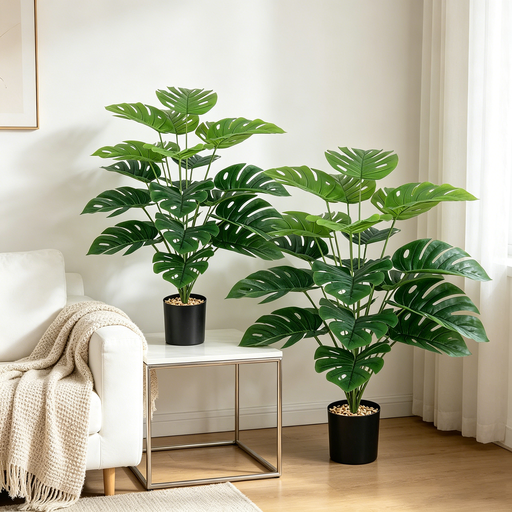
Why this product suits these needs: This set includes two artificial potted plants, each 85 cm tall, making it a good choice if you’d like to decorate several areas in a coordinated style.
The height, quantity and plastic material are specified. You can arrange the stems and leaves before displaying the plants, so you won’t mistake their shape in the packaging for how they’ll look once arranged.
Two pots with decorative stone filling; suitable for living rooms, offices, bedrooms and other indoor spaces.
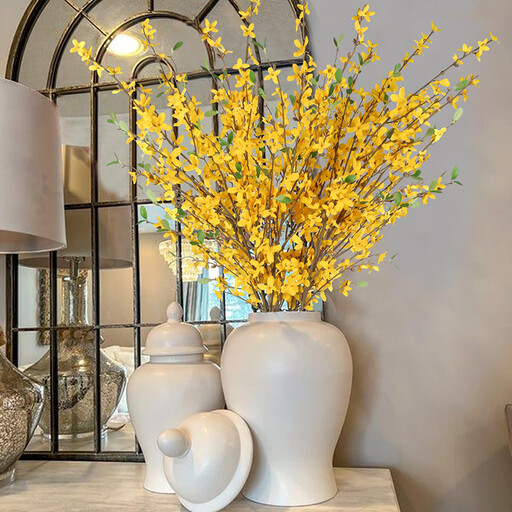
Why this product suits these needs: Three 100 cm silk-fabric branches with flexible stems give you plenty of options for vases, table decorations, wreaths and floral arrangements.
The material, length, quantity and flexibility are clearly described. This makes it easier to decide in advance whether the branches will suit your vase or decorating plans.
Three long branches with yellow flowers; described as suitable for indoor spaces and covered outdoor areas.
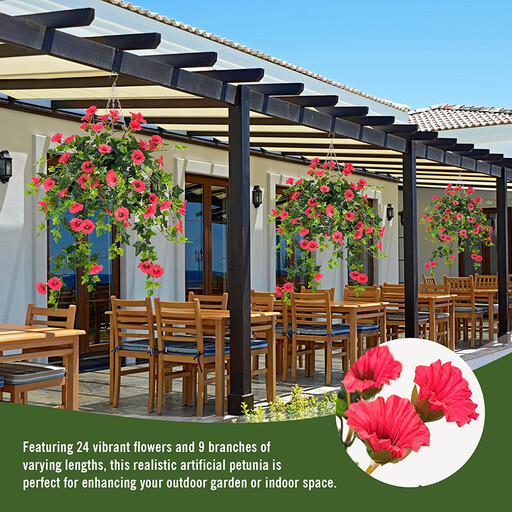
Why this product suits these needs: These two hanging arrangements, each around 75 cm long and 30 cm wide, are designed for balconies, patios, railings and hanging baskets.
The product description specifies UV-resistant silk fabric, 24 flowers and two buds per arrangement, plus a flexible central stem. These details help you plan how full the display will look and how to secure it.
Listed as suitable for indoor and outdoor use; flexible design for baskets, railings and walls; clean with a soft cloth or rinse carefully.
For desks, reception areas and small shelves, artificial succulents in compact pots are also a practical choice. An arrangement in a concrete pot or a set of six small ceramic pots takes up little space and can be split between several rooms. For seasonal displays, weddings or shop windows, artificial flowers with flexible stems can be rearranged time and again.
We’ve put together a complete, regularly updated list of products that meet these strict selection criteria and fully comply with the safety regulations in force in the EU.
First, gently pull the stems and leaves apart. Then look at the plant from different angles and turn it so that any gaps are distributed as evenly as possible. For hanging flowers, you can adjust the flexible stem to fit a basket, wall or railing. Make sure the fixture is secure and won’t create a trip or falling hazard.
How long they last depends on the material, workmanship, location and cleaning. Keeping them indoors and out of direct sunlight helps protect their colours and fabric. Outdoors, only use products whose descriptions specifically confirm that they’re suitable for this, for example by stating that they’re UV-resistant. Frost, heavy moisture and prolonged direct sunlight can still affect their appearance.
Unlike real plants, artificial plants don’t cost anything to water, feed or repot, and you won’t need to buy compost. It’s still a good idea to dust them from time to time. For larger artificial plants, also consider how stable they’ll be and whether they may need to be secured. This helps you incorporate artificial plants into your home or office décor in a way that suits your space and lasts.