
Lieferung heute & morgen

Qualitätsgarantie

Willkommens-Angebote freischalten: KOSTENLOSE Lieferung | Bis zu 80 % RABATT | Kostenlose 30-Tage-JoyPlus-Testphase
App herunterladen
An artist paint brush set should allow you to create fine lines, fill areas of colour evenly and achieve controlled blends, depending on your technique. In practice, however, a low-cost set is not always put together in a useful way. Some brushes quickly lose their shape, while others cover only a limited range of sizes or are unsuitable for the paint you use.
This buying guide helps artists, art students, hobby painters, model makers and DIY enthusiasts choose a suitable set for acrylic, watercolour, gouache or oil paints.
Sets with lots of brushes look appealing at first glance. What matters, however, is whether they actually include different shapes and sizes. Ten almost identical flat brushes offer less flexibility than six well-graduated round and flat brushes.
So check the following before buying:
Descriptions such as “Professional”, “High Quality” or “Precision” reveal little on their own about how practical a brush will be for everyday use. More useful are specific details about bristle material, ferrule, handle and care instructions.
A synthetic brush can be a practical choice for many water-based paints. It is important that the product description clearly identifies the filaments and provides cleaning instructions. A corrosion-resistant ferrule also reduces the risk of the connection deteriorating quickly with regular cleaning.
Very fine brushes for miniatures are unsuitable for large areas of canvas. Conversely, broad flat brushes can only be used to a limited extent for eyes, outlines, model components or small ornaments. A well-balanced detail brush set should therefore suit both the format and the painting technique.
For most hobby and study projects, synthetic filaments are versatile. They can generally be cleaned with water when used with water-based paints and retain their shape when properly cared for. Brushes used with gouache, watercolour and acrylics should be rinsed promptly after use.
Also look out for:
A round brush is typically suitable for lines, outlines, dots and smaller areas. A flat brush supports broad strokes, edges, base coats and the application of areas of colour. Filbert brushes combine a flat shape with a rounded tip and can be useful for softer transitions.
Anyone looking for a brush set for acrylic paint should look for a combination of several round and flat brushes. For watercolour techniques, controlled paint pickup is important. For brushes for gouache and oil paint, check the specific manufacturer’s information, as the paint, thinner and cleaning routine all affect the strain placed on the material.
Even a well-made set can be damaged by incorrect cleaning. Always follow the care instructions for the individual product.
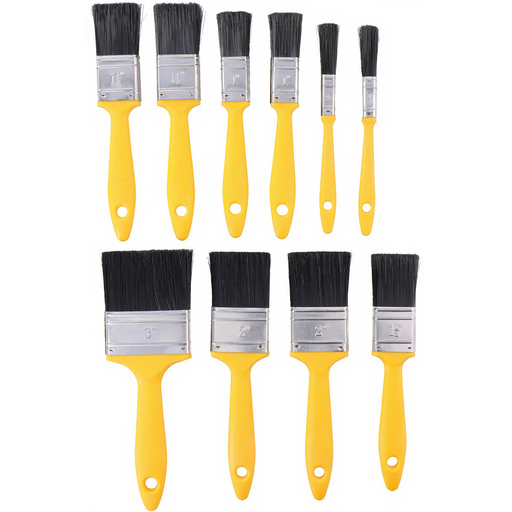
Why this product suits this profile: The selection covers sizes from 12 mm to 75 mm, making it suitable for hobby projects, craft work and larger areas of colour.
The different widths prevent you from ending up with a collection of almost identical brushes. According to the product description, the synthetic PET filaments are intended for acrylic, oil and watercolour paints.
Ten flat brushes, a size range from 12 to 75 mm and rust-resistant, gold-plated iron ferrules according to the product data.
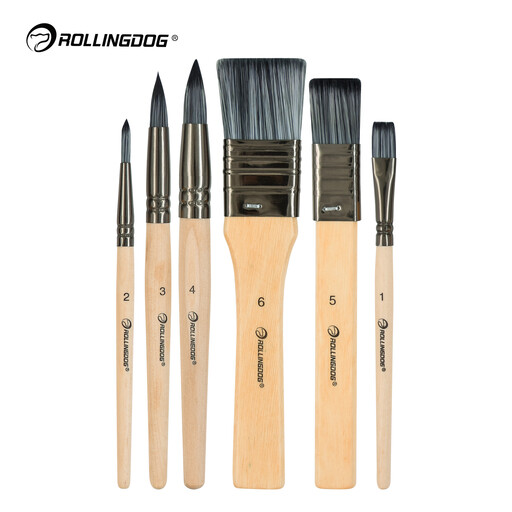
Why this product suits this profile: The combination of round and flat brushes supports detailed work on paper, canvas and other painting surfaces.
The set specifies the sizes: three flat brushes measuring 8, 15 and 25 mm, plus three round brushes measuring 4, 8 and 10 mm. This makes the range of uses clear.
Synthetic filaments, nickel-plated ferrules and wooden handles; according to the product information, the brushes are intended for gouache, watercolour and acrylics.
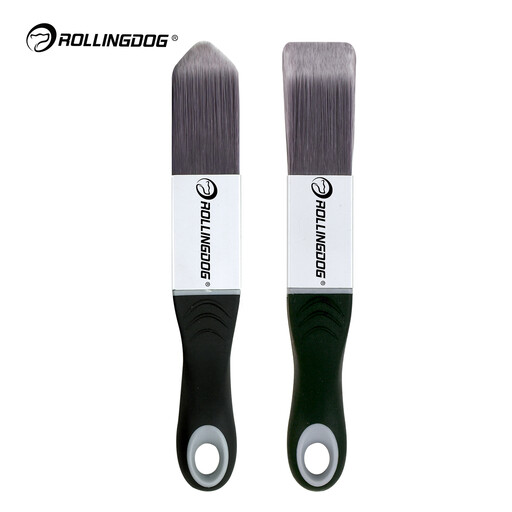
Why this product suits this profile: Model makers, miniature painters and DIY users receive two specially shaped brushes for controlled detail work and touch-ups.
The product data lists two different head shapes measuring 22 and 24 mm respectively. This means the selection is defined not just by the number of brushes, but by the intended brushstroke effect.
Tapered round filaments and aluminium ferrules according to the product description; specified for detailed work and various types of paint.
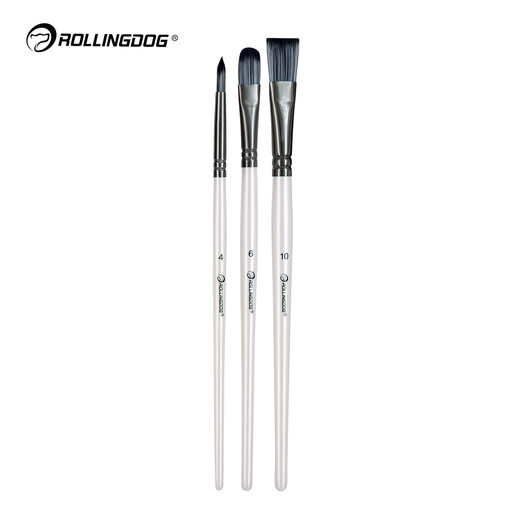
Why this product suits this profile: The set combines a flat brush, a filbert brush and a round brush for details, transitions and base coats.
The three clearly named brush types make it easier to choose a set based on its uses rather than simply the number of brushes included.
According to the product data, includes a #10 flat brush, #6 filbert brush and #4 round brush with synthetic filaments and coated wooden handles.
We have put together a complete, regularly updated list of products that fully meet these strict selection criteria and the safety regulations applicable in the EU.
For beginners, three to six well-graduated brushes are often enough. At a minimum, you should have a round brush for details and a flat brush for larger areas. If you regularly use different techniques, additional sizes or a filbert shape can extend the range of applications.
For miniatures, fine brushes for miniatures with a controlled tip and slim handle are particularly practical. Care is just as important as shape: paint residue should not be allowed to dry, and the tip should be carefully reshaped after cleaning.
It is not possible to give a reliable fixed lifespan. It depends on how frequently the brushes are used, the type of paint, the cleaning product and how they are stored. Cleaning brushes immediately after use, not leaving them soaking and protecting the filaments can reduce common causes of wear. Before buying, compare not only the price and number of brushes, but also material details, sizes and care instructions.