
Lieferung heute & morgen

Qualitätsgarantie

Willkommens-Angebote freischalten: KOSTENLOSE Lieferung | Bis zu 80 % RABATT | Kostenlose 30-Tage-JoyPlus-Testphase
App herunterladen
Choosing the right drawing tool is a fundamental decision for artists and illustrators. The market for artist pencils is diverse, offering specialised products for every technique and requirement. Whether for quick sketching pencils, detailed graphite pencils for drawing, or expressive charcoal work—the properties of the pencil significantly influence the final result. This guide will help you understand the features of different pencils and make an informed choice for your artistic projects.
Navigating the wide range of professional drawing pencils can be a challenge. The following criteria provide an objective basis for your decision.
The hardness of a graphite lead determines the lightness and texture of the line. The scale ranges from hard (H) to soft (B) grades.
For versatile work, a selection of different hardness grades in a drawing pencil set is often a practical solution.
In addition to classic graphite, there are specialised leads for unique effects.
The choice between individual pencils and a set depends on your specific needs.
Here, we present a selection of pencils that are notable for their specific properties, catering to different artistic demands.

What Makes It Stand Out The STAEDTLER Mars Lumograph Jumbo is designed for large-scale and expressive work. Its standout feature is the extra-thick 5.3 mm diameter lead, which allows for a robust and rich application. According to the manufacturer, a special lead formula ensures consistent, reproducible results with a metallic shimmer.
Objective Features
Who It's For This pencil is an excellent choice for artists who frequently work on a large scale, sketch, or cross-hatch. The thick lead provides excellent coverage and stability not found in standard pencils.
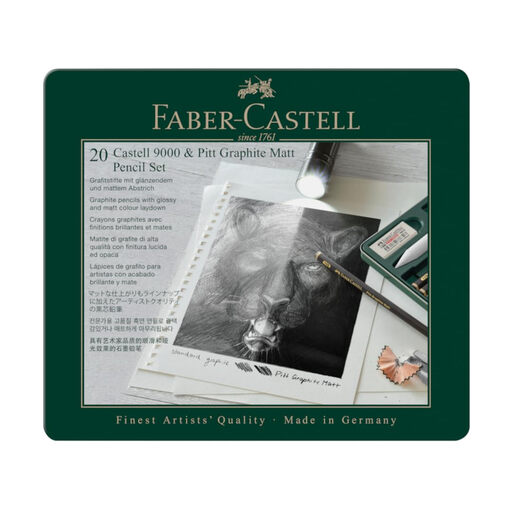
What Makes It Stand Out This drawing pencil set combines two Faber-Castell product lines: the innovative Faber-Castell Pitt Matt pencils and the classic Castell 9000. The Pitt Matt pencils are designed to reduce light reflections and create a deep matte finish. The set is completed with accessories like an eraser, a kneadable eraser, a paper stump, and a sharpener, all housed in a metal tin.
Objective Features
Who It's For This set is aimed at artists and illustrators looking for a comprehensive kit for various drawing techniques. It is particularly appealing for users who want to leverage both the classic sheen of graphite and the benefits of a low-reflection, matte finish.
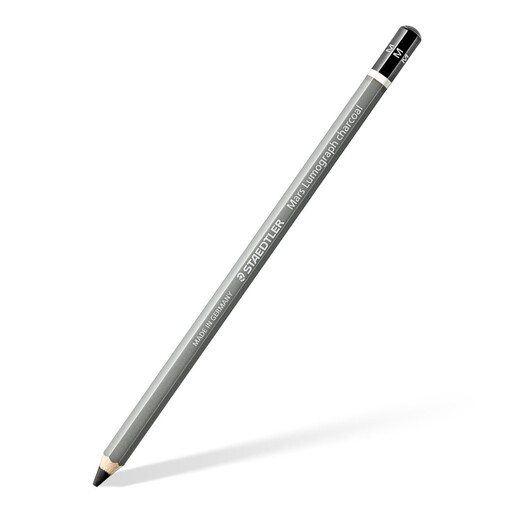
What Makes It Stand Out This charcoal pencil from STAEDTLER contains a lead made of compressed charcoal and soot. According to the manufacturer, this composition allows for an exceptionally deep black, matte stroke. With a hardness grade of S (Soft), it offers a very soft and rich laydown, perfect for expressive and high-contrast drawings.
Objective Features
Who It's For This pencil is designed for artists who appreciate the intense blackness of charcoal but prefer the control and clean handling of a wood-cased pencil. It is a great choice for portraits, still lifes, and any work where strong contrasts are desired.
The selection presented here covers specific applications. If you are looking for other alternatives, different hardness grades, or additional art supplies, you can find a broader overview in our category.
? Discover our entire range of Stationery
1. What is the difference between H and B pencils? H-grade pencils (e.g., 2H, 4H) have a hard lead with a high clay content and produce light, fine lines. B-grade pencils (e.g., 2B, 6B) have a soft lead with a high graphite content and create dark, rich strokes. H-pencils are suitable for technical drawings and underdrawings, while B-pencils are best for shading and sketching.
2. How can you prevent graphite and charcoal drawings from smudging? Soft graphite and especially charcoal drawings are prone to smudging. To protect a finished drawing, using a fixative spray is recommended. This creates a thin, transparent protective layer over the drawing, setting the pigments on the paper. While drawing, placing a spare sheet of paper under your hand can help prevent accidental smudging.
3. Are more expensive artist pencils worth the money? The price of artist pencils often correlates with the quality of the materials used. Higher-priced pencils frequently feature a higher pigment concentration, a more uniform lead consistency, and greater break-resistance. The wood often comes from certified sustainable forestry and is better bonded, which makes sharpening easier. Whether the investment is worthwhile depends on your personal standards for materials and your intended use.