
Lieferung heute & morgen

Qualitätsgarantie

Willkommens-Angebote freischalten: KOSTENLOSE Lieferung | Bis zu 80 % RABATT | Kostenlose 30-Tage-JoyPlus-Testphase
App herunterladen
By Joybuy Product Recommendation Officer, August 28, 2026
Choosing the right artist pens can make or break a creative project. However, the market is flooded with products whose marketing claims often fall short. Many creators know the disappointment: you invest in a new set, only to find that the ink bleeds through the paper, the tips become unusable after a short time, or the colours lose their vibrancy when exposed to light. These issues lead not only to frustration but also to unnecessary expenses.
This guide focuses on the objective criteria that truly matter. We'll highlight the three most common pitfalls when buying artist pens and show you what to look for to make an informed decision—for durable tools that support your creativity, not hinder it.
Before investing in new pens, it's helpful to know the typical flaws that often only become apparent after purchase.
To avoid the problems mentioned above, you should check three technical specifications before buying. These provide reliable indicators of a pen's quality and suitability for your purposes.
The type of ink largely determines the pen's behaviour on paper.
The tip defines a pen's range of application. The most common types for drawing pens for artists are:
Lightfastness indicates how resistant the colours are to fading from light exposure. This is a critical quality feature, especially for works that are meant to be preserved for a long time. Manufacturers like Faber-Castell often use a star rating system on the pen barrel to indicate this:
Pens without such a rating generally offer no guaranteed light resistance and are better suited for practice or digital archiving.
Based on these objective criteria, we have compiled a selection of products suitable for specific user profiles.
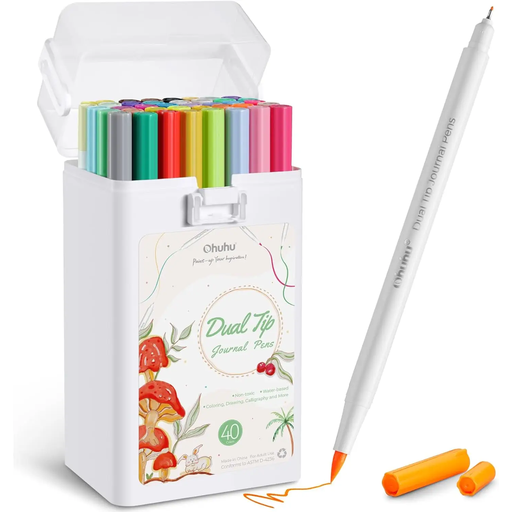
Why This Fits Their Persona: This set offers a wide variety of colours and a flexible dual tip (brush and fineliner). It's ideal for hobby artists who want to try out different techniques without immediately investing in multiple specialised sets. Perfect for designing journals or as a versatile adult colouring set.
The quick-drying, water-based ink minimises the risk of bleed-through on suitable, thicker paper. The durable tips are designed for long-lasting use and resist fraying under normal conditions.
Dual Tip: Combination of a 0.4 mm fineliner and a 1-5 mm brush tip for maximum versatility. Large Colour Selection: 40 colours including a colour chart for organisation.
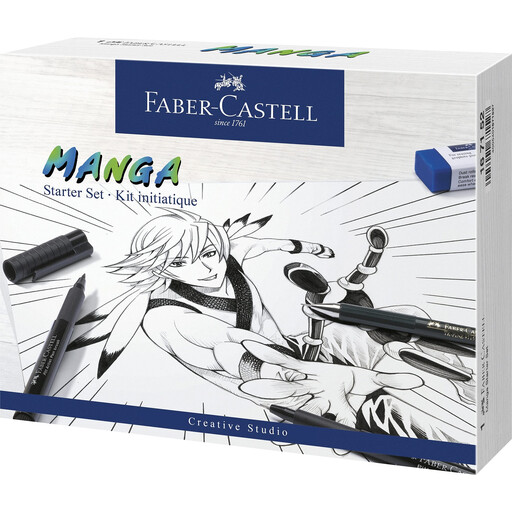
Why This Fits Their Persona: This set is specifically tailored to the needs of manga artists. It includes not only pens but also a mechanical pencil, an eraser, and a manikin. The included Faber-Castell Pitt Artist Pen pens are an established standard for professional illustrations.
The pigmented ink is waterproof after drying and does not bleed through, preventing outlines from smudging during colouring. The high lightfastness ensures the longevity of the artwork.
Waterproof Pigment Ink: Ideal for painting over with other media. Complete Set: Includes fineliners in various widths (XS, M) and a brush tip (B), plus accessories to get started right away.

Why This Fits Their Persona: Anyone who works extensively with coloured or graphite pencils knows the problem of broken leads and uneven points. An electric sharpener for coloured pencils solves this problem efficiently and protects expensive pencils. This model is designed for a wide range of pencil diameters (6-12 mm).
It avoids the frustration of manual sharpeners, which often break soft coloured pencil leads. The auto-stop function prevents over-sharpening and material waste. The adjustable point settings (sharp, medium, blunt) give the artist full control.
Adjustable Points: Three sharpness levels for different drawing techniques. Safety Features: Auto-stop for a perfect point, when the lid is open, or in case of overheating.
We have compiled a complete, up-to-date list of products that fully meet these strict selection criteria.
Most manufacturers recommend storing pens with liquid ink, especially those with dual or brush tips, horizontally. This ensures that the ink flows evenly to both tips and prevents one side from drying out. According to manufacturer guidelines, pens with pigment ink, like the Faber-Castell Pitt Artist Pen, should also be stored flat to ensure even pigment distribution.
Lightfastness describes the resistance of colour pigments to fading caused by light exposure, particularly UV radiation. High lightfastness is crucial for artwork intended for display or long-term preservation. Look for ratings like the star system (*** for maximum lightfastness) or specific standards such as ASTM D6901.
To minimise bleed-through, choosing the right paper is just as important as choosing the right pen. For markers and ink pens, papers with a smooth, coated surface and a higher weight (grammage), such as special marker paper, Bristol board, or mixed-media paper from 180 g/m? upwards, are ideal. These papers prevent the ink from penetrating too deeply into the fibres.