
Lieferung heute & morgen

Qualitätsgarantie

Willkommens-Angebote freischalten: KOSTENLOSE Lieferung | Bis zu 80 % RABATT | Kostenlose 30-Tage-JoyPlus-Testphase
App herunterladen
The selection of arts and crafts products for children is vast, and making a choice is often difficult. Many parents and grandparents are looking for a meaningful gift for creative kids—one that not only entertains but also supports their development. However, the market is flooded with products whose marketing promises don't hold up in practice. Before you invest, it's helpful to know the most common pitfalls to avoid disappointment and unnecessary expenses.
This guide will help you establish objective criteria for your selection and identify products that are genuinely suitable for everyday family life.
When purchasing arts and crafts supplies for children, several recurring issues can quickly spoil the fun.
To make an informed decision, focus on a few crucial product features. These will help you assess a product's quality independently of its advertising claims.
Especially with products for toddlers, who are prone to putting things in their mouths, material safety is non-negotiable. Pay attention to the following points:
A good educational toy for developing fine motor skills must be adapted to the child's motor abilities.
A creative toy should enrich daily life, not complicate it.
Based on the criteria mentioned, we have identified several products suitable for different needs and age groups.
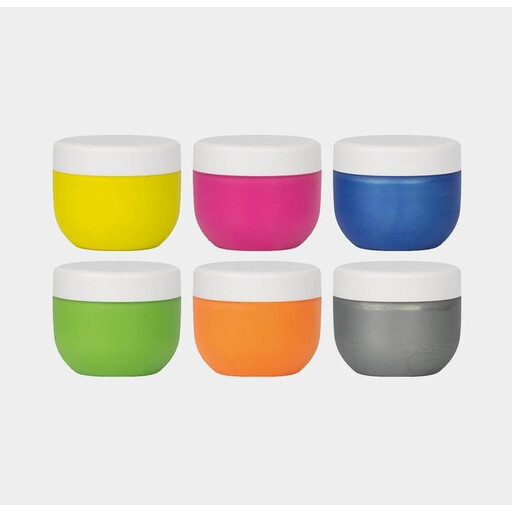
Why this product is a great fit: Ideal for toddlers from 2 years old who are discovering the world with their hands. The paints promote sensory perception and initial creative experiences without the pressure of having to hold a pen.
According to the manufacturer, the paints are dermatologically tested, paraben-free, gluten-free, lactose-free, and vegan. This goes beyond vague "non-toxic" claims and offers verifiable safety features.
The creamy consistency is made for little hands, and according to the manufacturer, the paints can be washed out of most textiles at 30°C, making cleanup easier.
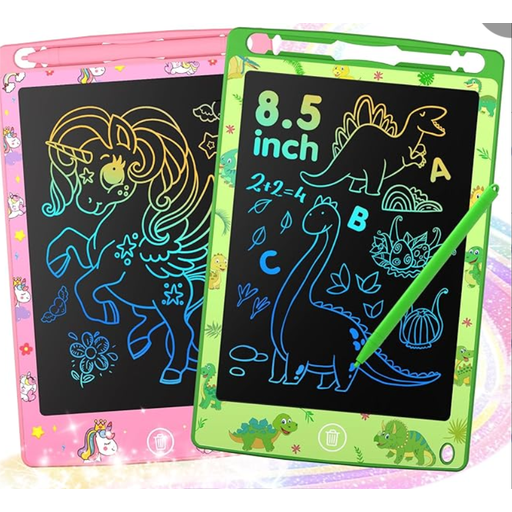
Why this product is a great fit: This set is an ideal travel toy. It's lightweight, slim, and allows for drawing without pens, paper, or mess. Perfect for car rides, restaurants, or the waiting room.
It's a reusable alternative to short-lived gadgets. According to the manufacturer, the ABS plastic casing is shock- and wear-resistant and meets EU REACH and toy safety standards.
The set includes two tablets, ideal for siblings. The screens can be cleared with the push of a button and feature a lock function to protect artwork from accidental deletion.
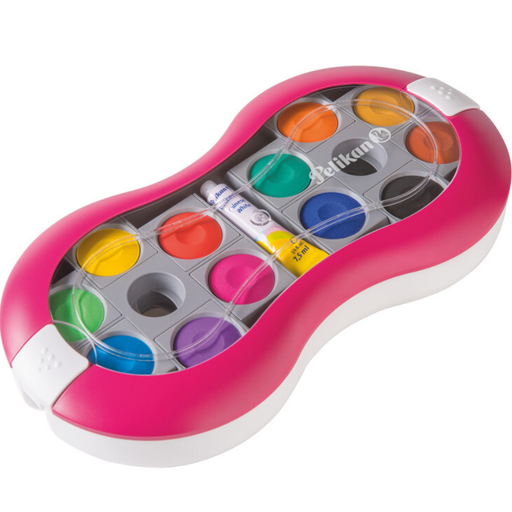
Why this product is a great fit: This paint set for kids offers a wide variety of colours and large mixing pans that invite experimentation. It's suitable for school-age children who want to get creative beyond the basic colours.
Instead of being a short-lived set, this paint box is designed for durability. The paint pans are replaceable and, according to the manufacturer, are made from 95% recycled plastic.
The 24 lightfast pigment colours offer high opacity. The sturdy box with 10 large mixing pans and a tube of opaque white provides equipment that is also suitable for art class at school.
We have compiled a comprehensive, up-to-date list of products that fully meet these strict selection criteria and European safety regulations.
1. What should I pay special attention to with finger paints for toddlers? Prioritise verifiable safety. Look for products explicitly labelled as "dermatologically tested" that comply with the EN 71 standard. A water-based formula is also important, as it makes cleaning hands and surfaces much easier. Details like "paraben-free" are additional quality indicators.
2. Are LCD drawing tablets a good alternative to paper? For certain situations, yes. They are an excellent travel toy because they are reusable, produce no waste, and keep hands clean. However, they cannot replace the tactile experience of real paper and pens, which is also important for developing writing motor skills and a feel for pressure. A combination of both is often a good approach.
3. From what age do thick crayons make sense? Thick crayons for ages 3 and up are generally a good choice, often even a bit earlier, from around 2.5 years. At this age, children are developing the tripod grip, and the thick shape makes it easier to hold the crayon correctly and steadily. Additionally, the lead is less likely to break under the uncoordinated pressure of young children compared to thin pencils.