
Lieferung heute & morgen

Qualitätsgarantie

Willkommens-Angebote freischalten: KOSTENLOSE Lieferung | Bis zu 80 % RABATT | Kostenlose 30-Tage-JoyPlus-Testphase
App herunterladen
Arts and crafts materials for children should inspire creativity, be easy to use and suit your child’s age. But parents, grandparents, nurseries and schools are faced with a huge choice. Craft kits for children, art supplies, modelling clay, markers, drawing pencils and DIY craft kits can differ significantly in how they’re used, what they’re made of, how they’re stored and the safety information provided.
The criteria below can help you look beyond marketing claims and choose art supplies that are right for how they’ll actually be used.
A product with lots of individual pieces might look appealing on the packaging, but it may not be suitable for a younger child. Small beads, modelling tools or removable lids can pose a choking risk. Products containing small parts need to be checked particularly carefully if they’re intended for children under three.
Motor skills matter, too. Toddlers can usually grip thick wax crayons or short, round pencils more easily than slim drawing pencils. You can choose from a wider range of options as children move on to nursery and school.
When used for watercolour markers or washable markers, this description doesn’t necessarily mean that every surface will come clean without leaving marks. Washability can vary depending on the fabric, how long the stain has been left and the surface it’s on. Wipe-clean tables, protective mats and clothes suitable for creative activities are therefore useful.
A large craft set for children may include lots of colours and accessories that rarely get used. What matters more is clear instructions, sturdy storage and materials suited to the project you have in mind. For a short activity on the go, for example, a compact set is more practical than a large art kit with lots of individual components.
The manufacturer’s age recommendation is a useful starting point. You should also check what’s included:
You should also consider supervision when choosing arts and crafts materials for nursery or school. A material that works at home with an adult alongside may need more organisation and oversight in a larger group.
When choosing paints, glitter glue and modelling clay for children, check the material details, cleaning instructions and warnings. Terms such as “water-based”, “water-soluble” or “washable” describe specific properties, but they’re no substitute for following the instructions.
Also look for:
Claims such as “non-toxic” should be understood as statements made by the manufacturer. For a specific safety assessment, refer to the information and certifications listed on the product page.
Art supplies for children can be divided into three practical groups:
Pre-prepared projects with few accessories are handy for trips, waiting times or smaller homes. For school and nursery, a well-organised colour selection, easy-to-clean materials and simple distribution to several children are more important.
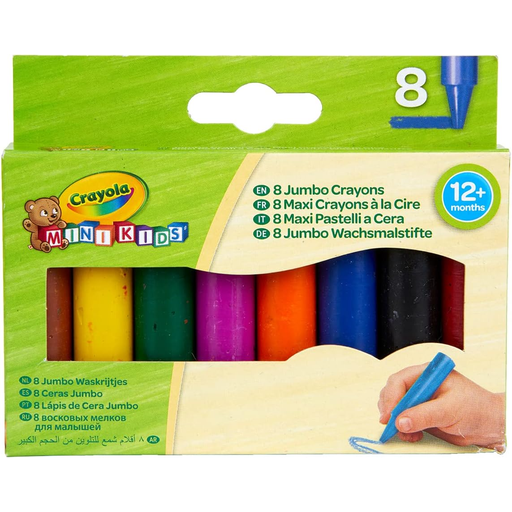
Why this product suits this profile: According to the product details, this set contains eight round wax crayons and is suitable for children aged 12 months and over. The compact colour selection is ideal for first attempts at drawing and colouring at home or nursery.
The round, easy-to-grip shape is well suited to little hands. Even so, check the warnings and ensure children use the crayons under supervision.
Eight colours, wax crayons and a size designed for small hands; suitable for paper and creative pre-school activities.
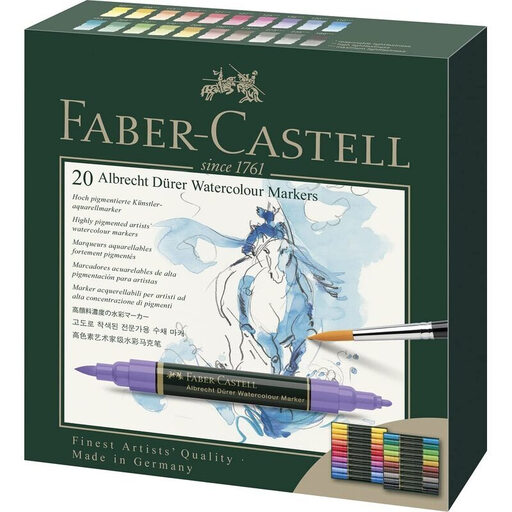
Why this product suits this profile: According to the product description, this set is for anyone who wants to combine drawing with watercolour techniques. It includes 20 markers with brush and fibre tips, plus water-based, water-soluble ink.
The two tips handle both larger areas and fine lines. As the ink is water-soluble, watercolour paper and a protected work surface are a good idea.
20 colours, two tips per marker and a storage wallet; according to the product details, made in Germany.

Why this product suits this profile: The box contains 24 individually sealed pots of coloured clay, four modelling tools and a cutting mat. This makes it suitable for regular craft sessions at home or in educational settings.
The separate pots help keep the colours neatly stored. Reseal them and clean the tools after use.
24 colours, a storage box, four tools and a transparent cutting mat; according to the product details, suitable for children aged three and over.

Why this product suits this profile: According to the product details, the set includes 130 pre-prepared note sheets and a wooden stylus. It doesn’t need liquid paint or glue, and is easy to carry around.
The pre-prepared sheets mean you don’t need extra materials and there’s less to clean up. The wooden stylus isn’t a toy, though, and should be used under supervision.
130 sheets, a compact size of around 8.9 × 8.9 cm and no need for glue or liquid paints.
We’ve put together a complete, regularly updated list of products that meet these strict selection criteria and fully comply with the safety regulations in force in the EU.
Depending on the manufacturer’s recommendations, larger materials that are easy to grip, such as round wax crayons, are generally suitable for toddlers. Small parts, removable caps and modelling tools should only be used under supervision. Always follow the age recommendation and warnings for the product in question.
Put the lids back on pens after use to stop the nibs or ink drying out. Modelling clay will stay usable for longer if you seal each portion of colour tightly after use. Store paints, glitter glue and markers somewhere dry and out of direct sunlight. A labelled box makes it easier for children to keep everything organised.
Ongoing costs depend on the type of product. With pre-prepared scratch art or foil art, the sheets are used up over time. Wax crayons and coloured pencils can last longer, while markers may dry out if left uncapped. Before buying, it’s worth comparing not just the number of pieces, but also refill options, storage and how often you plan to use them.