
Lieferung heute & morgen

Qualitätsgarantie

Willkommens-Angebote freischalten: KOSTENLOSE Lieferung | Bis zu 80 % RABATT | Kostenlose 30-Tage-JoyPlus-Testphase
App herunterladen
Asian biscuits offer plenty of choice, from Japanese biscuits with strawberry or chocolate notes to Chinese biscuits with matcha, nuts or fruit fillings. However, if you want to buy international snacks online, you should not be guided solely by packaging design, familiar brands or unusual flavours. The ingredients list, allergens, country of origin and pack size determine whether a product suits your needs.
As a Joybuy Product Recommendation Officer, I filter market information according to clear, verifiable criteria. The following tips will help you put marketing claims into context and choose suitable biscuits from Japan, biscuits from China or other international varieties.
Names such as Strawberry Cookies, Matcha Cookies or “Almond” initially describe the flavour profile. They do not automatically mean that the named ingredient is present in large quantities. For example, the Franzzi Matcha Cookies list at least 0.5% matcha powder as well as green tea powder. The ingredients list therefore provides more specific guidance than the green packaging colour alone.
It is also worth checking the quantity stated for fruit biscuits: according to the product details, the Franzzi Cranberry Cookies contain at least 5.0% dried cranberries. The Hsu Fu Chi Strawberry Pastry Cookies list candied strawberries at 2.5%; the filling also contains winter melon and candied pomelo peel.
Crispy biscuits absorb moisture from their surroundings after opening. This applies equally to Japanese biscuits, butter biscuits and Chinese varieties. Resealable packaging or individual portions can make them easier to handle, but they do not replace dry storage.
A cool, dry place, protection from direct sunlight and tightly resealing the pack after opening have all proved effective. For larger packs, such as 400 g or 500 g, an airtight container is sensible if the biscuits will be enjoyed over several tea breaks.
An Asian brand does not necessarily mean that the product was made in the country associated with it. According to the product details, the Oreo Thin Crispy Cookies and the Franzzi Matcha Cookies are made in China. The NIKKO Strawberry Cookies Japanese 90 G, the Furuta KAMAYAKI Chocolate Chip Cookies and the Hokuriku Doraemon Cookies are stated to come from Japan.
For consumers in Germany, the mandatory information shown on the packaging is also important. This includes ingredients, allergens, net quantity, nutritional values, best-before date and the responsible business. For imported products, information on the product page can provide initial guidance; the labelling on the packaging delivered to you is definitive.
Before placing your order, check the following in particular:
Nutritional information generally refers to 100 g. This makes it easier to compare different packs. However, the actual portion depends on the size and number of biscuits. For the NIKKO variety, the nutritional values provided are based on a similar matcha biscuit from the same brand, according to the product information, as no specific data for the strawberry variety was publicly available. This should be taken into account when comparing products.
The selection can be broadly organised according to the occasion:
Packs from 50 to 108 g are convenient for trying a flavour for the first time. Smaller packs, such as the 50-g Doraemon biscuits, also make a thoughtful little gift. Packs from 184 to 225 g offer more to share, while 400 or 500 g packs are designed for regular tea and coffee breaks. Individually wrapped products can make portioning easier at the office, in a lunchbox or when you are out and about.
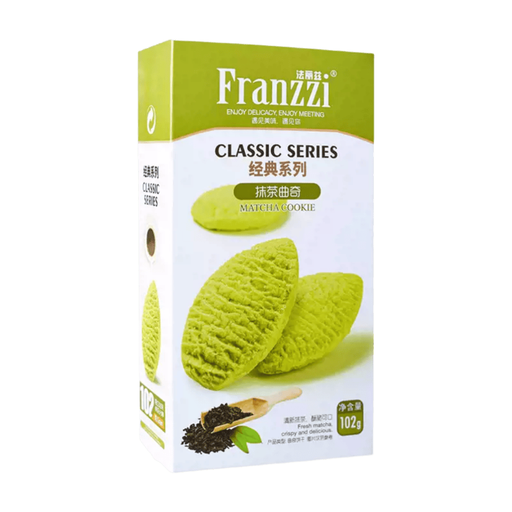
Why this product suits this profile: The 102-g pack offers an accessible introduction to Matcha Cookies and is suitable for tea time, the office or enjoying on the go.
The stated matcha content of at least 0.5% makes the expected flavour profile clearer than the packaging alone.
102 g content, a crispy texture and clearly stated allergens: wheat, soya and milk.
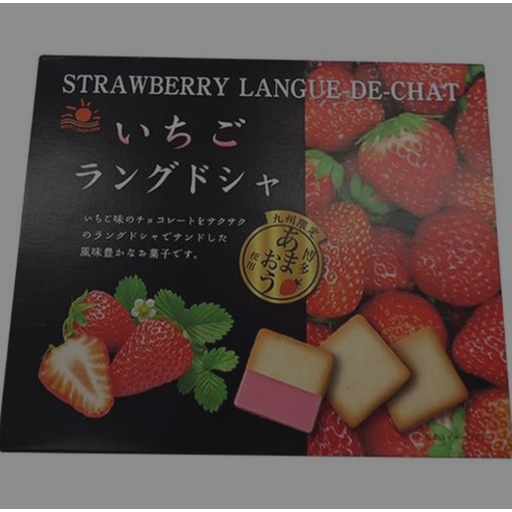
Why this product suits this profile: Its Japanese origin, 90-g pack and strawberry flavour make it a considered choice for tea time or as a gift.
The product description lists wheat and egg, as well as possible traces of milk, soya and nuts. The information for the strawberry variety should be checked on the packaging.
Product from Japan, strawberry flavour and a lightly crispy, crumbly shortbread-style texture according to the product description.
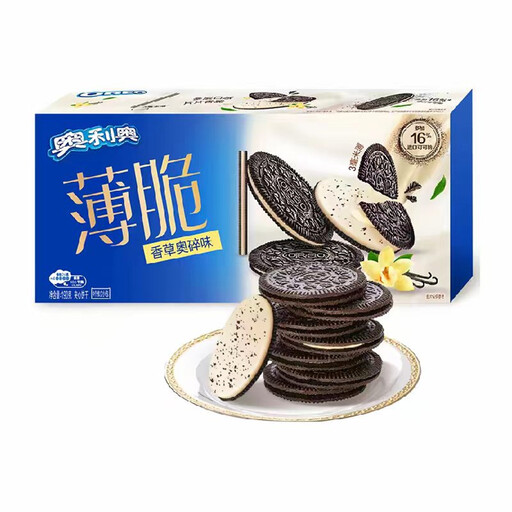
Why this product suits this profile: The 190 g pack is ideal for households looking for a larger pack to share and who enjoy a crispy cocoa and vanilla flavour.
The product name is supported by specific information about cocoa and Oreo biscuit pieces. After opening, the pack should be protected from moisture.
190 g content, a crispy wafer texture and vanilla flavour with Oreo biscuit pieces; origin: China.
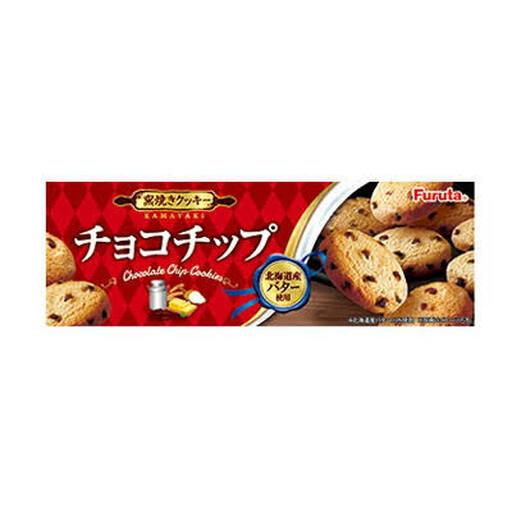
Why this product suits this profile: The combination of wheat and wholemeal flour, 3% dark chocolate and cinnamon appeals to shoppers looking for a more nuanced chocolate biscuit profile.
The chocolate content is stated as 3%. This makes it easier to assess expectations around chocolate pieces objectively.
Origin: Japan, wholemeal flour and stated allergens including wheat, egg, milk and soya.
For a gift, country of origin, pack size and a clearly recognisable flavour profile are usually important. Japanese biscuits such as the NIKKO Strawberry Cookies or the Hokuriku Doraemon Cookies combine a stated Japanese origin with strawberry or chocolate flavour. Before giving them as a gift, check the allergens and best-before date.
Store the biscuits in a dry, cool place away from direct sunlight. Seal resealable bags completely. An airtight container is recommended for larger packs. Individually wrapped products are practical for taking with you and opening one portion at a time.
The complete ingredients and allergen information on the packaging is crucial. Asian biscuits often contain wheat or gluten, as well as milk, egg or soya. Nut products such as almond, walnut and hazelnut biscuits may contain additional allergens. If traces are possible or the information is unclear, do not choose the product without clarifying the matter first.