
Lieferung heute & morgen

Qualitätsgarantie

Willkommens-Angebote freischalten: KOSTENLOSE Lieferung | Bis zu 80 % RABATT | Kostenlose 30-Tage-JoyPlus-Testphase
App herunterladen
Asian dried fruit and plum snacks offer a broad range of flavours, from sweet, soft and chewy fruit to sour plums with salt, honey or sweeteners. When shopping in Germany, however, flavour is not the only consideration. The ingredients list, allergy information, portion size and storage instructions all help determine whether a product suits everyday use, the family or a particular purpose.
Dried fruit from Asia is often enhanced with sugar, glucose syrup, maltose syrup or honey. This can make its nutritional values significantly different from those of fresh fruit. When choosing dried strawberries, dried peaches or dried mango, it is therefore worth checking the figure for “of which sugars” per 100 grams.
For example, according to the product information, Be&Cheery Dried Strawberry contains at least 65% strawberry, as well as sugar and maltose syrup. Its declared sugar content is 59.4 g per 100 g. This does not make it unsuitable, but it does show that the term “fruit snack” does not fully describe the recipe.
Pickled plums, salted plums and sour plums often get their distinctive flavour from salt, acidity regulators and sweeteners. X.O. Salted Red Plum, for example, lists 8.0 g of salt per 100 g. The 70-g pack therefore represents a small portion, but its salt content should still be taken into account if consumed regularly.
The ingredients list is also important for products containing honey or liquorice. It provides more information than terms such as “traditional”, “authentic” or “natural”.
Some preserved fruit products contain sulphites, sorbates, benzoates or colourings. Anyone with a relevant intolerance should look out for the statement “contains sulphites”. Some products also specifically warn about colourings that may have an adverse effect on activity and attention in children. Such notices can be found, for example, on certain plum and strawberry snacks.
For children, parents should read the entire label rather than choosing solely based on the type of fruit.
The percentage of fruit helps when comparing products. According to the product information, MUSHAN BASE dried mango contains at least 79.5% mango, while Yan Jin Pu Zi Coconut Flakes Mango Strips has a declared mango content of 85% as well as 5% coconut flakes. However, both products also contain sugar, syrup and other ingredients.
If you are looking for a particularly clear fruit flavour, the proportion of the named fruit can serve as a useful guide. For a reduced-sugar choice, the nutrition table is also crucial.
Dried fruit can be soft, firm, chewy or compact. A soft, chewy texture is ideal for eating straight from the pack, while firmer plums can also be used in tea or drinks. Individual portions are convenient when you are out and about, but they create more packaging waste. Larger bags or jars are generally better suited to households that use the product regularly.
After opening, many products should be tightly sealed and stored in a dry place. Instructions such as “use soon” or requirements to refrigerate after opening should be followed.
With plum snacks, salt and sugar levels can vary considerably. According to the declaration, Tongxiang ShareLover Plum contains plum, sugar, salt, sweeteners and liquorice, among other ingredients. Tong Xiang Jiuzhi Dried Plums lists 9.39 g of salt per 100 g; the product also contains sweeteners and liquorice. According to the product warning, people with high blood pressure should avoid excessive consumption of liquorice.
For dried fruit containing sulphites, the allergy information is relevant. If you want to avoid these additives, look specifically for a recipe without the relevant declaration instead of relying on the product image.
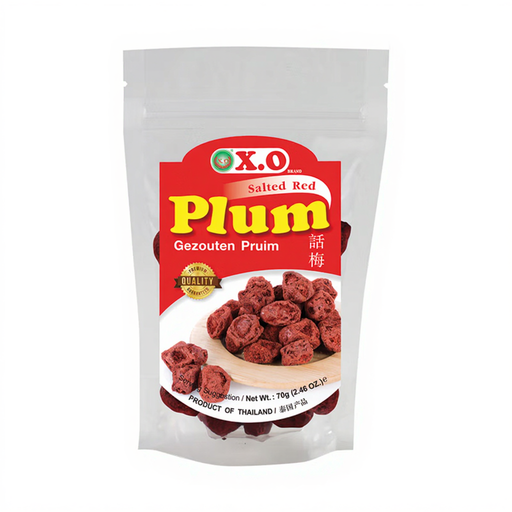
Why this product suits the profile: The 70-g pack offers a manageable amount for trying sweet-and-sour and salted plums. The product is ready to eat and, according to the product information, can also be added to tea, lemonade or other drinks.
The ingredients and nutrition information make it clear that the salt content of 8.0 g per 100 g should be carefully considered. The small pouch reduces the risk of buying an unsuitable large multipack.
70-g portion, firm and chewy texture, versatile as a snack or drink ingredient.
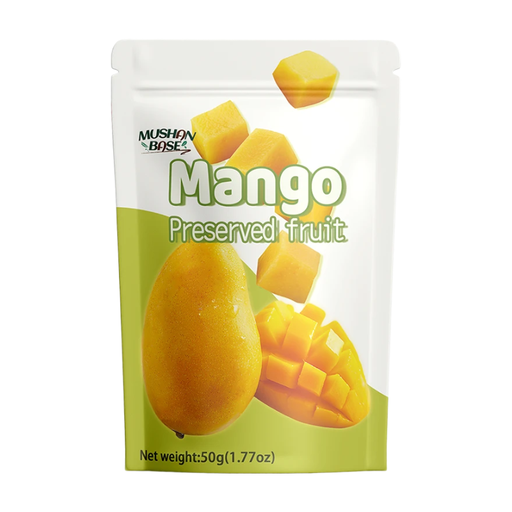
Why this product suits the profile: Its declared mango content of at least 79.5% and its small pack make it easier for shoppers to compare fruit content and portion size.
The nutritional information of 36.3 g of sugar and 343 kcal per 100 g prevents “high fruit content” from being confused with a low-sugar recipe. Sulphites are clearly declared.
At least 79.5% mango, soft and chewy texture, 50-g pouch for controlled portioning.
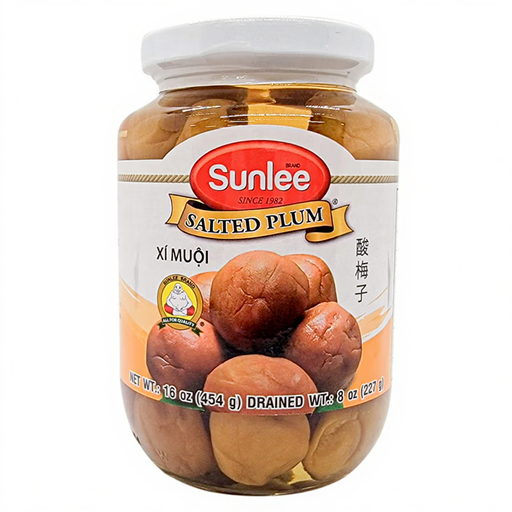
Why this product suits the profile: The 454-g pack is designed for regular enjoyment, sharing or use in recipes and drinks. According to the product description, it comes from Thailand.
The large quantity is only suitable for regular consumption. Before buying, check whether the salty and sour flavour and room-temperature storage are suitable for your household.
454-g supply pack, ready to eat, and according to the description also suitable as an ingredient or garnish.
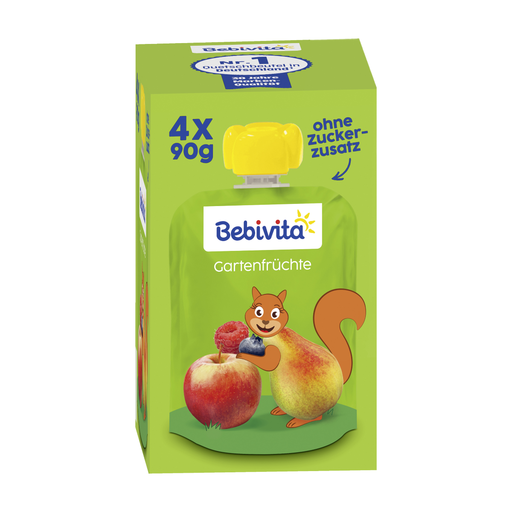
Why this product suits the profile: According to the product information, this fruit purée contains no added sugar and is suitable for children from 1 year of age. It contains apple, pear, blueberry and raspberry. The resealable 90-g pouches are designed for use on the go.
“No added sugar” does not mean sugar-free: the information lists 10.7 g of sugar per 100 g from the fruit. To help prevent tooth decay, the purée should be given under supervision and preferably with a spoon.
100% fruit according to the ingredients declaration, 4 × 90 g, resealable pouch, suitable from 1 year of age.
We have put together a complete, regularly updated list of products that fully meet these strict selection criteria and the safety regulations applicable in the EU.
For fruity variety, try dried mandarins, dried peaches and dried strawberries. According to the declaration, 7FRESH One Small Dried Tangerine contains at least 78% mandarin and 28.6 g of sugar per 100 g. Be&Cheery Dried White Peach lists 65.8 g of sugar per 100 g. These figures show why comparing products per 100 g is more meaningful than looking at the size of individual pieces.
If you are looking for pickled plums with an additional flavour note, consider X.O. Spicy Pickled Mango with 90% mango and chilli. For a honey-forward variety, Jiajianchengchu Honey Plum or Xuehaimeixiang Honey Bayberries may be suitable. For sweeteners, colourings and sulphites, always check the current information on the packaging.
This depends on the specific product, the child’s age and the ingredients. Many plum snacks contain salt, sweeteners, colourings or sulphites and are not specifically intended for toddlers. For children from 1 year of age, designated fruit purées are a more suitable product category. Parents should check the age recommendation, texture and usage instructions, and supervise consumption.
The best-before date generally applies to unopened packaging. After opening, dried fruit should be stored in a dry, cool place in a tightly sealed container and used as soon as possible. Fruit purée often has a much shorter shelf life: Bebivita purée should be refrigerated after opening and consumed within one day.
Not necessarily. Because of their sugar, syrup or honey content, dried fruit can contain anywhere from around 245 to more than 360 kcal per 100 g. Salted plums, on the other hand, can have a high salt content. For an informed choice, consider energy, sugar, salt and portion size together.