
Lieferung heute & morgen

Qualitätsgarantie

Willkommens-Angebote freischalten: KOSTENLOSE Lieferung | Bis zu 80 % RABATT | Kostenlose 30-Tage-JoyPlus-Testphase
App herunterladen
Asian fish and meat balls are versatile ingredients for hot pot, soups, oden, noodle dishes and stir-fries. But in the freezer aisle, fish balls, seafood balls and Asian-style meat balls can differ considerably in their ingredients, fillings, storage requirements and preparation. If you choose based only on pack size or pictures, you could easily end up with a product that doesn’t suit the dish you’re planning.
This buying guide helps households, families, hot-pot fans and foodservice buyers compare the details that matter.
Depending on the product, ‘fish balls’ can mean a simple fish mixture, surimi, a vegetable version or a filled ball. So, for filled fish balls and filled meat balls, it’s worth checking the ingredients list. What matters is how much fish or meat the product contains, and whether it also includes starch, soya protein, vegetables or a seasoning paste.
Hot-pot balls should generally be stored at –18 °C or colder. Many products must not be refrozen once thawed. Depending on the label, opened packs should be kept in the fridge and used within the stated time. Always follow the instructions on the individual pack.
Some fish balls for soup can be cooked straight in the stock. Other products need to be thawed before use. Battered or crispy varieties may lose their intended texture if boiled, and are better suited to frying or baking. Choose a preparation method that works with your recipe.
When comparing fish balls, beef balls and pork balls, start by checking the ingredients list. For example, FRESHASIA Wan Jiang Fish Ball contains 50% fish meat. FRESHASIA Wanjiang Beef Balls contain beef, water, starch, salt, sugar, soya protein and spices.
For filled varieties, check what’s inside, too. FRESHASIA Wan Jiang Fish Balls with Pork Filling combine fish paste with a seasoned pork filling. Wan Jiang Beef Balls With Chicken Filling list 54% beef and 17% chicken breast.
The product information provided lists fish, wheat or gluten, egg, soya, celery, sesame and squid, among other ingredients. This information is particularly relevant for families, house shares and foodservice businesses. Even products with a seemingly simple recipe may contain soya protein or wheat starch.
If you need to avoid allergens, always check the current packaging. Recipes, allergen information and the responsible business may change.
For comparison, energy, fat, carbohydrates, protein and salt per 100 g are more useful than general marketing claims. For example, among the products listed, the stated salt content ranges from 0.5 g sodium per 100 g for FRESHASIA Wan Jiang Fish Balls to 2.7 g salt per 100 g for DoDo Fish Ball Seafood. Be careful not to confuse the units: sodium and salt are different measures.
Most of the packs available contain 200 g. That may be enough for one pot of soup, but for a larger hot pot or foodservice, it’s worth working out how many packs you’ll need.
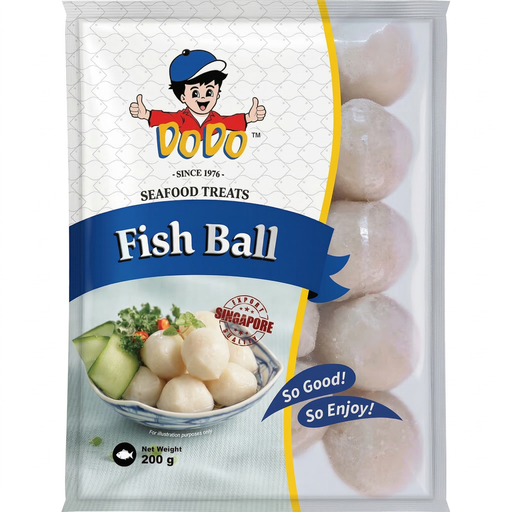
Why this product suits this profile: The 200 g pack is ideal for trying hot pot for the first time, as well as for soups and quick family meals. According to the product information, the balls are made from fish meat and individually quick-frozen.
The product information lists the ingredients, allergens and nutritional values, as well as a specific freezer storage temperature of –18 °C or colder. This makes it easier to check whether the product is right for you before buying.
Suitable for hot pot, oden, soups and stir-fries; 200 g net weight and individually quick-frozen pieces, according to the product description.
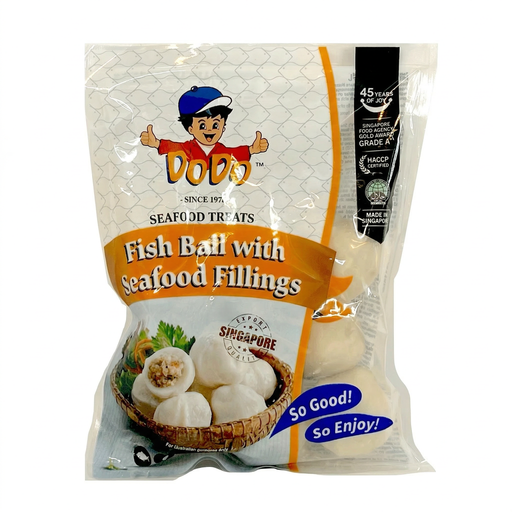
Why this product suits this profile: Its ingredients are listed in detail: 47% surimi, 11% squid, plus vegetables and spices. This is useful if you want to compare the flavour and ingredients carefully.
The allergen list includes fish, molluscs, egg, celery, sesame, soya and gluten, among other ingredients. The squid content is also clearly stated.
Designed for stocks, noodle dishes, hot pot and deep-frying; Singapore is listed as the country of origin.
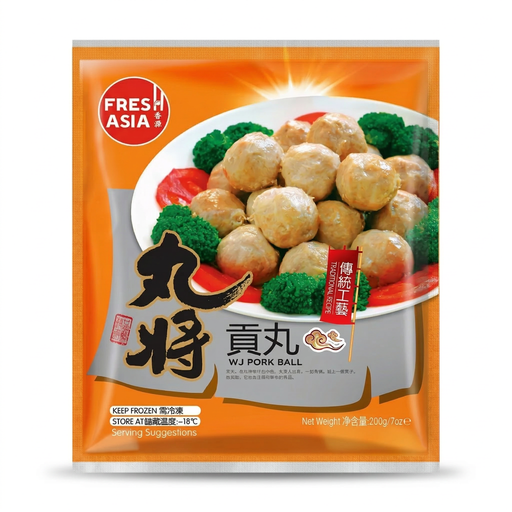
Why this product suits this profile: According to the product information, these Asian-style pork balls are intended for hot pot, oden, soups and stir-fries. That makes them a flexible choice for regular meals and planning larger menus.
The ingredients and possible traces of other allergens are listed. The instructions to store frozen at –18 °C or below and not to refreeze are clearly stated.
Pork-based, with a net weight of 200 g and versatile uses; the product information lists garlic, soya sauce and spices, among other ingredients.
Cooking time depends on the product, its size and whether it’s frozen or thawed. For example, some pre-cooked meat balls are listed as needing 5 to 8 minutes in boiling water or soup. Always follow the preparation instructions on the individual pack. Filled products should be cooked until the centre is heated through.
The product information provided explicitly advises against refreezing several frozen products after thawing. So, only take out the quantity you need and keep the rest frozen. If you’re unsure, follow the instructions for the specific product.
Depending on your taste, you could choose beef balls, pork balls, fish balls or filled varieties for hot pot. Check the ingredients, any potential allergens and the recommended cooking time, and make sure the product can be added to the stock straight from frozen. To combine different textures, you could pair plain fish balls with filled meat balls and vegetable varieties.