
Lieferung heute & morgen

Qualitätsgarantie

Willkommens-Angebote freischalten: KOSTENLOSE Lieferung | Bis zu 80 % RABATT | Kostenlose 30-Tage-JoyPlus-Testphase
App herunterladen
Asian potato noodles are available in Germany in many forms: thin glass noodles, wide sweet potato noodles, Korean dangmyeon, Chinese potato noodles and spicy instant dishes. However, the name alone says little about the ingredients, preparation method or intended use. If you focus only on packaging images or phrases such as “0% fat”, you can easily choose a product that is not suitable for your needs.
As a Joybuy Product Recommendation Officer, I have categorised the key differences using clear, verifiable information. This makes it easier to decide before buying whether you are looking for noodles for hotpot and japchae, a noodle addition for soup or a quick meal.
Many instant potato noodles also contain wheat flour or wheat gluten. For example, Samyang Potato Ramyun contains potato starch and wheat flour in its noodle portion. The Omachi varieties also contain wheat flour; according to the ingredients list, their potato starch content is only around 2.7 to 2.9%.
For a gluten-free option, you should therefore check the complete ingredients list. Products made with 100% potato starch or sweet potato starch belong to a different product category from potato ramen containing wheat.
With noodles made purely from potato starch, the nutritional information may show 0 g of fat per 100 g. However, if oil, sesame or seasoning sachets are included, the nutritional value of the prepared meal changes. Tian Xiao Hua Zero-Fat Potato Starch Noodle is one example: the noodle base is listed as fat-free, but the seasoning contains chilli oil.
It is therefore worth checking the information for the noodles and sauce separately. With instant products containing several sachets, the overall composition is what matters.
Wide glass noodles absorb sauces and stock well, but usually require a longer soaking or cooking time. Thin sweet potato noodles cook more quickly and are suitable for soups, stir-fries or cold salads. If you buy the wrong width for your recipe, the noodles can easily end up too soft or still firm.
The most important terms are potato starch, sweet potato starch, tapioca starch, corn starch and wheat flour. Dangmyeon is often made from sweet potato starch and is frequently gluten-free according to the ingredients list. However, the term “Korean glass noodles” is not a substitute for checking the specific allergen information.
Seasoning mixes may contain additional allergens, such as soya, sesame, peanuts, fish or wheat. Particularly with spicy potato noodles and ready meals in bowls, the ingredients list for every individual sachet should be taken into account.
Dry Asian potato noodles are not ready to eat. Depending on the product, they may need to be soaked for 20 to 30 minutes and then cooked, or cooked directly for around 5 to 8 minutes. Always follow the instructions on the packaging.
After opening, dry noodles should be stored in a cool, dry place protected from moisture. An airtight container prevents them from absorbing moisture and breaking. Prepared noodles should be eaten immediately.
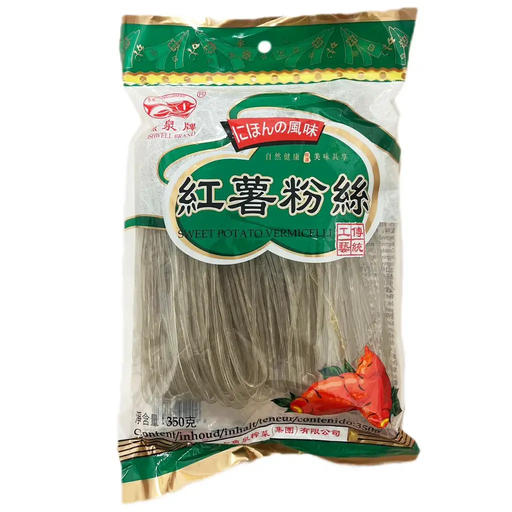
Why this product suits this profile: The ingredients list consists of sweet potato starch and water. This makes the pack a simple base for soups, stir-fries and hotpot.
The clear ingredients base makes it easy to distinguish this product from wheat ramen and heavily seasoned ready meals.
350 g pack, thin noodles and, according to the product information, 0.2 g of fat per 100 g.
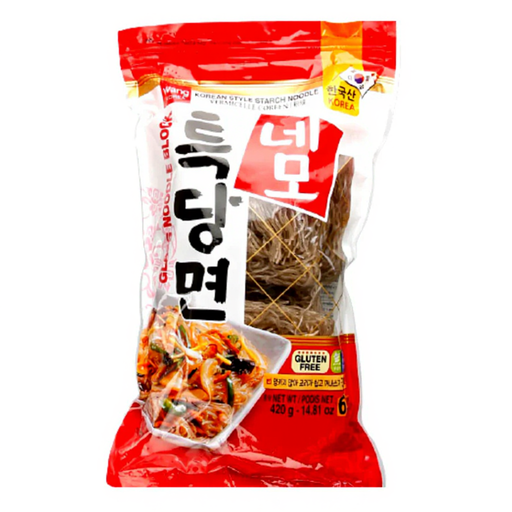
Why this product suits this profile: According to the product information, these Korean glass noodles are made with 100% potato starch and are intended for japchae and hotpot.
The clear starch specification helps prevent a product containing wheat from being mistakenly selected as pure glass noodles.
420 g contents, 0 g of fat and 0.03 g of salt per 100 g according to the product information.
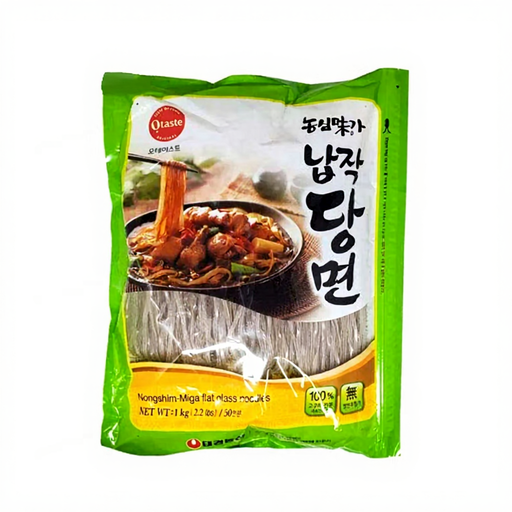
Why this product suits this profile: The flat sweet potato noodles in this bulk pack are suitable for preparing japchae, hotpot, soups and stir-fries regularly.
The pure ingredients specification of 100% sweet potato starch makes the intended use clear and avoids unnecessary seasoning sachets.
1 kg pack, flat noodles, 0 g of fat and 0 g of salt per 100 g according to the product information.
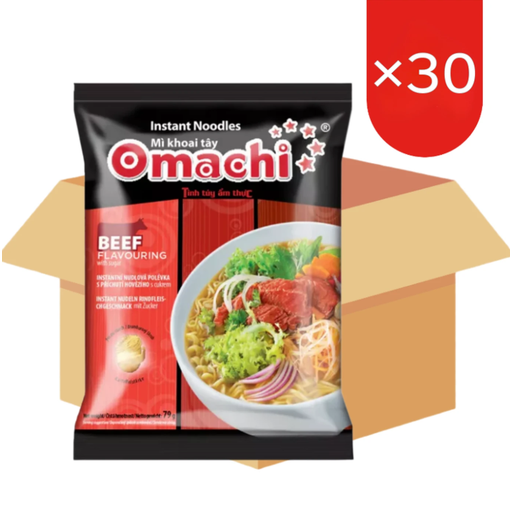
Why this product suits this profile: Pour 400 ml of boiling water over each bowl and serve after four minutes of standing time.
The ingredients clearly show that this is not a gluten-free product made purely from potato starch, but a wheat product containing potato starch.
30 individual portions, four-minute preparation time and a beef seasoning profile according to the product information.
We have put together a complete, regularly updated list of products that fully meet these strict selection criteria and the safety regulations applicable in the EU.
Not necessarily. Pure products made from potato or sweet potato starch can be free from gluten-containing grains according to the ingredients list. Instant ramen, on the other hand, often contains wheat flour, wheat gluten or seasoning sauces containing wheat. The ingredients list and allergen information on the relevant packaging are the deciding factors.
Dry dangmyeon is usually cooked for 6 to 8 minutes until soft and translucent. It is then drained and briefly rinsed in cold water. For japchae, it can then be quickly combined in a frying pan with vegetables, sauce and other ingredients. With particularly thick or wide varieties, soaking before cooking may be helpful.
The specific best-before date is shown on the packaging. Unopened products should be stored in a cool, dry place away from direct sunlight. After opening, an airtight container is recommended. Moisture can cause dry noodles to stick together or become brittle; prepared noodles should be eaten promptly.