
Lieferung heute & morgen

Qualitätsgarantie

Willkommens-Angebote freischalten: KOSTENLOSE Lieferung | Bis zu 80 % RABATT | Kostenlose 30-Tage-JoyPlus-Testphase
App herunterladen
Asian rice porridge is available in Germany in a range of forms: Chinese congee, sweet canned porridge, savoury instant porridge or long-life ready-to-eat porridge in multipacks. The products can vary considerably in their ingredients, portion sizes, preparation, allergens and nutritional values.
If you only look for terms such as “multigrain”, “traditional” or “nutritious”, you could miss important details. Our guide helps you avoid common buying mistakes and find an option that suits your daily routine.
Canned porridge is generally ready to eat and can be eaten straight after opening or heated up. Instant rice porridge in a sachet, on the other hand, usually needs boiling water and a short standing time. For example, VIFON Cháo Gà recommends around 250 to 350 ml of boiling water and a standing time of about three minutes, depending on the consistency you prefer.
Before buying, check whether you’ll have access to a microwave, a hob or just a kettle. Instant rice porridge is handy for the office, travelling or studying, while canned porridge is particularly convenient when you don’t want to do any extra preparation.
Chinese multigrain porridge and Eight-Treasure Congee often contain barley, oats, wheat, buckwheat, peanuts, soya or sesame. These ingredients may be present in products described on the front of the pack simply as a “grain mix”.
If you have an allergy, check the full ingredients list and allergen information on the packaging. Black rice porridge isn’t automatically gluten-free either, particularly if it contains barley or oats.
Sweet varieties containing red beans, longan, dates or coconut may contain sugar or sweeteners. For example, Wahaha Eight-Treasure Congee with cinnamon and lotus seeds contains 8.0 g of sugar per 100 g. Products containing xylitol may have a different composition, but they’re not intended for unlimited consumption. Wahaha Xylitol-Enhanced Nutritious Eight-Treasure Congee, for instance, carries a warning that excessive consumption may have a laxative effect.
Always check the nutrition table per 100 g and, where available, per portion. With cans weighing 280 to 360 g, the amount you actually eat could be significantly more than the 100 g comparison figure.
For a quick Asian breakfast, three options are particularly worth considering:
Don’t heat a can of porridge directly in the microwave. Transfer the contents to a microwave-safe container first. When preparing products with boiling water, follow the stated quantities, as these affect the consistency and salt content per prepared portion.
Ingredients are generally listed in descending order by weight. So, when choosing multigrain porridge, it’s worth checking which grains are included and how much of each. Yin Lu Hao Zhou Dao Black Rice Porridge, for example, lists black rice, maize and barley, along with their minimum proportions.
Key things to check include:
Online product information can change. If you have an intolerance, always follow the labelling on the packaging you receive.
Individual 45 or 50 g sachets are designed for a quick meal for one. Cans weighing 280 to 360 g are more suited to a full portion or sharing. Multipacks of twelve cans mean you’ll need to reorder less often, but they do take up more space.
Unopened cans and dry products are usually stored in a cool, dry place. Follow the manufacturer’s instructions after opening. Several canned products in this selection state that the contents should be consumed immediately; others recommend refrigeration and consumption within a short time.
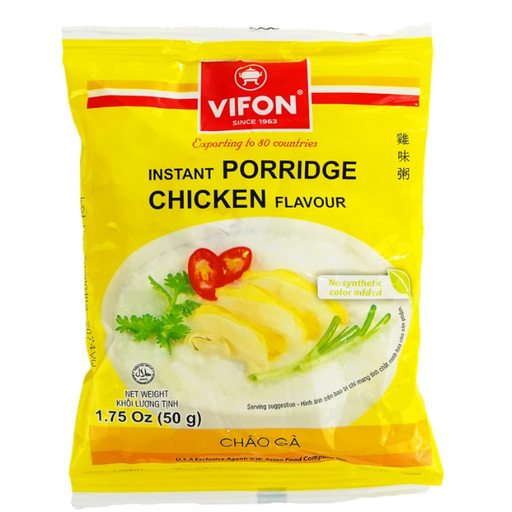
Why it suits this profile: This single-serve sachet is designed for one portion and, according to the product information, needs only hot water and around three minutes to stand. That makes it a good fit for the office, studying or eating on the go.
The preparation method is clearly stated. At 50 g, the portion size is manageable, although you should bear in mind that the salt content is 5.2 g per 100 g.
A single portion with rice as the main ingredient, no cookware needed and, according to the product information, no declared major allergens. Check the label for trace warnings.
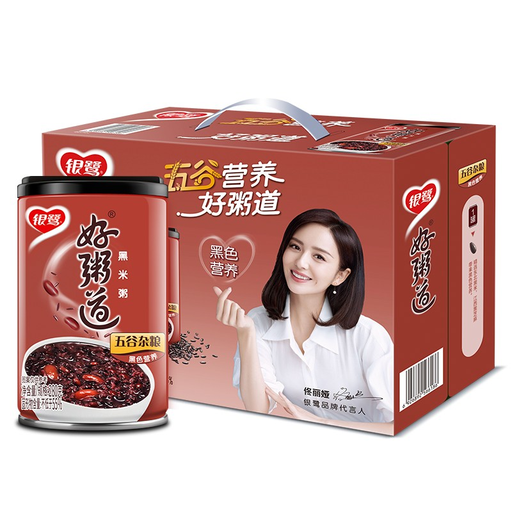
Why it suits this profile: The pack contains twelve 280 g cans. The ingredients list includes several types of grain and gives the minimum proportions of black rice, maize and barley.
The specific proportions make the “multigrain” description easier to understand. Gluten from barley and oats, as well as buckwheat, is also clearly stated.
Ready-to-eat canned porridge that can be enjoyed hot or cold, with 64 kcal and 0 g of fat per 100 g according to the product information.
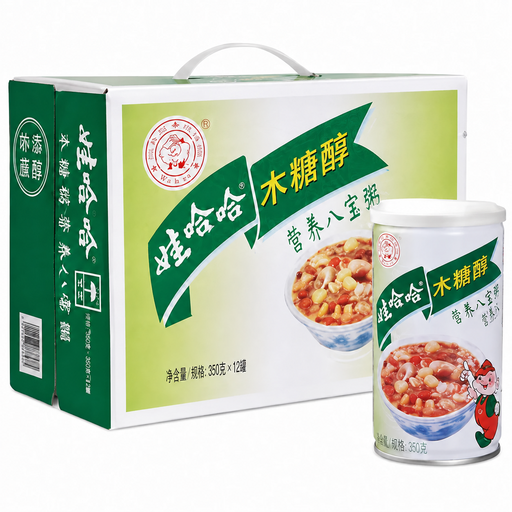
Why it suits this profile: This multipack contains twelve 350 g portions and combines sticky rice with barley, red beans, lotus seeds and tremella mushrooms. It’s ready to eat straight from the can.
The use of xylitol as a sweetener is clearly stated. If you eat too much, take note of the warning about possible laxative effects. The product contains peanuts and gluten-containing barley.
A generous total of 4.2 kg, no cooking required and, according to the product information, 48 kcal per 100 g.
We’ve put together a complete, regularly updated list of products that meet these strict selection criteria and fully comply with the safety regulations in force in the EU.
Canned products are usually ready to eat and can be eaten cold after opening or heated in a suitable container. To prepare instant rice porridge, mix the contents with boiling water and leave to stand for a few minutes. The packaging will tell you how much water to use and how long to leave it.
The best-before date is shown on the relevant packaging. Store unopened cans and dry products in a cool, dry place away from direct sunlight. After opening, rice porridge should be consumed either immediately or within a short time, depending on the manufacturer’s instructions. Refrigerate opened cans if the packaging advises this.
No. Sweet and savoury products intended for adults may contain peanuts, gluten, sesame, soya, high levels of salt or sweeteners. The baby porridges in this range should be considered separately and are intended exclusively for babies from five months of age. Always follow the age guidance and preparation instructions, and check the ingredients list carefully.