
Lieferung heute & morgen

Qualitätsgarantie

Willkommens-Angebote freischalten: KOSTENLOSE Lieferung | Bis zu 80 % RABATT | Kostenlose 30-Tage-JoyPlus-Testphase
App herunterladen
Asian seaweed snacks combine a crispy texture with savoury, salty or spicy flavours. However, the range includes very different products: roasted seaweed for direct consumption, Korean seaweed snacks in individual portions, Gimjaban as a topping, and unseasoned seaweed sheets for sushi. If you only buy based on pack size or eye-catching flavour claims, you can easily overlook important differences.
Not every product labelled "Seaweed" is intended as a ready-to-eat snack. Seaweed for sushi is usually sold unseasoned and dry in sheet form. Kombu seaweed or broad kelp leaves often need to be soaked, rinsed and cooked, depending on the product. A snack such as roasted laver sheets, on the other hand, is typically ready to eat.
Seaweed sheets are light, so even small packs can look generous at first glance. That is why you should compare not just the pack price, but also the net weight, number of individual portions and price per 100 grams. With products such as 3 × 4 g or 16 × 4 g, the portion size and usage differ significantly.
An original flavour may be seasoned with just oil and salt, whereas teriyaki, wasabi, BBQ or tom yum varieties contain additional ingredients. These can include soya, wheat, sesame, crustaceans, nuts or milk derivatives. Always check the current ingredients list on the packaging, as recipes and labelling can change.
For direct consumption, roasted seaweed, a crispy seaweed snack or a Korean seaweed snack in small portion packs are ideal. These varieties are practical for the office, school or on the go. Seasoned sheets also work well with rice, noodles and salads.
Gimjaban consists of finely crumbled, seasoned seaweed. Its flaky form is less suited to eating straight from the packet as a classic snack, but works particularly well as a topping for rice or soup. If you want to make sushi, look for unseasoned, sturdy nori sheets. A product such as O’Food Roasted Seaweed for Sushi is designed for this purpose.
Check whether the product is mainly made from seaweed, or whether oils, sugar, salt and seasoning blends make up a larger proportion. With Taokaenoi Crispy Seaweed Original, the product information states that 85% is seaweed, with palm oil, salt and white pepper among the other ingredients. A spicy variety such as Sriracha or a hot seaweed snack with chilli may also contain sugar, acidity regulators and flavour extracts.
If you have a sensitive palate, original or lightly salted varieties are a sensible choice. Wasabi, Sriracha, tom yum or BBQ are more suited to buyers looking for a distinctly bold flavour.
The nutrition table is usually given per 100 g, whereas the actual pack often contains only 4 to 50 g. For a meaningful comparison, you should convert the values to your intended portion. With seasoned products in particular, it is worth checking the salt, fat and sugar content.
For example, Kimnori Seasoned Seaweed Teriyaki states 0.8 g of salt per 100 g, while Kimnori Seasoned Seaweed Original is listed at 4.2 g of salt per 100 g. These values should only be assessed in relation to the respective portion size. Claims such as "healthy" or "low calorie" should not be taken from the product name alone.

Why this product fits the profile: The original flavour is a straightforward option for getting started with Asian seaweed snacks. The 32 g pack is ideal for trying or sharing.
The ingredients list clearly states the seaweed content as well as oil, salt and pepper. This makes it easier to distinguish from heavily flavoured varieties.
32 g net weight, crispy snack format and original seasoning; according to the product information, made in Thailand.
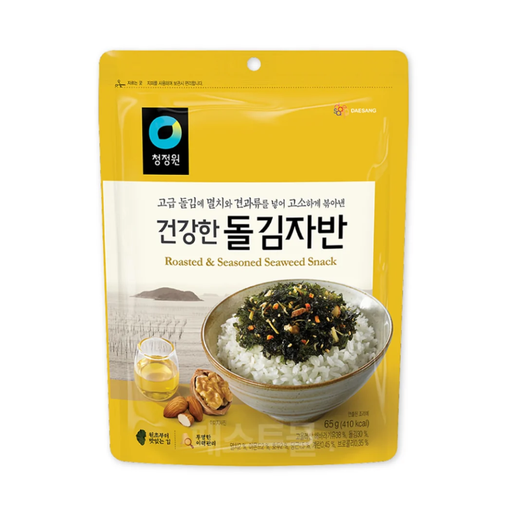
Why this product fits the profile: The pre-seasoned laver flakes are intended for direct consumption as well as for mixing with rice. The resealable pouch helps with storage.
The product information lists sesame, prawns, walnuts and almonds as allergens. This information helps with a targeted purchasing decision.
30 g net weight, zip-lock pouch and use as a snack or rice accompaniment; origin according to product information: South Korea.
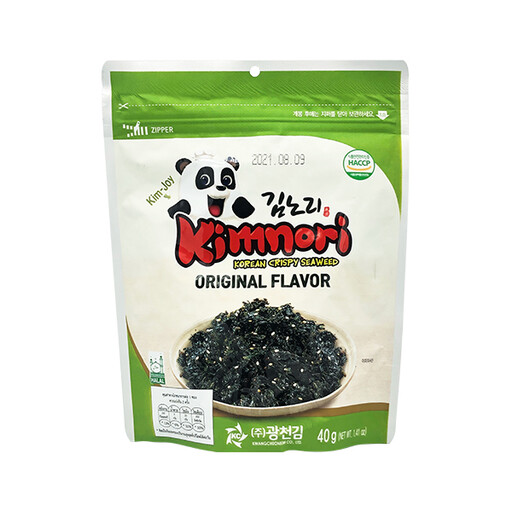
Why this product fits the profile: Gimjaban can be sprinkled flexibly over rice, noodles, soups or salads. The 40 g pack is aimed at households that regularly use seaweed as an ingredient.
The flake form makes the intended use clear and prevents the expectation of receiving a whole nori sheet for sushi. Sesame is listed as an allergen.
40 g net weight, original seasoning with sesame oil and sesame, and versatile use as a topping; origin according to product information: South Korea.
Moisture affects the crispness of seaweed sheets particularly quickly. Store opened packs in a cool, dry place away from direct sunlight. Individual portions such as Kimnori Seasoned Seaweed Original 3 × 4 g reduce contact with air. For larger bags, an airtight container is recommended. The best-before date can be found on the individual packaging; once opened, the snack should be consumed as soon as possible.
We have put together a complete, regularly updated list of products that fully meet these strict selection criteria and the safety regulations in force in the EU.
Many roasted and seasoned products are edible immediately. Dried kombu seaweed, broad kelp leaves or unseasoned cooking ingredients, on the other hand, may require soaking and cooking time. Always follow the preparation instructions for the specific product.
Store the opened pack in a dry, airtight place. Individual portions should only be opened immediately before eating. With flakes and sheets, moisture quickly leads to a softer texture.
For sushi, unseasoned, roasted nori sheets are more appropriate than flavoured snack sheets. O’Food Roasted Seaweed for Sushi 20 g is described as an ingredient for sushi rolls. Seasoned varieties are better suited as a side dish, snack or topping.