
Lieferung heute & morgen

Qualitätsgarantie

Willkommens-Angebote freischalten: KOSTENLOSE Lieferung | Bis zu 80 % RABATT | Kostenlose 30-Tage-JoyPlus-Testphase
App herunterladen
Asian seaweed snacks combine a crisp texture with salty, savoury or subtly sweet flavours. In Germany, the selection ranges from small Korean seaweed snacks for eating on the go to sushi nori and seaweed flakes for use in the kitchen. However, if you want to make an informed choice, you should look beyond the flavour and packaging design.
As a Joybuy Product Recommendation Officer, I filter the most important product details and explain which criteria matter when comparing roasted seaweed, seasoned seaweed sheets and other nori snacks.
Not every seaweed sheet is intended to be eaten as a snack. Sushi nori is usually unseasoned and designed for maki, onigiri or kimbap. A Korean seaweed snack, on the other hand, is often already seasoned with oil and salt. Using a seasoned product for sushi can significantly alter the flavour of the filling.
So look for terms such as “ready to eat”, “seasoned”, “roasted” or “for sushi”. The shape is also important: whole sheets are suitable for rolling, while seaweed flakes are generally intended as a topping for rice, soups and salads.
Roasted seaweed sheets weigh very little, which can make them seem like an especially small snack. However, the oil, sugar and seasoning blends can cause nutritional values per 100 grams to vary considerably. For example, the products featured here range from around 380 to over 700 kcal per 100 grams.
That is why the pack size, number of individual portions and ingredients list are so important. A 4.5-gram packet should be assessed differently from a 50-gram pack, even if both are marketed as crispy seaweed.
Seaweed quickly absorbs moisture from its surroundings once opened. Seasoned seaweed sheets and nori snacks then lose their characteristic texture. A resealable pack can be useful, but it does not replace storing the product in a dry place.
After opening, seal the pack as tightly as possible and use the contents promptly. For larger bags, small airtight storage containers are a practical option.
Check whether the product consists solely of dried seaweed or also contains oil, salt, sugar and flavourings. Commonly used oils include corn oil, sesame oil, rapeseed oil and palm oil. Seasoned varieties may also contain soya, wheat, prawns or nuts.
For allergy sufferers, always follow the information on the packaging. Sesame is particularly common. If you are choosing a snack with teriyaki, chilli or prawn flavour, you should also check for soya, wheat and crustaceans.
Small individual portions of 3 to 4.5 grams are ideal for the office, school and eating on the go. Larger packs of 30 to 50 grams make sense if you eat seaweed snacks regularly or use them in cooking. Also check the best-before date and the recommended storage conditions: at room temperature in a cool, dry place.
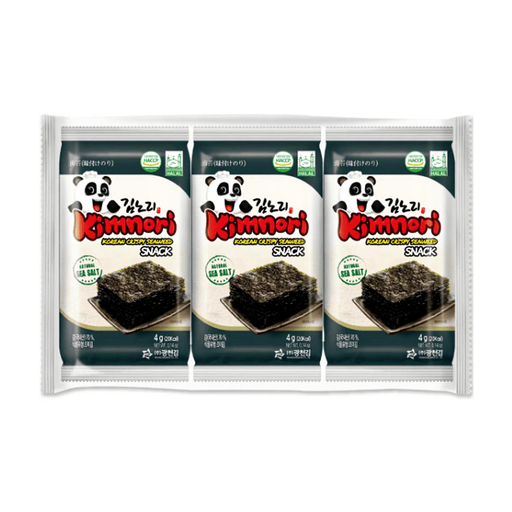
Why this product suits this profile: Three individually wrapped 4-gram portions offer an easy introduction to seasoned Korean gim snacks.
The individual portions limit how much of the total quantity is exposed and help reduce moisture loss after opening.
Original seasoning, 3 x 4 g, sesame listed as an allergen and ready-to-eat sheets.
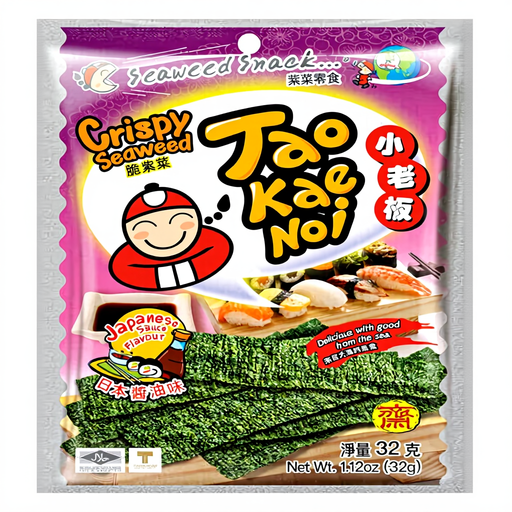
Why this product suits this profile: The product description specifies 85% seaweed, along with Japanese sauce seasoning offering salty and sweet notes.
The flavour and nutritional values per 100 g are clearly stated, making it easier to compare this product with milder or spicier varieties.
32-g pack, crispy sheets, Japanese sauce seasoning and storage at room temperature.
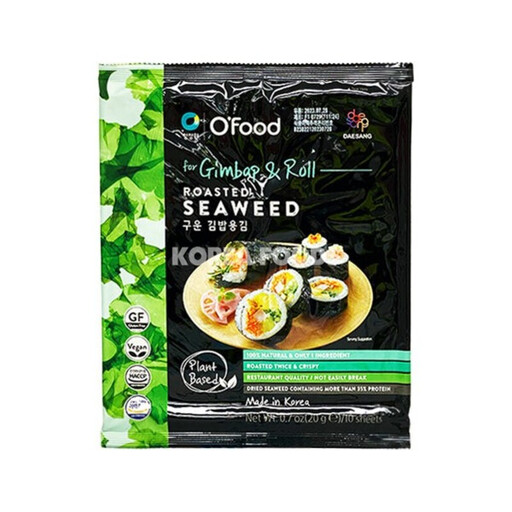
Why this product suits this profile: Unseasoned roasted sheets are designed for sushi rolls and can also be eaten directly as a snack.
Its clear focus on sushi reduces the risk of accidentally buying heavily seasoned snack sheets for maki or kimbap.
100% dried seaweed according to the product description, 20 g pack size and versatile use.
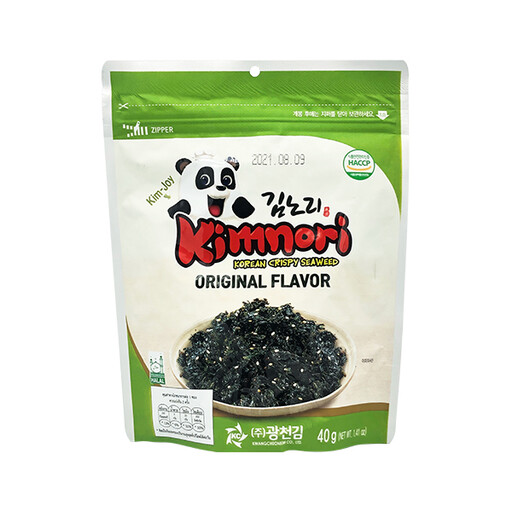
Why this product suits this profile: Finely crushed seaweed flakes are suitable for rice, noodles, soups, salads and rice balls.
The flaked format is clearly described, preventing the mistaken expectation that you will receive whole sheets for rolling.
40-g pack, Korean Jaban flakes, sesame oil and roasted sesame seeds according to the ingredients list.
We have put together a complete, regularly updated list of products that fully meet these strict selection criteria and the safety regulations applicable in the EU.
Yes. Individual portions of 3 to 4.5 grams are particularly easy to carry in a handbag, rucksack or lunchbox. For longer storage, keep the packaging unopened. Once opened, packs should be sealed tightly and eaten as soon as possible.
This depends on the packaging, humidity and storage conditions. Unopened products can be stored until the best-before date printed on the pack. Once opened, they lose their crispness more quickly when exposed to moisture. A cool, dry place away from direct light is therefore advisable.
For sushi, choose unseasoned whole sheets such as sushi nori. Seasoned gim snacks, wasabi seaweed and teriyaki sheets are better suited to eating directly. Depending on the recipe, you can use either unseasoned or lightly seasoned sheets for kimbap. Always check the specific product description and ingredients list before buying.