
Lieferung heute & morgen

Qualitätsgarantie

Willkommens-Angebote freischalten: KOSTENLOSE Lieferung | Bis zu 80 % RABATT | Kostenlose 30-Tage-JoyPlus-Testphase
App herunterladen
Asian jelly snacks combine fruity flavours with a distinctive texture: soft, wobbly, sometimes chewy or containing small pieces of fruit. There is now a wide choice for fans of Korean snacks, Chinese desserts and convenient individual portions. That can make comparing products more difficult.
However, eye-catching packaging says little about ingredients, sugar content or whether a product is suitable for children. If you want to buy Asian jelly snacks, you should therefore consider more than just the flavour and product image.
Names such as Mango Jelly, Lychee Jelly or Grape Jelly may refer to fruit juice, fruit concentrate, flavouring or a combination of these. The exact proportion is listed in the ingredients. For example, the Strong CICI Mango Flavor Jelly Drink contains at least 1.2% mango purée and at least 1.8% grapefruit juice. It also contains Nata de Coco and flavourings.
If you are expecting a pronounced fruit flavour, you should therefore distinguish between fruit content, fruit juice concentrate and flavouring.
A product can contain relatively little energy per 100 grams while still using sugar or sweeteners. According to the product information, WANT WANT Vittorio Jelly Delight Peach contains 61 kcal and 13 g of sugar per 100 g. For a 150 g pack, this works out at approximately 91.5 kcal and 19.5 g of sugar.
Konjac jelly, on the other hand, can contain considerably less energy. Delief Vegan Collagen Konjac Jelly Lychee is listed as containing 5 kcal and 0 g of sugar per 100 g, but it uses sucralose, among other ingredients. When choosing a product, it is therefore important to consider the complete nutritional and ingredients information.
Jelly snacks are not always easy to chew or swallow. Children and older people should take particular care when consuming small, compact portions and products with a firm gel texture. WANT WANT Vidor Jelly Drink specifically states that the product is not suitable for children under four and should be consumed under supervision.
A jelly drink is not an ordinary drink either: depending on the product, it may contain fruit pulp, Nata de Coco or firm jelly pieces. Chewing slowly and following the instructions on the packaging are therefore important.
Look out for setting agents such as carrageenan, konjac flour, pectin, agar-agar or gelatine. Gelatine is of animal origin and generally makes a product unsuitable for a vegan diet. For example, ENNJOI Sourmeow Gummy Guava contains gelatine and, according to the product information, is not suitable for vegetarians or vegans.
For vegan jelly snacks, check the labelling directly on the product. Delief Konjac Jelly Green Grape is listed as vegan. Products containing coconut ingredients, such as Lychee Jelly with Nata de Coco, should also be checked for allergy information.
The information per 100 grams makes comparison easier, but can be misleading when portion sizes differ. A 338 g cup of grass jelly is listed as containing 36 kcal per 100 g, but the full portion contains around 121 kcal. Fruit gums are often higher in calories: Jelly Belly Harry Potter Bertie Botts Candy contains 363 kcal and 68 g of sugar per 100 g.
Individual portions between 60 and 160 g are also convenient when you are out and about. If you eat several portions, remember to calculate the values accordingly.
The product page or packaging provides information about the country of origin, best-before date and storage conditions. Many jelly drinks and desserts should be stored in a cool, dry place when unopened. Depending on the product, once opened they should either be consumed immediately or refrigerated and used within 24 hours.
Chinese desserts such as grass jelly can be eaten straight from the cup, cut into cubes or combined with fruit, syrup and condensed milk. Jelly puddings from South Korea are often served chilled, which changes the gel texture.
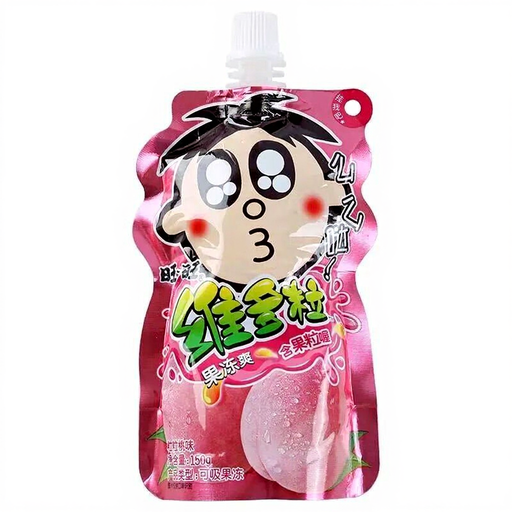
Why this product suits this profile: The 150 g portion combines peach juice with pieces of Nata de Coco and can be drunk straight from the pouch.
The nutritional information gives specific quantities: 61 kcal and 13 g of sugar per 100 g. This makes it easier to assess the portion realistically.
150 g content, 0 g of fat and a drinkable jelly texture with coconut pieces.
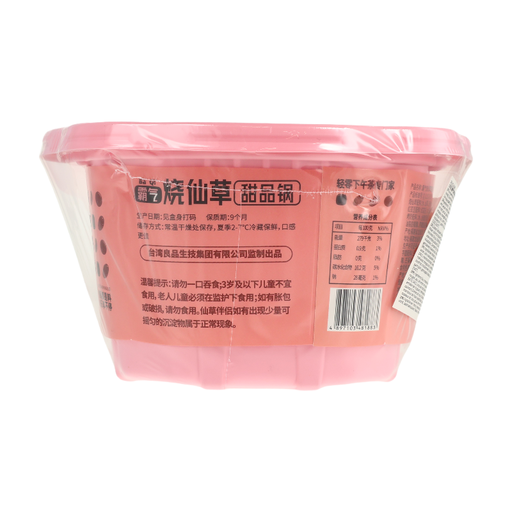
Why this product suits this profile: This Chinese grass jelly is made with Mesona Chinensis powder and can be served straight away or used as a dessert base.
The product description lists ingredients, portion size, storage information and specific nutritional values rather than making general health claims.
338 g content, 36 kcal per 100 g and versatile serving options with fruit, syrup or condensed milk.
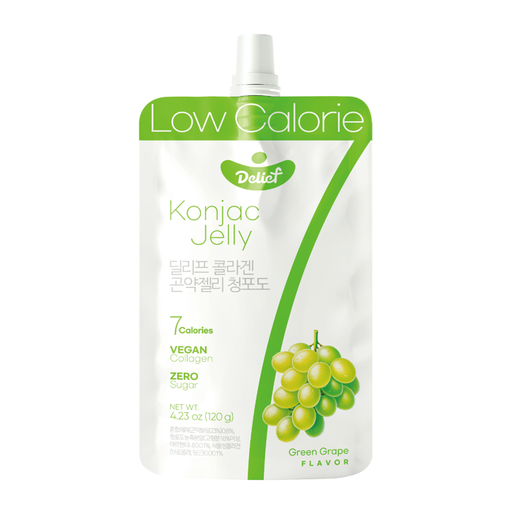
Why this product suits this profile: This konjac jelly is labelled vegan, comes in individual portions and is listed as containing 5 kcal and 0 g of sugar per 100 g.
Suitability is assessed through the stated vegan labelling and the ingredients list, not just the flavour description.
120 g portion, green grape flavour and a konjac base with no stated sugar.
Not necessarily. Some products use gelatine, including various fruit gums and grape jelly snacks. Others are made with konjac, carrageenan or pectin and may be vegan. The product labelling and complete ingredients list are decisive.
Unopened products are often stored in a cool, dry place away from direct sunlight. Once opened, product-specific instructions apply: some portions should be consumed immediately, while others should be refrigerated and used within 24 hours. The information on the packaging is authoritative.
This depends on the product size, texture and recommended age. Jelly pieces and compact gel portions can pose a choking risk. Instructions such as “not suitable for children under four” must be followed. Children should only eat jelly snacks in suitable portions and under supervision.