
Lieferung heute & morgen

Qualitätsgarantie

Willkommens-Angebote freischalten: KOSTENLOSE Lieferung | Bis zu 80 % RABATT | Kostenlose 30-Tage-JoyPlus-Testphase
App herunterladen
Asian jelly snacks vary considerably. Some are soft and fruity, while others are elastic thanks to konjac or contain pleasantly chewy pieces of Nata de Coco. If you buy based solely on the packaging, flavour imagery or the term “low calorie”, you can easily overlook important details. When choosing products in Germany, the key factors are the ingredients list, nutritional information, serving format and safety warnings.
A strawberry, grape or mango flavour may come from flavouring, concentrated fruit juice or a combination of different ingredients. The actual fruit content should be checked in the ingredients list. For example, WANT WANT Konjac Jelly Strawberry Flavor contains 0.1% concentrated strawberry juice, according to the product information. The product therefore tastes fruity, but it should not be equated with a fruit purée.
Energy values vary considerably depending on the recipe. According to the product information, Shimonita Konjac Jelly Matcha Flavor contains 101 kcal per 100 g, while Delief Konjac Jelly Peach is listed at 5 kcal per 100 g. Both products belong to the konjac jelly category, but their sugar, sweetener and overall recipes are not directly comparable. It is therefore more important to check the complete nutritional table than to rely on a single advertising claim.
Japanese konjac jelly and other jelly snacks with a firm or elastic consistency should not be eaten hastily or whole. Some products explicitly warn of a choking hazard and are not suitable for children. Particular care is required with children, older people and anyone with swallowing difficulties. The instructions on the individual packaging take precedence.
If you are looking for vegan jellies, do not rely solely on the product name. Check the allergen and ingredients information as well. Delief Konjac Jelly Peach, Mango and Green Grape is labelled vegan. Cocon Kingo Grape Jelly with Nata de Coco, on the other hand, lists milk as an allergen. Gelling agents such as carrageenan and xanthan, as well as plant-based thickeners, may also be combined depending on the recipe.
For bubble tea, the texture should not be too soft, so that the pieces remain noticeable in the drink. Nata de Coco or diced Grass Jelly are practical options.
Products range from small individual packs to multipacks and larger sizes for keeping in stock. A 120-g portion is convenient for eating on the go, while 338 g or 430 g may be suitable for several desserts or sharing and sampling together. Also compare energy, sugar and carbohydrates per 100 g. This makes it easier to assess Japanese sweets, fruit jellies and vegan konjac products objectively.
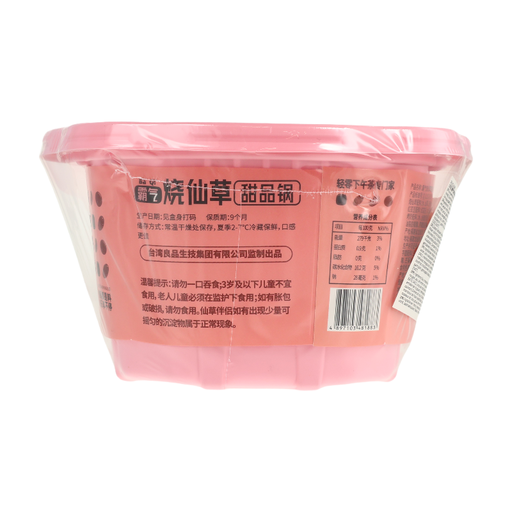
Why this product suits this profile: The large dessert pot is a great way to try Grass Jelly and can be combined with fruit, syrup or condensed milk.
The product information lists the ingredients, allergens and nutritional values, as well as clear storage instructions for after opening.
338 g of product, ready to eat and listed at 36 kcal per 100 g; versatile for desserts and drinks.
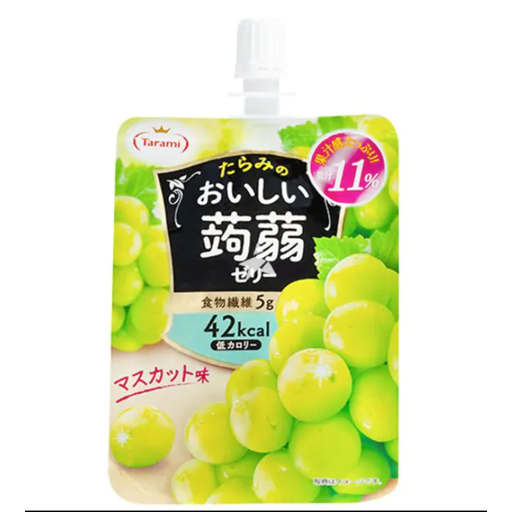
Why this product suits this profile: The Japanese recipe combines Muscat grape juice, konjac powder and a lightly elastic texture in a single serving.
The information states 54 kcal and 11.5 g of sugar per 100 g, as well as possible trace warnings, rather than simply promoting the fruit flavour.
150-g portion, ready to eat and, according to the product information, made without any of the 14 major EU allergens in the recipe.
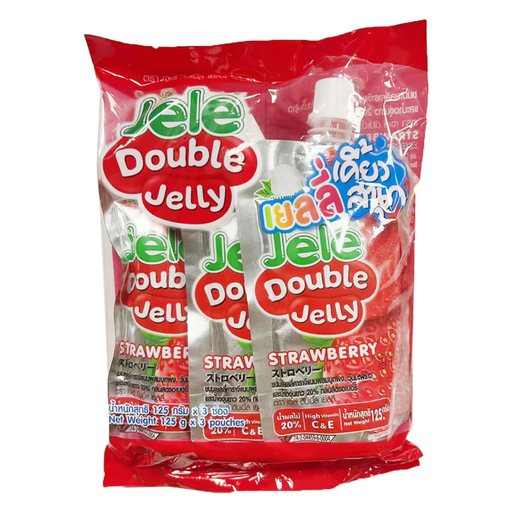
Why this product suits this profile: Three cups of strawberry jelly with Nata de Coco pieces are ideal for families, desserts and keeping a supply at home.
The pack contains three separate 125-g cups, so you do not have to use the entire quantity immediately after opening.
46 kcal per 100 g, 15% Nata de Coco according to the ingredients information, and easy storage in a cool, dry place.
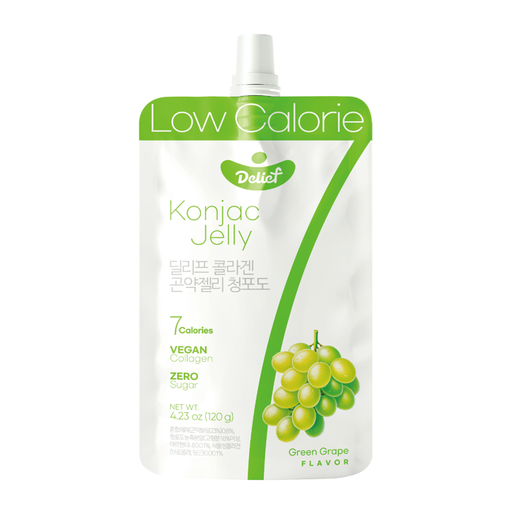
Why this product suits this profile: The product description identifies it as vegan and highlights a green grape flavour in a small individual portion.
The selection is based on the declared vegan suitability and published ingredients, rather than the packaging alone.
According to the product information, 5 kcal per 100 g and 0 g of sugar; check the current labelling and packaging before buying.
We have put together a complete, regularly updated list of products that fully meet these strict selection criteria and the safety regulations applicable in the EU.
Most products are ready to eat. Konjac jelly can be eaten chilled, straight from the pouch or cup. Some varieties can also be briefly frozen to create a firmer, ice-like consistency. Grass Jelly can be diced and added to bubble tea, sweet soups or fruit bowls. Nata de Coco works well with milk or fruit drinks, provided the ingredients list is suitable for your preferred diet.
Unopened products should be stored in a cool, dry place or at room temperature, as indicated on the packaging. Once opened, many products should be refrigerated and consumed within the stated period. Do not eat the snack if the seal is damaged, it has an unusual smell or the best-before date has passed.
Not necessarily. Particularly firm konjac jellies and products in small cups may present a choking hazard. Follow the specific warnings on the packaging. Children should only be given jelly snacks under supervision and in small, thoroughly chewed portions; some products are explicitly not suitable for children.
Shelf life depends on the product. Some Japanese varieties state an overall shelf life of twelve months from production. However, the exact best-before date is shown on the packaging. Once opened, refrigeration and prompt consumption are essential.
Nata de Coco, diced Grass Jelly and firmer fruit jellies are suitable for bubble tea. They retain their structure better than very soft varieties. Add the jelly to the drink shortly before serving so that it does not absorb unnecessary liquid or change its texture.