Daytime viewers
If you watch with the curtains open or the lights on, you’ll want to make out dark scenes despite reflections. RTINGS.com points out that reflection handling matters just as much as brightness.


If you often watch TV in daylight, a specific Mini LED LCD model is a sensible place to start: RTINGS.com often recommends this type of TV for bright rooms, but you’ll need to check the individual model’s reflection handling and brightness. OLED is also worth considering if you regularly darken the room and prioritise stars against a dark background; its advantage in dark scenes alone doesn’t tell you how it will handle reflections from a window beside your viewing position. Before choosing a model, also compare reception options, the right screen size and energy consumption.
If you watch with the curtains open or the lights on, you’ll want to make out dark scenes despite reflections. RTINGS.com points out that reflection handling matters just as much as brightness.
If you can darken the room at times, black skies and small bright objects are likely to matter most to you. RTINGS.com describes OLED as a suitable option for dark rooms.
If you watch regular TV as well as astronomy programmes, take your existing reception method and screen size into account. Germany’s Federal Network Agency lists DVB-T2, IPTV and satellite among the available reception options; the Federal Environment Agency highlights the link between screen size and electricity consumption.
A good fit if: you often watch in daylight and want to make out dark scenes even with ambient light in the room.
The trade-off: Reflection handling, brightness and control of light in dark scenes vary by model and screen size.
A good fit if: you often darken the room and prioritise deep blacks and small bright points of light.
The trade-off: Its advantage in dark scenes doesn’t guarantee good visibility in direct light from a window. You should also consider the risk of burn-in if unchanged elements stay on screen for long periods.
A good fit if: purchase price and everyday TV viewing matter more than especially nuanced images of dark space scenes.
The trade-off: With less precise backlighting, blacks may look raised in dark scenes; the specific TV is what matters.
When choosing a TV for astronomy programmes in a bright living room, four different buying priorities come into play.
| Priority | What to check when buying | Who it matters most to |
|---|---|---|
| Daylight and reflections | Compare the positions of windows and lights with the model’s reflection handling and brightness. | When I watch in daylight, I want to make out dark space scenes despite light sources in the room. Around 36% of consumers prioritise reflection handling and daytime viewing. |
| Stars and dark scenes | Compare small bright objects against a dark background in your usual room lighting, and consider how the specific model handles light. | If I can darken the room, I pay particular attention to blacks and small bright points of light. Around 29% of consumers are primarily concerned with star detail. |
| Programme reception | Decide how you’ll receive programmes and check that the tuner, connections or apps you need are supported. Germany’s Federal Network Agency lists DVB-T2, IPTV and satellite as alternatives to cable. | If I want to watch specific astronomy programmes, the TV needs to work with my reception method or streaming service. Around 21% of consumers prioritise access to programmes. |
| Size and electricity consumption | Check that the screen size suits your available space, and compare the energy label and model-specific consumption figures. | When choosing a TV, I want a screen that’s the right size without overlooking its running costs. Around 14% of consumers have this priority; the Federal Environment Agency notes that larger screens can use more electricity. |
Brightness and reflections affect each other. Even a suitable coating won’t prevent every distracting reflection, as RTINGS.com explains in its guidance on reflections.
Check whether any windows or lights will be opposite your planned screen position, and compare reflection test results for the exact model.
Mini LED TVs vary in how they control light; OLED’s advantage in dark scenes doesn’t automatically mean good visibility in direct ambient light. Features and picture quality can also vary with screen size.
Compare your preferred size and dark scenes under the lighting conditions you usually watch in.
Reception depends on the connection or service you use. Germany’s Federal Network Agency lists DVB-T2, IPTV and satellite, for example; the Federal Environment Agency also recommends considering the electricity consumption of the specific TV.
Decide how you’ll receive programmes before buying, then compare energy labels and consumption figures before choosing a size or feature set.
The examples below relate to the product ranges and models mentioned, not to each brand’s entire range.
The German QN90F range is a Mini LED option to consider for bright rooms.
The German C8L range is a Mini LED alternative; check the features available for the size you’re considering.
The OLED65G59LS is an OLED option for viewers who often darken the room and prioritise dark scenes.
The BRAVIA 9 II range offers an RGB LED option using LCD technology.
The 55U7DS Pro is an example of a Mini LED option featured in a German review.
The Joybuy models below are Mini LED LCD TVs for buyers considering this picture technology for astronomy programmes in a bright living room. Check that their reflection handling and screen size suit your room.
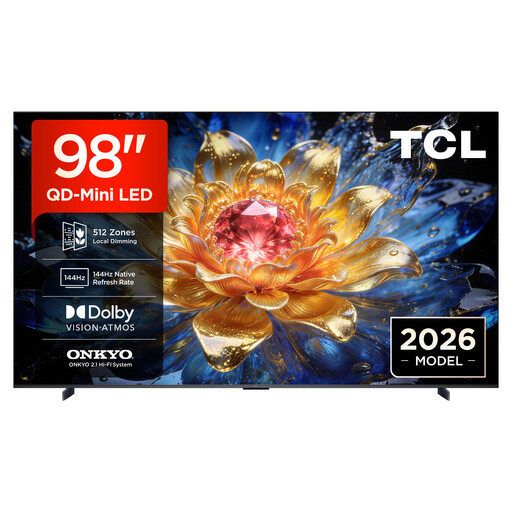 No image available
Worth considering if you’re specifically looking for a large Mini LED TV. First check that your room has enough space and that your viewing distance is suitable.
4K HDR.
512 dimming zones.
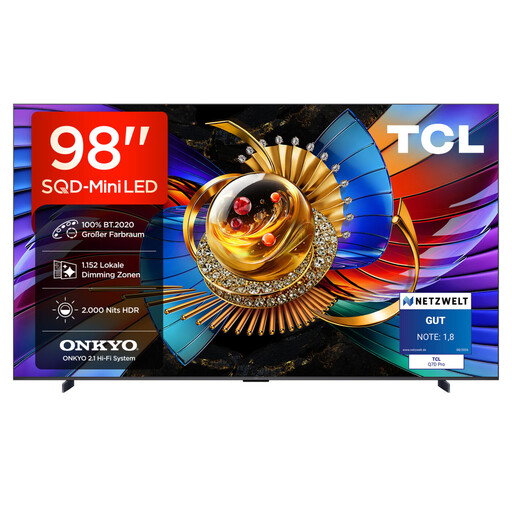 No image available
An option for buyers comparing large Mini LED TVs with the Anti-Reflection feature mentioned in the title; check how well it works where you plan to place the TV.
4K, 1.152 local dimming zones and 2.000 Nits HDR.
144 Hz; check the available space and viewing distance before buying.
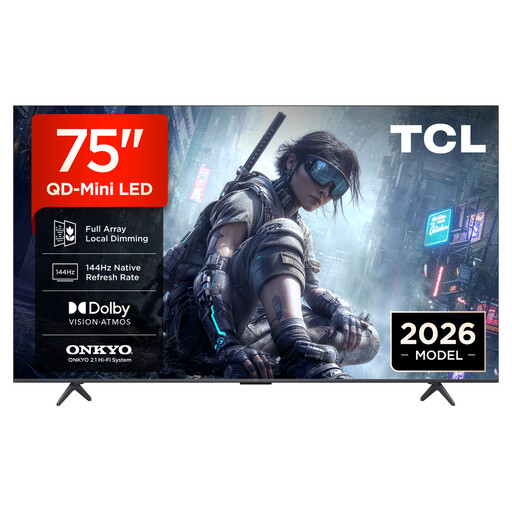 No image available
Worth considering if you’re comparing 75-inch Mini LED TVs; make sure the size suits your available space and viewing distance.
4K HDR and 144 Hz VRR.
Dynamic Dimming.
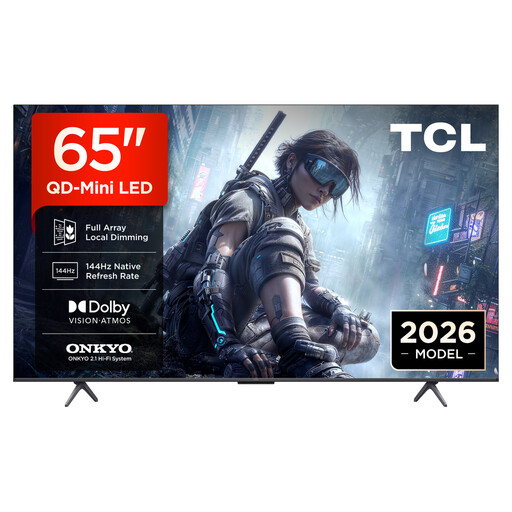 No image available
Worth considering if you’re looking to see whether a 65-inch Mini LED TV is right for your room.
4K HDR and 144 Hz VRR.
Dynamic Dimming.
 No image available
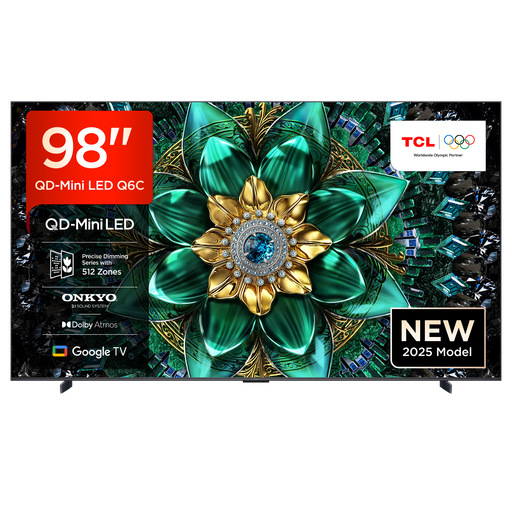
An option if you’re specifically comparing 98-inch TVs with Mini LED local dimming; check that you have enough space and that your viewing distance is suitable.
4K HDR and 1.000 Nits peak brightness.
144 Hz.
No, the label alone isn’t enough. Check reflection handling, brightness and how the specific model displays dark scenes; direct light will still make a difference.
Before setting up the TV, check whether any windows or lights will be opposite the screen, and decide how you’ll receive programmes. Germany’s Federal Network Agency lists DVB-T2, IPTV and satellite among the alternatives to cable; then check that the model you choose has the right features.
Compare the EU energy label and consumption figures for the specific model. The Federal Environment Agency also recommends choosing only as large a screen as you need; don’t try to judge consumption from the technology label alone.
Your statutory rights against the retailer are separate from any voluntary guarantee. If a fault occurs, the first step may be to request a repair or replacement; the exact conditions depend on the circumstances.
Old electrical equipment must be disposed of separately, for example at a local recycling centre. Germany’s Federal Ministry for the Environment also lists retailers as possible take-back points, subject to legal requirements; check how returns are handled when you place your order.