
Lieferung heute & morgen

Qualitätsgarantie

Willkommens-Angebote freischalten: KOSTENLOSE Lieferung | Bis zu 80 % RABATT | Kostenlose 30-Tage-JoyPlus-Testphase
App herunterladen
A new hair colour can transform your look and boost your confidence. Dyeing your hair at home is a practical and cost-effective alternative to a salon visit. However, the market for hair colour is vast, and the promises on the packaging are varied. This often leads to disappointment when the result doesn't meet expectations. As your Joybuy Product Recommendation Officer, I'm here to help you identify the common pitfalls and make an informed decision.
Many users invest time and money in a hair colour, only to end up with an uneven result, an unexpected shade, or damaged hair. These problems can often be traced back to three fundamental misjudgements:
To avoid these mistakes, you should check three core technical aspects before buying. These are the primary determinants of the colour result, its longevity, and the effect on your hair.
The longevity of a hair colour is classified in levels. This classification is the most important guide for your purchasing decision.
Ammonia is an effective, but also pungent, alkalising agent. It opens the hair's cuticle layer so that the colour pigments and oxidising agent can penetrate.
Check whether the product is intended for a full-head application, just for a root touch-up, or as a simple colour refresher (glossing). A good kit includes not only the colour and developer but also high-quality gloves, clear instructions, and a nourishing after-treatment (conditioner or mask) to close the cuticle layer after colouring and seal in the colour.
Based on these criteria, we have identified products suitable for various needs and use cases.
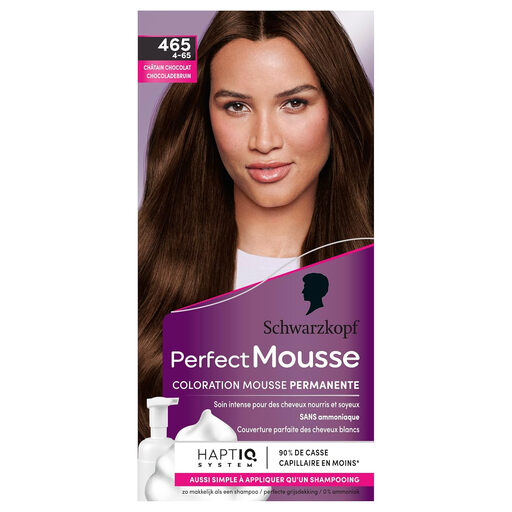
Why This Fits Their Persona: Ideal for anyone who wants a gentle yet simple application. The non-drip foam texture is as easy to distribute as a shampoo, making it especially beneficial for beginners.
The ammonia-free formula sidesteps the pitfall of harsh chemicals. It offers a gentler alternative that avoids the pungent smell and is kinder to the scalp, without compromising on grey coverage.
Easy application thanks to foam texture; permanent colour with reliable grey coverage; ammonia-free formula.
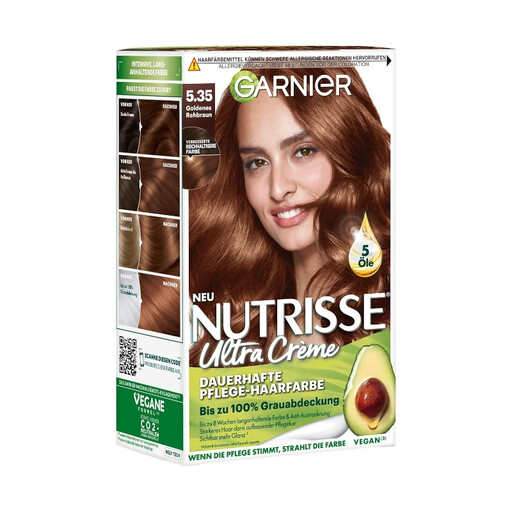
Why This Fits Their Persona: This permanent cream colour is designed for users whose main goal is complete and long-lasting coverage of grey hair. The creamy, non-drip texture allows for precise application.
This product directly addresses the pitfall of insufficient grey coverage. As a Level 3 permanent colour, it is formulated to reliably cover even a high percentage of greys and deliver a uniform, rich colour result.
Formula for up to 100% grey coverage; enriched with 5 nourishing fruit oils; long-lasting colour intensity.
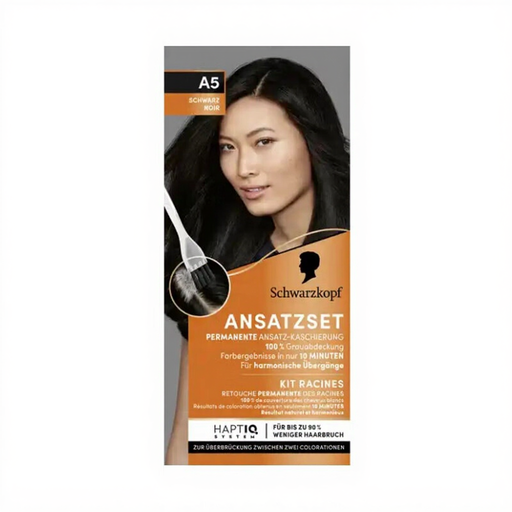
Why This Fits Their Persona: Perfect for anyone looking to conceal regrowth between full colour applications. This kit saves time and protects already coloured lengths from another chemical treatment.
It prevents unnecessary stress on the entire head of hair. Instead of a full re-colour, only the visible roots are treated. This prevents hair damage and colour build-up on the lengths, which can lead to an uneven result.
Quick application in just 10 minutes; precision brush for targeted application; compatible with all permanent hair colours.
We have compiled a complete, up-to-date list of products that fully meet these strict selection criteria and local safety regulations.
The final result always depends on three factors: your starting hair colour, the percentage of grey hair, and your hair's texture. Porous or previously coloured hair accepts colour differently than healthy, virgin hair. Therefore, always refer to the application chart on the product packaging and not just the model's picture.
A temporary colour (Level 1) only coats the outside of the hair and washes out after a few shampoos. It cannot lighten the hair. A permanent colour (Level 3) penetrates deep into the hair with the help of oxidising agents, changes the pigments permanently, and grows out over time. It is necessary for a significant colour change or for grey coverage.
With a permanent colour, it is recommended to only touch up the roots every 4 to 6 weeks to protect the already coloured lengths. A full-head application should be done infrequently to avoid breakage and structural damage. Temporary colours and glosses can be used more often as they are gentler. Always follow the safety instructions and perform a patch test for allergies 48 hours before each application.