Preparing dip for several portions
If you want to make your recipe in as few batches as possible, compare the usable capacity rather than just the stated capacity.


Whether you need a blender depends first on the texture you want. For roughly chopped aubergine, simply mixing it with the other ingredients is enough; for a creamy dip, you could use a hand blender, food processor or jug blender. For larger batches, usable working capacity matters more than the stated bowl or jug capacity alone. Also consider cleaning, storage and the manufacturer’s instructions for warm ingredients.
If you want to make your recipe in as few batches as possible, compare the usable capacity rather than just the stated capacity.
If you’re deciding between chunky aubergine and a smooth, puréed dip, your preferred texture will determine whether you need an appliance at all.
If you want to keep cleaning and storage to a minimum after batch cooking, consider the blending foot, bowl and accessories included.
A good fit if: you want to leave the cooked aubergine flesh chunky and mix it with the other ingredients.
Consider: the result won’t be the same smooth, finely puréed dip as a creamy recipe variation.
A good fit if: you want to purée a creamy dip in a suitable container and store a compact appliance.
Consider: the shape of the container, the risk of splashes and whether larger quantities will need to be blended in several batches.
A good fit if: you want to process aubergine flesh with other ingredients in a work bowl, or use the appliance for chopping too.
Consider: the bowl and blade need washing, and the stated capacity alone won’t tell you how much dip will fit at once.
A good fit if: you regularly want to blend other foods in the jug as well as making dip, and have room for a countertop appliance.
Consider: whether your portion is suitable for the jug and what the instructions say about warm ingredients.
| What matters to you | What to check before buying | Who it matters most to |
|---|---|---|
| Usable capacity | Compare your recipe quantity with the working capacity, fill markings and instructions for the model. Kenwood lists a 1.3 l bowl capacity for the FDP23.140GY, but a working capacity of 0.75 l. | If I want to prepare a larger main batch in as few rounds as possible, usable working capacity matters. Around 36% of consumers put batch capacity first. |
| Preferred texture | Decide before buying whether you want a chunky or creamy dip. If you choose an appliance, check how to use its speed settings or pulse function. | If I want to keep pieces in my dip, I don’t automatically need an appliance; puréeing is part of making a creamy version. Around 29% of consumers base their choice primarily on the texture they want. |
| Cleaning and storage | Check what’s included, which parts are removable and the model-specific cleaning instructions. Don’t assume that dishwasher suitability applies to the whole appliance. | If I regularly batch cook, I want to clean and put away as few parts as possible afterwards. Around 21% of consumers prioritise cleaning and storage space. |
| Different portion sizes | Check the instructions for both large and small quantities. Don’t assume that a model is suitable for small portions just because it has a high maximum capacity. | If I sometimes make a small quantity as well as a larger batch, the appliance needs to suit both situations. Around 14% of consumers first consider the need to make different portion sizes. |
The Kenwood FDP23.140GY has a stated bowl capacity of 1.3 l and a working capacity of 0.75 l. When planning a batch, the working capacity for the ingredients is the figure that matters.
Compare your recipe quantity with the working capacity, fill markings and instructions for the specific model.
If the ingredients don’t fit in one batch, you may need extra processing and cleaning rounds.
One recipe might call for cooked aubergine flesh to be roughly chopped and mixed with the other ingredients; another might purée it until creamy. The texture you want determines whether you need a blender at all.
Before buying, decide whether you want to keep some pieces in the dip or purée it until smooth.
An appliance you don’t need means an extra purchase and more washing up.
Philips says that the HR3760/10 can blend hot ingredients. This doesn’t mean that other models can do the same, or that you can blend any quantity.
Before adding ingredients, check the instructions for your specific appliance for temperature and fill limits.
Food processors for anyone who wants to make aubergine dip in a work bowl and use the appliance for chopping too.
The MultiPro Go is a compact food processor for when you need to do other food preparation as well as puréeing.
ErgoMixx hand blenders are designed for puréeing in a suitable container; accessories vary by model.
A jug blender is one option if you also want to blend other foods in the jug as well as making dip.
MultiQuick hand blenders are designed for puréeing in a suitable container.
The Joybuy products below are hand and jug blenders for making smooth, puréed dips. For larger batches, consider the suitable fill level for the container and whether you may need to blend in more than one round.
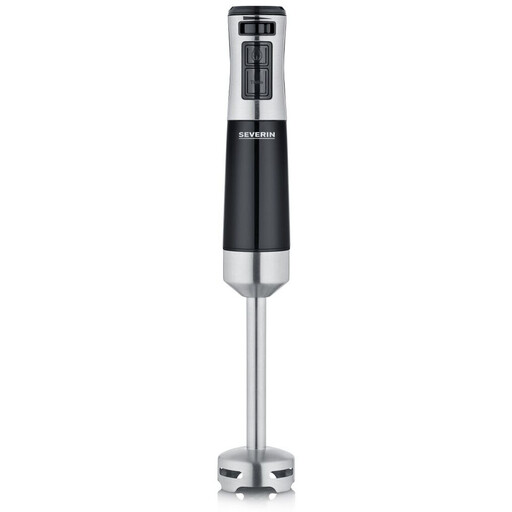 No image available
For smooth, puréed dips when you want a detachable blending foot and variable speed control.
The blending foot is detachable, and the removable parts are listed as dishwasher-safe. The model is also described as suitable for chopping.
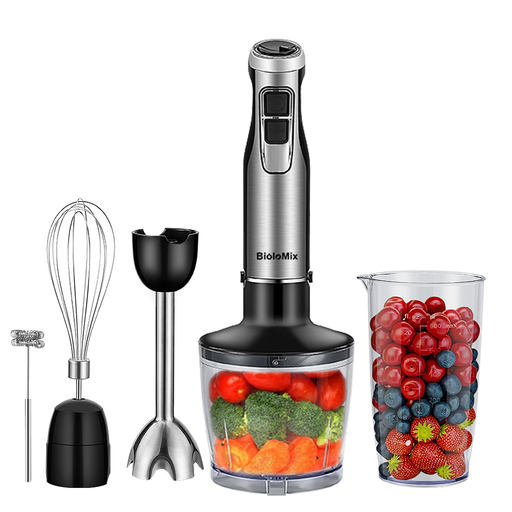 No image available
For puréeing dip when you want to adjust the speed across several settings.
The model has six speed settings, a stainless-steel blade, an anti-splash system and a detachable design.
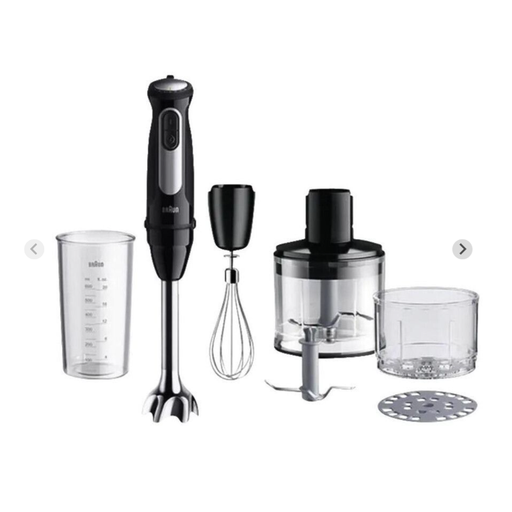 No image available
For puréed dips and sauces when you want to control the process using different speed settings.
The metal blending foot is detachable; the model has 25 speeds and a turbo function. If the motor heats up, it needs a break; avoid running it continuously for long periods.
 No image available
For puréed dishes when you want to use a separate container.
The product details list an 800-ml beaker and a 500-ml chopper bowl among the items included. The model also has two speed settings and a detachable design.
 No image available
If you want to use the blender attachment for other ingredients, such as sauces and purées, as well as dip.
According to the product details, the blender attachment has eight speed settings and a pulse function. Continuous operation is limited to a maximum of six minutes.
No. For a chunky dip, you can chop the cooked flesh and mix it with the other ingredients; for a creamy version, you’ll need to purée it. It all depends on the texture you want.
No. Whether warm ingredients are suitable depends on the model. Philips specifically says that the HR3760/10 can handle them; follow its instructions and don’t assume the same applies to other appliances. One German dip recipe recommends letting the aubergine cool before puréeing it.
The German Federal Institute for Risk Assessment recommends keeping perishable foods as cold as possible until they’re eaten or processed. This is general food hygiene advice, not a guarantee of how long a particular recipe will keep.
In Germany, you have statutory consumer rights against the retailer; a manufacturer’s guarantee is separate and voluntary. The consumer advice centre recommends checking the guarantee terms and the spare parts and servicing information for the specific offer.
No. For products that must carry a CE mark under applicable EU regulations, the manufacturer uses it to declare that the product meets the requirements. The regulations that apply to a particular appliance need to be checked for that product; CE marking doesn’t prove better performance when making dip.