You don’t need a blender to make chunky aubergine dip: you can mash the soft flesh by hand. If you want to control the consistency and blend the dip in your own container, a hand blender is an obvious choice. For a larger, more evenly blended batch, you could consider a jug blender, provided the specific model’s maximum working capacity is sufficient. When choosing, take the container capacity, the number of batches and cleaning into account.
Which option is right for you?
Batch cooks making larger portions
If you want to prepare as much dip as possible after roasting, then freeze it in portions, compare the usable capacity and the effort involved in blending several batches. The SWR explains the differences between jug and hand blenders when preparing food, while the German Federal Centre for Nutrition recommends suitable freezer containers for prepared food.
Fans of a texture they can control
If you like your dip chunky or smooth, depending on your taste, the texture you want is key. A recipe from The Mediterranean Dish uses roasted aubergine as the base for a creamy dip; for a more rustic texture, you can also mash the soft flesh by hand.
Cooks short on space
If you only make a batch now and then and want to keep storage and cleaning to a minimum, first see if mashing by hand will do the job. The SWR describes a hand blender as a practical option for smaller quantities that can be blended directly in your own container.
What should you look for when buying?
First decide how much dip you want to blend at once and what texture you’re after. Then you can compare the container, appliance and cleaning effort more easily.
| Buying priority |
What to check |
Who is it important for? |
| Quantity and fill limit |
Compare your batch size with the maximum working capacity of the specific jug blender. With a hand blender, check that your own container is large enough. |
If I want to blend a large portion in as few batches as possible, the usable capacity needs to be right. Around 36% of consumers put quantity first. |
| Desired texture |
First decide whether you want the dip chunky or smooth. For a rustic version, use short blending bursts or mash the soft flesh by hand. |
If you want to control the consistency yourself, you don’t automatically need an appliance. Around 29% of consumers put texture first. |
| Cleaning and storage |
Check whether the blending foot is removable and read the cleaning instructions for the exact model. Only plan for accessories you’ll actually use. |
If I want to clean and store as few parts as possible after cooking, a straightforward appliance design matters. Around 21% of consumers put this first. |
| Other uses |
Consider whether you’ll regularly blend or chop other ingredients as well as making dip. Check what’s included against the full model number. |
If you want to use an appliance for other tasks too, weigh up the accessories you need against how often you’ll use them. Around 14% of consumers see versatility and purchase as their main priority. |
Common buying misconceptions
-
A more powerful or larger blender will automatically make better dip
Chunky and smooth are different preparation goals. A container’s stated capacity also doesn’t tell you on its own what the maximum working capacity is for that particular appliance.
Decide on the texture and batch size you want first. Then compare the appliance type, maximum working capacity and accessories you’ll need.
-
A small blending cup will hold the whole batch
A cup supplied with the appliance, such as one with a capacity of 500 ml or 700 ml, isn’t automatically large enough for a whole batch of dip.
Compare your portion size with the specific accessories and maximum working capacity. Allow for several batches if needed.
-
The blending container is automatically suitable for freezing too
A container that’s designed for blending isn’t necessarily rated as freezer-safe.
Once the dip has cooled, transfer it into suitable, labelled portions and check that the containers are specifically intended for freezer use.
You may need separate freezer-safe containers for portioning.
Brands and models to consider
Bosch
The ErgoMaster hand blender MSM6M831 is an option if you want to blend in your own container and control the speed.
- Bosch lists a removable metal blending foot, variable speed control and a 500-ml chopper for the MSM6M831.
- The chopper’s capacity shouldn’t be taken to mean it can hold a whole batch of dip.
Braun
The MultiQuick 7 MQ7035X is a hand blender designed for blending and additional chopping tasks.
- Braun lists a 1,000-W motor and ActiveBlade for the MQ7035X.
- These manufacturer specifications aren’t evidence of an independent test with aubergine dip. Before buying, check what’s included and the exact model name.
Philips
Philips offers both the HR2685/00 hand blender with food processor attachment and the HR3041/00 jug blender. Choose the type that suits the quantity and how you like to work.
- Philips lists a 1.7-l food processor attachment and a 0.5-l chopper for the HR2685/00, and an automatic cleaning function for the HR3041/00.
- These specifications don’t confirm a safe working capacity for hot dip or compare blending results.
Kenwood
The Triblade HDP106WG is a hand blender with a metal blending foot and a supplied beaker for smaller tasks.
- Kenwood lists one speed setting and a 700-ml beaker for this model.
- Don’t assume the beaker’s capacity is the right working quantity for a whole batch of dip.
Severin
The SM 3773 hand blender is a compact option for individual tasks.
- Severin lists a removable stainless steel blending rod, variable speed control and a 0.7-l blending container.
- The small blending container is suited to individual batches, not necessarily to blending an entire batch of dip at once.
Joybuy products for aubergine dip
These product options include hand and jug blenders for blending in the supplied container or a suitable container of your own.
 No image available
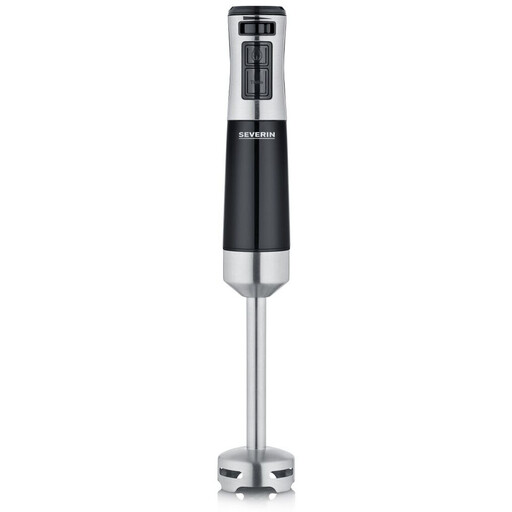
Severin SM 3771 hand blender, 600 W
A hand blender option if you want to blend the dip in your own suitably sized container.
The product name specifies 600 W, variable speed control and a removable blending rod.
View at Joybuy
 No image available
3-in-1 jug blender, 800 W, 1,500-ml blending jug
A jug blender could be a good option if you want to blend the dip in the jug and the maximum working capacity suits the portion you’ve prepared.
The product name specifies 800 W and a 1,500-ml blending jug. The stated capacity alone doesn’t confirm the maximum working capacity for a whole batch of dip.
View at Joybuy
 No image available
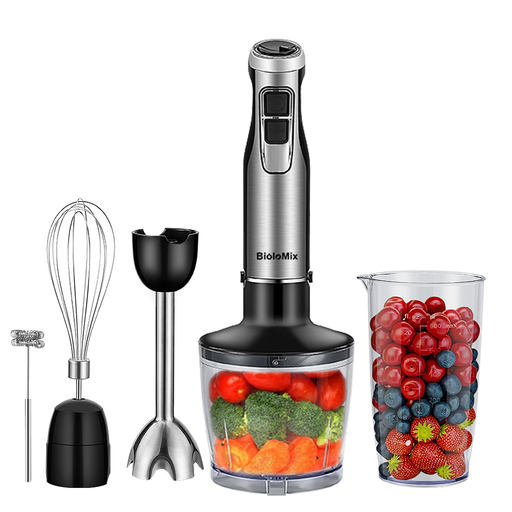
BioloMix HB1200 4-in-1 hand blender, 1,200 W
A hand blender option if you want to adjust the texture gradually and work in a suitable container.
The product name specifies six speed settings, 1,200 W, a stainless steel blade and a removable design.
View at Joybuy
 No image available
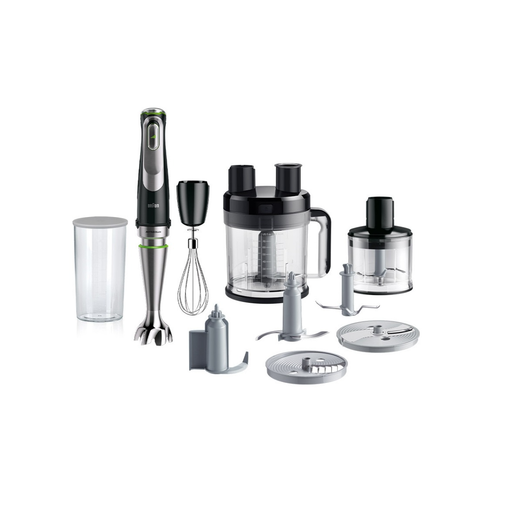
Braun MultiQuick 9 MQ 9195XLI, 1,200 W, 2-l blending beaker
A hand blender with a blending beaker is an option if you don’t want to blend in your own container.
The product name specifies 1,200 W and a 2-l blending beaker. For your intended use, check the instructions on temperature, fill level and use with hot ingredients.
View at Joybuy
 No image available
ochama jug blender, 600 W, 1.5-l jug
A jug blender could be an option if you want to blend the dip in the jug and your prepared portion is within the maximum working capacity.
The product name specifies 600 W, a 1.5-l jug and three speed settings. The jug’s capacity doesn’t confirm the maximum working capacity for a whole batch of dip.
View at Joybuy
Frequently asked questions
Can I freeze roasted aubergine dip in portions?
Yes. Freezing is one way to store prepared food. The German Federal Centre for Nutrition recommends using suitable freezer containers, filling them with as little air as possible and labelling them with the contents, quantity and date. For longer storage, the German Federal Institute for Risk Assessment recommends cooling hot food quickly to below 7 °C; this doesn’t establish a specifically tested shelf life for this recipe.
Can I blend the dip while it’s still hot?
You can’t tell from the type of blender alone. Check the instructions for the specific model to find its permitted temperature, fill level and lid requirements. Unless this information is provided, it hasn’t been confirmed as suitable for hot ingredients.
If a blender is faulty, who is responsible: the retailer or the manufacturer?
When you buy as a consumer in Germany, you have statutory warranty rights against the seller. A manufacturer’s guarantee is separate and voluntary. The Verbraucherzentrale lists repair or replacement as ways of putting a fault right.
What should I look for when it comes to electrical product safety?
The EU Low Voltage Directive 2014/35/EU, in the consolidated version dated 30 May 2026, applies within the rated voltage ranges it specifies. Products covered by the directive must meet the relevant conformity requirements; the European Union describes CE marking as the manufacturer’s declaration that applicable product rules have been met. CE is not an independent quality mark and doesn’t confirm that a particular blender can process hot ingredients. For the appliance you’re considering, check that the model, voltage information, marking and instructions all match.


