Batch-cooking enthusiasts
You want to make several portions of roasted aubergine dip and plan how to blend the mixture in manageable batches before dividing it up for the freezer.


When making several portions for the freezer, first check that the blending foot and container are suitable for your planned batch sizes and that you can comfortably blend several batches. Variable speed is useful if you want more control over the texture; a large accessory set is worthwhile mainly if you’ll use the extra parts for other prep too. General tests and manufacturer specifications don’t show how well a blender performs specifically with aubergine dip.
You want to make several portions of roasted aubergine dip and plan how to blend the mixture in manageable batches before dividing it up for the freezer.
You want to control whether your dip stays chunky or becomes smoother, rather than basing your choice on wattage alone.
If you’re making several batches, you’ll want to know which parts can be cleaned as instructed and whether anything needs to be washed by hand.
The percentages below refer to consumers choosing a hand blender for making roasted aubergine dip in batches; each person is assigned to their main purchase priority.
A good fit if: You mainly blend soft roasted aubergine and want to store only a few parts.
The trade-off: A basic set comes with fewer accessories; check the capacity of the container and the cleaning instructions for the exact model.
A good fit if: You want to adjust the texture from chunky to smooth.
The trade-off: More settings don’t guarantee a particular result with aubergine; cleaning and ease of use vary by model.
A good fit if: You regularly chop or slice other ingredients as well as making dip, and will use the extra attachments.
The trade-off: More accessories need storage and extra cleaning; the food processor’s capacity isn’t automatically the right amount for blending with the hand blender.
| Purchase priority | What to check | Who is it important to? |
|---|---|---|
| Batch size | Check the container you’ll actually blend in and plan suitable batch sizes. Kenwood lists a 700 ml beaker for the HDP106WG. | When I’m preparing several portions for the freezer, I want to know whether my container is suitable for manageable batches. Around 40% of consumers say batch size is their main priority. |
| Dip texture | Compare how the specific model operates and what settings it offers; wattage alone doesn’t tell you what the result will be. | If I want to keep some chunks in my dip, I need to be able to control the blending process. Texture is the main priority for around 30% of consumers. |
| Cleaning | Check the instructions for the blending foot, beaker and motor unit separately. According to COMPUTER BILD, the blending foot on the Kenwood HDP106WG was not dishwasher-safe. | When making several batches, I want to know exactly which parts need washing by hand afterwards. Around 20% of consumers rank cleaning as their main purchase priority. |
| Extra attachments | Compare what’s included with the exact model against the other tasks you’d use a chopper or food processor for. | If I regularly prepare other ingredients as well as dip, I want any extra attachments to be genuinely useful for those tasks. Around 10% of consumers put the usefulness of accessories first. |
General test results relate to specific appliances and ingredients, not necessarily roasted aubergine. Braun’s product page for the MultiQuick 5 Pro MQ 55001 M also gives conflicting power specifications, so don’t use wattage as your main point of comparison.
Compare how each model operates, its blending foot and independent test findings. If you want to keep some chunks in your dip, start with short bursts.
The food processor and blending foot are different accessories, and they aren’t designed for the same way of filling.
Check the container you’ll actually use for blending and divide the mixture into suitable batches if needed.
Unneeded attachments take up storage space and need extra cleaning after use.
Detachable means a part can be removed; it doesn’t tell you how that part can be cleaned. According to COMPUTER BILD, the blending foot on the Kenwood HDP106WG was not dishwasher-safe.
Check the cleaning instructions for every part of the exact model in the user manual.
For longer storage, Germany’s Federal Institute for Risk Assessment recommends cooling hot food quickly to below 7 °C. The Federal Centre for Nutrition recommends measuring out the amount you need and freezing it in portions.
Allow time for cooling, and set aside suitable, labelled freezer containers or bags as separate steps.
You may need suitable containers or freezer bags for individual portions.
The ErgoMaster MSM6M8X1 is aimed at people who want to use the included accessories for other food preparation as well as blending.
The MultiQuick 5 Pro MQ 55001 M is an option for consumers who want to take control settings for texture into account when blending.
The Triblade HDP106WG has a relatively simple set of features and comes with a stated 700 ml blending beaker.
According to Severin, the SM 3773 combines stepless speed control with a detachable blending shaft.
The 5000 Series HR2685/00 is worth considering if you regularly want to slice or chop as well as blend.
This selection features hand blenders for batch blending, with a range of controls and accessories.
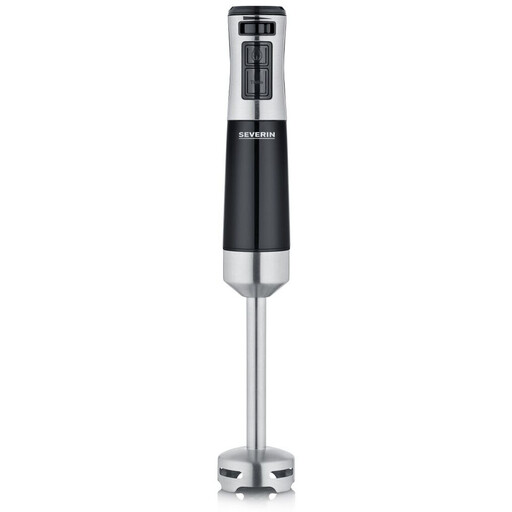 No image available
For consumers who want to blend dip in batches and adjust the texture as they go.
600 W, variable speed control and detachable blending shaft, according to the product name. The description recommends avoiding extended continuous use and allowing the motor to cool between uses.
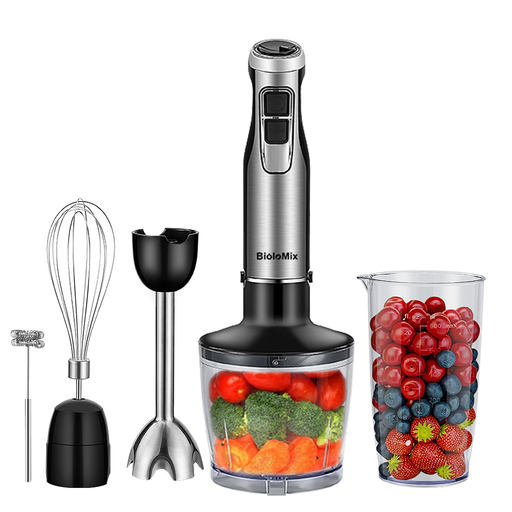 No image available
An option if you want to use different speed settings when blending.
Listed in the product name: six speed settings, 1200 W, stainless steel blades, splash guard and detachable design.
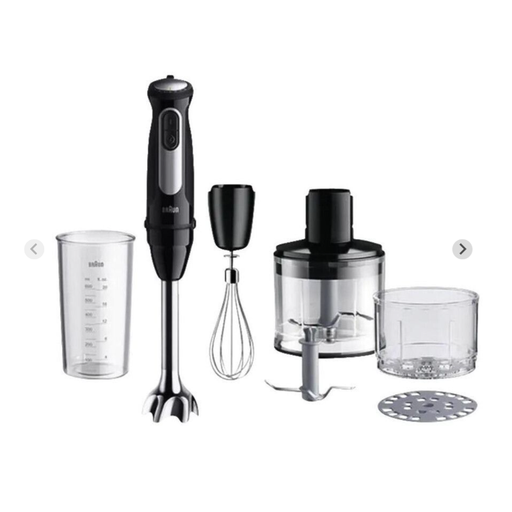 No image available
For consumers looking to achieve different textures when blending and use a suitable container.
The description recommends avoiding extended continuous use and taking a break if the motor gets hot.
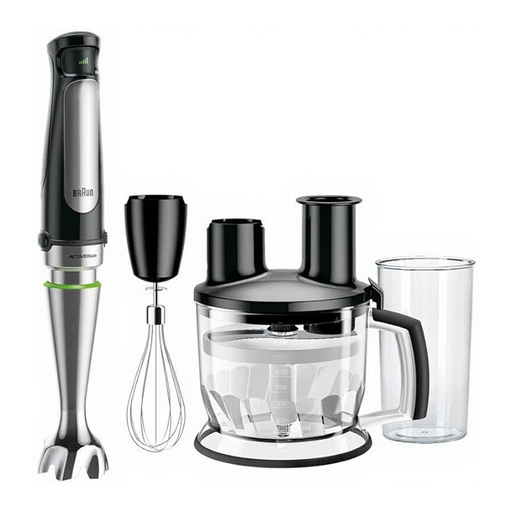 No image available
An option if you’re planning other food preparation as well as making dip. Check which attachments are included with the exact version and which container you’ll use for blending.
 No image available
For consumers who want to vary the speed when blending and use accessories in addition to the blending shaft.
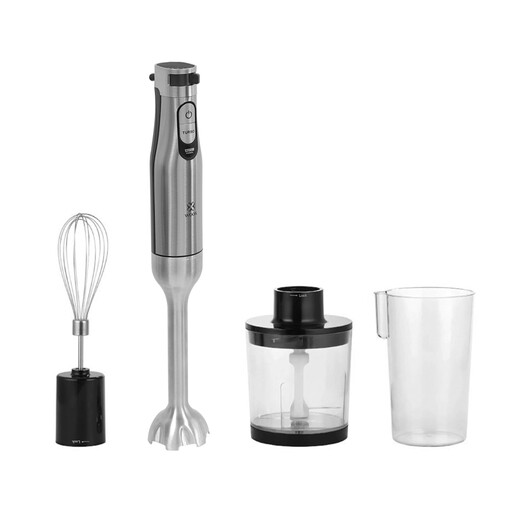
The product name lists 1200 W, variable speed control, blending shaft, chopper, whisk and milk frother.
No, you can plan suitable batches for your blending container. The capacity of a blending beaker or food processor doesn’t automatically determine how much you can blend for your whole batch for the freezer. Kenwood lists a 700 ml beaker for the HDP106WG; Bosch lists the food processor for the MSM6M8X1 as a separate accessory.
Follow the instructions for the exact model and clean the motor unit and detachable blending foot separately. Severin’s instructions for the SM 3773 say to unplug it before cleaning, warn against immersing the appliance and point out that the blades are sharp.
For longer storage, cool hot food quickly; Germany’s Federal Institute for Risk Assessment recommends cooling it to below 7 °C. The Federal Centre for Nutrition recommends measuring out the amount you need and freezing it in portions. Use suitable freezer containers or bags, and label each portion.
Your statutory rights for a faulty product are against the seller; a voluntary manufacturer’s guarantee is separate and is subject to its own terms. The Verbraucherzentrale (German consumer advice centre) explains the difference. Also check whether a repair service is available for the exact model.
No, a food processor’s capacity doesn’t automatically apply to blending with the hand blender. The food processor and blending foot are different accessories; when blending, follow the guidance for the container you’re actually using and the instructions in the manual.