Cooking with access to a shared oven
If you can arrange access to the shared oven, first check whether its interior is large enough for your baking dish. REWE’s aubergine roll recipe uses a dish measuring around 25 × 20 × 5 cm.


If you can use the shared oven and your baking dish fits inside, you don’t need to buy another appliance just to make aubergine rolls. A REWE recipe uses a dish measuring around 25 × 20 × 5 cm and bakes the prepared rolls for about ten minutes. A freestanding mini oven may be a better option if you want more independence and have enough room for it, including the clearances specified by the manufacturer.
If you can arrange access to the shared oven, first check whether its interior is large enough for your baking dish. REWE’s aubergine roll recipe uses a dish measuring around 25 × 20 × 5 cm.
A mini oven of your own can give you more independence, but you’ll need a suitable place for it and must allow the clearances specified by the manufacturer. The manufacturer’s details on external dimensions and design will help you plan.
If you want to cook several rolls in one dish, the internal dimensions are what matter. Steba and CASO publish measurements for specific models; matching capacity in litres alone doesn’t mean your dish will fit.
A good fit if: you can arrange access and a time to bake, and your dish fits inside. The REWE recipe bakes the prepared rolls in a baking dish for about ten minutes.
The trade-off: You’ll depend on the oven being available and clean, and on being able to agree a time with the other people using it.
A good fit if: the shared oven is often in use and you have a suitable place for your own. First compare the internal dimensions with your dish, then check the heating modes and cleaning requirements.
The trade-off: A small oven may limit the size of your dish or the number of portions you can cook. The manufacturer’s measurements don’t automatically confirm that your dish will fit with its handles.
| Buying priority | What to look for when buying | Who it matters most to |
|---|---|---|
| Dish size and portions | Measure your dish, including its handles, and compare it with the usable internal dimensions of the specific oven. | If I want to cook all the rolls in one dish, usable interior space matters more to me than the capacity in litres. Around 40 % of consumers say dish fit and portion size are their top buying priorities. |
| Space | Check the external dimensions and set-up instructions against the space available; agree how shared worktops will be used. | If I want to set up my own oven in a shared kitchen, I need a suitable spot with the specified clearances. Around 30 % of consumers focus mainly on where the oven will go and how to set it up safely. |
| Heating mode | Check whether the specific model offers the heating mode mentioned in the recipe, and whether temperature settings refer to conventional heat or fan-assisted cooking. | If I’m following different recipe steps, I want to be able to choose the right heating mode. Around 20 % of consumers prioritise heating mode and the recipe method. |
| Cleaning | Check the instructions to see which trays or crumb trays can be removed and how they should be cleaned. | If I want to leave the oven ready for someone else after using it, easy cleaning is important. Around 10 % of consumers put cleaning after shared use first. |
The REWE recipe calls for a dish measuring around 25 × 20 × 5 cm. You can’t assume that a listed internal dimension or details about suitable round dishes will also apply to a rectangular dish with handles.
Measure your dish, including the handles and rim, and compare its length, width and height with the usable interior space and the instructions for the appliance.
Depending on the dish, you may need to bake in another batch or use a different baking dish.
A freestanding appliance isn’t automatically suitable for built-in installation. Rommelsbacher explicitly states that the BG 1055/E model is not designed to be built in.
Check the design and set-up instructions for the specific model before choosing a spot for it in the shared kitchen.
Your statutory rights are against the seller; a manufacturer’s warranty is an optional extra with its own terms and conditions.
Keep your proof of purchase and the model name, and if there’s a fault, distinguish between your rights against the seller and any warranty promise.
Freestanding mini ovens; the BG 1055/E is an example of a model suited to smaller dishes, with a choice of heating modes.
Compact ovens with published internal and external dimensions; the KB M19 model makes it possible to compare sizes directly.
Freestanding design ovens; the TO 20 SilverStyle is an example with published internal dimensions and several heating modes.
Mini ovens and toaster ovens in different sizes; the TO 2068 and TO 2052 have different features.
Built-in ovens offer a size comparison with the large shared oven; the HBA572BB4 is one example.
The Joybuy products below include freestanding mini and compact ovens, as well as combination appliances with a baking function. Whatever the cooking cavity capacity, check that your baking dish will fit with its handles and find out what clearances are required when setting up the appliance.
 No image available
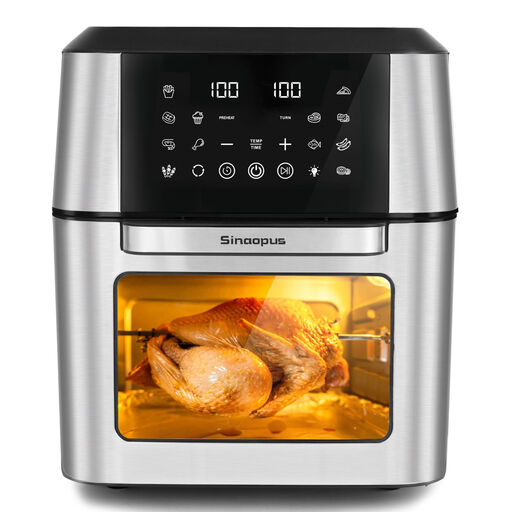
Could be worth considering if you want a combination appliance with a baking function; the product description lists baking and roasting.
12 l; 1.800 W; temperature range of 80–200 °C; 12 programmes; touchscreen and timer. The description mentions a removable basket and accessories, but doesn’t give the internal dimensions for a baking dish.
 No image available
Could be a good option if you’re looking for a freestanding oven for baking and grilling; check first that your dish will fit inside.
32 l; 1.600 W; temperature range of 100–250 °C; timer. The description also lists a baking tray, a rack and a removable crumb tray.
 No image available
A compact option if you’re looking for a small oven for baking; the description says it’s designed for one or two people.
10 l; temperature range of 100–230 °C; conventional top and bottom heat; 60-minute timer. The title mentions a pizza function.
 No image available
Could be a good choice if you want a mini oven with several heating modes; compare the internal dimensions with your baking dish.
28 l; temperature range of 100–230 °C; 60-minute timer; top heat, bottom heat and combined heat. The description lists three adjustable shelf levels and dishwasher-safe accessories.
 No image available
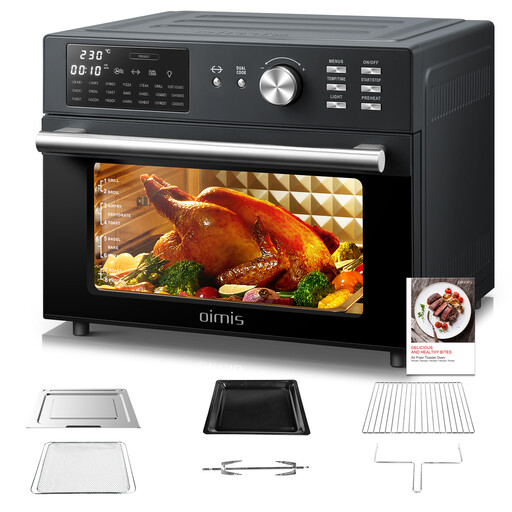
A combination appliance to consider if you want to use functions beyond baking; check the internal dimensions before planning to use a baking dish.
30 l; 1.800 W; 21 presets and a pizza function. The title also mentions a rotisserie and dehydrating function. The product description advises cleaning the inside of the appliance after every use and keeping it away from flammable materials while in use.
Yes, if you can use it and your dish fits inside. The REWE recipe uses pre-prepared aubergine slices and bakes the rolls for about ten minutes in a dish measuring around 25 × 20 × 5 cm. This timing doesn’t apply universally to uncooked fillings.
Not as a general rule. A LECKER recipe specifically gives a temperature of 200 °C for an electric oven or 180 °C for fan-assisted cooking when pre-baking the aubergine slices. Follow the instructions for each step of the recipe and the guidance for the oven you’re using.
Not just because its external dimensions fit. Rommelsbacher explicitly states that the freestanding BG 1055/E isn’t suitable for built-in installation. Check the instructions for your chosen model and make sure you have a suitable spot for it.
In Germany, your statutory rights are against the seller; these are separate from any voluntary manufacturer’s warranty. If there’s a fault, the first step may be to ask for the oven to be repaired or replaced. The Verbraucherzentrale explains that the seller covers the associated transport, labour and material costs.
Check the conformity and manufacturer information for the specific appliance. According to EU information, electrical and electronic equipment covered by the relevant harmonised legislation may need to carry a CE marking. This is a declaration by the responsible manufacturer, not an independent EU quality mark; a product description alone can’t confirm that a particular offer complies.