Speakers dealing with audible booth noise
If you can hear reflections or ventilation noise in your small booth, check the microphone distance and placement before changing models. RØDE recommends positioning speech microphones close to the speaker.


If reflections or ventilation noise are a problem in your small booth, a directional microphone positioned close to the speaker is a sensible starting point. First, experiment with the setup and the room: a cardioid polar pattern won’t eliminate room noise. In a quiet, suitably treated booth, a condenser microphone may be worth considering for capturing vocal nuances. Choose USB or XLR to suit your computer, interface and microphone model. For voice-over work with the Shure SM7B, Shure recommends at least 60 dB of preamp gain. This recommendation applies to that model; it isn’t a general figure for dynamic microphones.
If you can hear reflections or ventilation noise in your small booth, check the microphone distance and placement before changing models. RØDE recommends positioning speech microphones close to the speaker.
A quiet recording environment is important for soft passages and changes in vocal expression. Self-noise specifications apply to specific models, including those from RØDE, Neumann and Sennheiser.
If you need several speakers or takes to be positioned similarly, marking the distance and using a repeatable microphone position can help. Shure and beyerdynamic identify distance and placement as important considerations for voice recording.
First, listen for how much room sound comes through in your test recordings. Then weigh up vocal nuances, repeatable positioning and the requirements of your chosen connection.
| Buying criterion | What to check | Who is it important for? |
|---|---|---|
| Room sound and background noise | Check the polar pattern, the direction you speak into the microphone and the usable distance; test with the ventilation running. | If I can hear reflections or ventilation in my small booth, I want to check the placement and the room first, rather than relying on the polar pattern alone. Around 33% of consumers would put checking the room first. |
| Vocal nuances | Compare the self-noise specifications for the specific models and test with both quiet and loud passages. | If I want to record quiet passages and changes in vocal expression, I need a quiet booth where I can assess vocal nuances. Around 25% of consumers would prioritise capturing a nuanced voice. |
| Consistent takes | Consider the stand position, the direction you speak into the microphone and a distance that all speakers can repeat. | When roles and takes change, I want to set the position and distance so that the recordings are easier to compare. Around 25% of consumers would prioritise consistent takes. |
| Connection and recording equipment | Check your existing interface, gain, model-specific phantom power requirements and preferred connection. | If I want to record on my computer without extra equipment or use the gear I already own, the connection needs to suit my setup. Around 17% of consumers would prioritise an easy connection or compatibility. |
Even a directional microphone can pick up reflections from hard surfaces and ventilation noise. RØDE highlights these as potential sources of background noise.
Test the specific booth with both quiet and loud lines before choosing a model.
Poor room or microphone placement may mean extra work setting things up and recording test takes.
For voice-over work with the SM7B, Shure recommends at least 60 dB of preamp gain. According to its datasheet, the Sennheiser MK 4 requires 48 V phantom power. These requirements apply to the specific models mentioned.
Compare the requirements of your chosen microphone with your interface specifications.
Depending on your existing setup, you may need suitable preamp gain or a compatible interface.
RØDE specifies this output for the NT1 5th Generation via USB only; it isn’t supported over the XLR output.
Decide which connection you want to use before buying, and check the recording settings you’ll need.
With directional microphones, changes in distance can affect bass response. This can make takes sound less consistent when you edit them together.
Mark a practical position and compare test takes after a change of role.
Getting several speakers to maintain the same distance can take extra time when matching takes.
The dynamic SM7B is an XLR model suited to close-miked speech. This description applies to the model, not to the brand as a whole.
The dynamic PodMic and the NT1 5th Generation condenser microphone, with USB and XLR connections, cater for different connection and recording preferences.
The dynamic M 70 PRO X is another XLR option for close-miked speech.
The compact TLM 102 condenser microphone may be worth considering for a quiet recording environment.
The MK 4 XLR condenser microphone is an option if you have a compatible interface.
The Joybuy products below include dynamic USB and XLR microphones for voice recording, as well as a set for two speakers. Before buying, check that the connection and microphone position will suit your booth.
 No image available
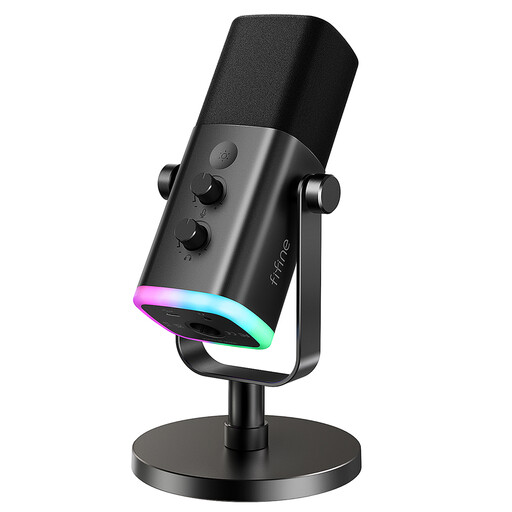
For close-miked speech with a USB or XLR connection; check which option suits your recording setup.
According to the product details, an XLR cable isn’t included, and the microphone’s function buttons work only over USB. The supplied C-clamp is designed for desktops less than 2 inches thick.
 No image available
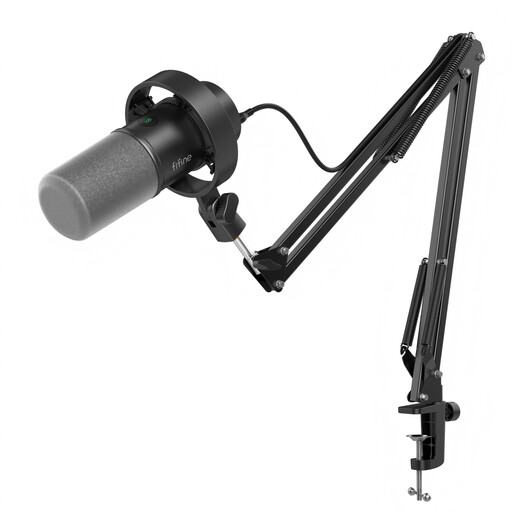
This dynamic USB/XLR microphone with boom arm suits a setup where you want a fixed position for voice recording.
According to the product details, an XLR cable isn’t included, and the microphone’s function buttons work only over USB.
 No image available
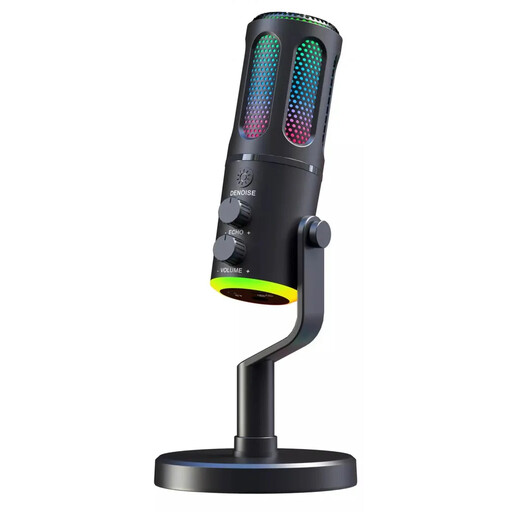
For a fixed USB recording setup at your desk; the product name specifies a wired connection and cardioid polar pattern.
USB is listed as the connection.
 No image available
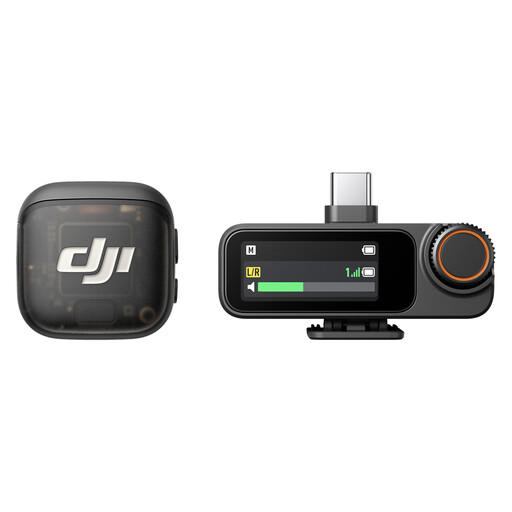
This set with two transmitters and one receiver may suit dialogue recordings with two speakers.
USB-C, Lightning and 3.5 mm TRS are listed as connections.
Start with a short test take in your booth, keeping the direction you speak into the microphone and the distance as consistent as possible between takes. RØDE gives 5–15 cm for its dynamic speech microphones and 15–30 cm for the condenser microphone examples mentioned as general technique recommendations. These aren’t fixed distances for every model or voice.
No, it depends on the microphone model. According to its datasheet, the Sennheiser MK 4 requires 48 V P48; RØDE says that dynamic microphones don’t normally require phantom power. Check the specifications for your microphone and interface.
First, check the microphone position, ventilation and room reflections. If your XLR signal chain is experiencing interference, RØDE also recommends testing the cable and interface separately and checking that a condenser microphone is receiving the phantom power it requires.
According to information from the European Union, consumers are generally entitled to a minimum two-year legal guarantee from the seller; this is separate from a manufacturer’s guarantee. For a standard online distance purchase, you generally have 14 days from delivery to cancel, subject to applicable exceptions.
Under § 77 of the German Copyright Act (UrhG), performers involved in a production have rights relating to the recording, reproduction and distribution of their performance. Clarify how these rights will be handled for your production. § 201 of the German Criminal Code (StGB) also concerns unauthorised recording of another person’s private speech. This does not amount to a blanket ban on an agreed audio drama production, nor does it automatically authorise every use.