Which setup is right for you?

Audio drama group in an echoey hall

If performers can speak close to the microphone and face it appropriately, you can plan the recording more precisely. Shure points out that a microphone cannot reliably separate direct sound from reverberation that has already been picked up.

Ensemble with overlapping dialogue

If several characters speak at once, plan the inputs and tracks you’ll need for the whole setup. This lets you check in advance whether you’ll be able to edit each voice separately later.

Small team recording one voice at a time

If you’re recording characters one after another, focus on connecting the microphone to the computer you already have. A USB model could work well, provided it’s compatible with your computer and recording software.

What to consider when choosing

Close-miked speech with a dynamic XLR microphone

A good fit if: Speakers can stand or sit close to the microphone one at a time, and you have a compatible XLR input.

The trade-off: A cardioid pickup pattern is no substitute for speaking at close range or testing the recording in the hall.

Several XLR microphones with a multitrack recorder

A good fit if: You want to edit or adjust the levels of characters speaking at the same time separately later.

The trade-off: Microphones, inputs, cables and stands all add to the setup. Zoom lists four XLR/TRS combo inputs and recording on up to six tracks for the H6essential. Test the track assignments with your complete setup to make sure they work as intended.

USB for recording individual voices on a computer

A good fit if: You’re recording characters one at a time and have a compatible computer at the recording location.

The trade-off: A USB connection won’t solve an echo problem. To record several microphones separately, your computer and software must be able to handle each one as a separate input.

XLR condenser microphone in a controlled setup

A good fit if: You have access to a quiet recording spot and a suitable XLR input.

The trade-off: According to the manufacturer, the Audio-Technica AT2020 requires full 48 V phantom power. This type of microphone won’t eliminate unwanted room echo either.

What matters What to check before buying Who it matters most to
Clear speech despite echo Check the pickup pattern and microphone positioning; make a test recording from the planned speaking position. When I’m recording in an echoey hall, I want to capture voices clearly and at close range. Around 33% of consumers put speech clarity despite room echo first.
Separate voices Count the separate tracks you’ll need at the same time and compare this with the usable inputs. When characters are speaking at the same time, I want to be able to edit each voice separately later. Around 27% of consumers prioritise separate tracks.
Easy connection Check the connection on the computer you’ll use and make sure your recording software is compatible. When we’re recording characters one at a time, I want to connect the microphone to the equipment we already have as simply as possible. Around 20% of consumers focus mainly on how it connects.
Subtle vocal nuances Test with both quiet and loud speech; check the required 48 V power supply for the AT2020. For quieter passages, I want to capture subtle nuances while also being able to control the room and microphone connection. Around 20% of consumers prioritise this.

Common misconceptions

  • A microphone placed far away will capture the whole hall clearly

    As the proportion of reflected sound increases, speech can sound echoey in the recording. A microphone won’t improve the room acoustics.

    Before choosing your equipment, test the actual speaker positions and compare them with close-miking in the hall.

    Dialogue that’s difficult to understand may need to be recorded again.

  • One shared track is enough, even when characters speak at the same time

    You can’t edit individual voices on a shared track in the same way as separate recordings. The number of tracks you want must be supported by the recording device and its available inputs.

    Count the characters speaking at the same time and test your track assignments before recording the scene itself.

    Extra microphones, cables and stands can make the setup more involved.

  • The AT2020 and AT2020USB-X use the same connection

    The Audio-Technica AT2020 is an XLR model and, according to the manufacturer, requires full 48 V phantom power. The AT2020USB-X is a separate USB-C model.

    Check the full model name, connection and power supply supported by your recording device.

Microphone brands to consider

Shure

The dynamic SM58 is an XLR option for close-miked dialogue. Shure describes it as a vocal microphone with a cardioid pickup pattern.

  • Shure lists a built-in pop filter and robust construction.
  • These features don’t guarantee an echo-free recording or make it suitable for characters speaking together from further away.

Sennheiser

According to its product information, the dynamic e 835 has a cardioid pickup pattern and a three-pin XLR connection.

  • Sennheiser lists speech and singing as suitable uses and describes the capsule as shock-mounted.
  • The product information is no substitute for testing the recording with speakers at their actual distances in the hall.

Audio-Technica

The AT2020 and AT2020USB-X offer different connection options for recording speech.

  • The AT2020USB-X is described as a USB-C microphone, while the AT2020 is an XLR condenser microphone.
  • According to Audio-Technica, the AT2020 requires full 48 V phantom power via XLR. Check each model and your recording device separately.

RØDE

According to the manufacturer, the dynamic PodMic USB offers both XLR and USB-C output.

  • RØDE also lists a headphone output and a built-in pop filter.
  • Its connection options don’t guarantee a particular sound in your community hall.

Microphones and sets at Joybuy

The Joybuy products below include microphones and sets for close-miked speech, as well as USB, XLR, camera and mobile connection options. Before recording, check that the connection, microphone position and track separation you want are right for your setup.
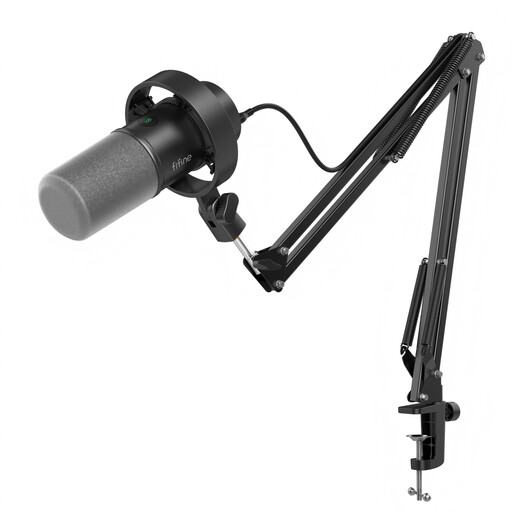
FIFINE K688CT dynamic USB/XLR microphone kit with boom arm

FIFINE K688CT USB/XLR microphone kit

For close-miked speech; the product description recommends a distance of 2–6 inches and lists a unidirectional pickup pattern.

USB-C and XLR connections, with a boom arm, mute button, headphone socket and gain control. The XLR cable is not included, according to the description; the buttons only work in USB mode.

According to the description, the clamp fits desks less than 2 inches thick.

View at Joybuy
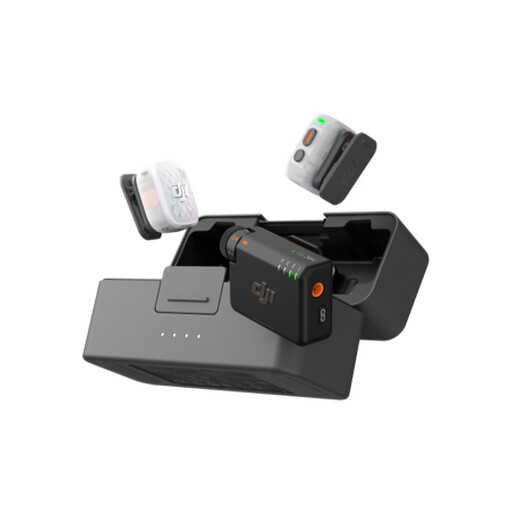
DJI Mic Mini 2S set with two transmitters, one receiver and charging case

DJI Mic Mini 2S, 2 TX + 1 RX with charging case

With two transmitters, it’s an option for recording two characters at once; the product description also lists internal recording.

Described as a wireless microphone system with one receiver. The listed features include clip or magnetic attachment and compatibility with cameras, smartphones and PCs. Check the connection with the recording device you intend to use.

View at Joybuy
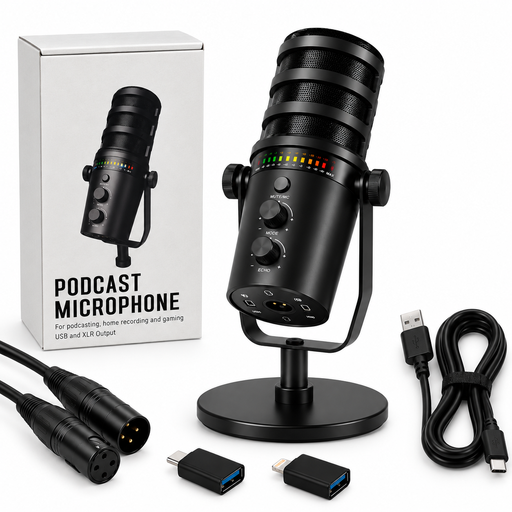
Dynamic USB/XLR microphone set with desk stand

Dynamic USB/XLR microphone set with desk stand

For a dedicated recording spot; the product description lists a cardioid pickup pattern and a desk stand.

USB-C and XLR connections, plus gain control, mute and a headphone socket. Check which connection works with your recording device.

View at Joybuy
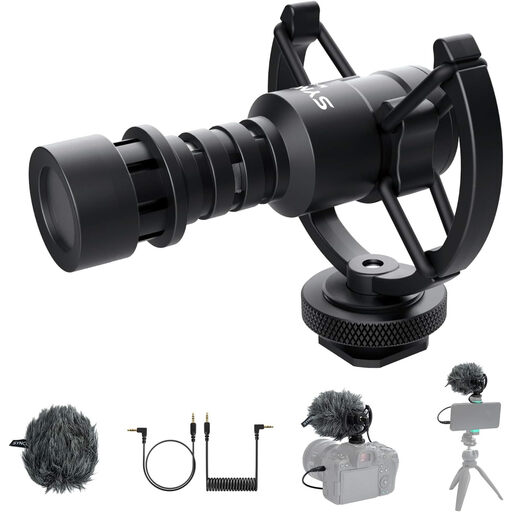
SYNCO M1S shotgun microphone with mount and windscreen

SYNCO M1S shotgun microphone

Described as an external microphone for a camera or smartphone, with a cardioid pickup pattern designed for directional recording.

Includes a mount, windscreen, and TRS and TRRS cables. The 3.5 mm connection described must be compatible with your recording device.

View at Joybuy
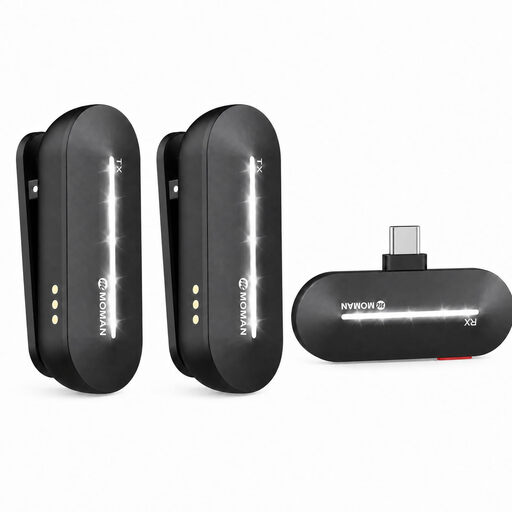
Moman M1CXT wireless lavalier microphone set with two transmitters and USB-C

Moman M1CXT USB-C lavalier microphone set, 2 TX + 1 RX

Described as having two transmitters for recording two people at once; the USB-C receiver requires a compatible recording device.

The product description lists real-time monitoring and an omnidirectional pickup pattern. This pattern is less suited to directional recording of a single main sound source.

View at Joybuy

Frequently asked questions

Can a more expensive microphone eliminate echo in a community hall?

No. A microphone can’t remove room echo from a recording. What matters first is how much direct sound is captured compared with the room reflections. Test the planned speaking distance and microphone position in the hall.

What do I need to record several characters on separate tracks?

Make sure you have enough external microphones and inputs that can be used at the same time. Zoom lists four XLR/TRS combo inputs for the H6essential. Test your desired track assignments with the complete setup to check they work.

Does the AT2020 need a USB connection or phantom power?

The Audio-Technica AT2020 is an XLR condenser microphone and, according to the manufacturer, requires full 48 V phantom power. The separate AT2020USB-X model uses USB-C, so don’t confuse the two connection types.

How should we look after a microphone used by several people?

Follow the instructions for the specific model. For its wired microphones, Shure recommends, among other things, keeping liquids out of the product and not cleaning the microphone element itself. These instructions are not a general assurance that the microphone can be disinfected.

What legal protection applies if I buy a faulty microphone?

For consumer purchases in the EU, your statutory rights are against the seller. EU consumer information states that these rights apply for at least two years from receipt of the goods. This is separate from any voluntary manufacturer’s warranty.

Are we allowed to record other people’s conversations in a community hall?

There’s no general yes-or-no answer. Section 201 of the German Criminal Code (StGB) covers, among other things, the unauthorised recording of another person’s non-public spoken words. Before recording, clarify what will be captured and prevent accidental recordings. Whether a particular utterance is non-public and whether recording it is authorised depends on the circumstances.