When recording a historical monologue with a fan running, microphone distance and placement matter more than the recording format or noise filter. A clip-on microphone worn close to your body is one option if you move while speaking; a handheld recorder may be a better fit if you can position it close to your voice and as far from the fan as possible. RØDE recommends placing the microphone near the sound source and away from unwanted noise. It’s still important to listen to a test recording made at the location.
Which setup is right for you?
For narrators recording with a fan running
If you’re recording a single historical narration, position the microphone as close to your voice and as far from the fan as possible. RØDE describes this placement as a way to reduce background noise, but it’s no substitute for listening to a test recording.
For narrators on the move
If you move around while speaking, a clip-on microphone can help keep the distance between your voice and the microphone consistent. Check that it fits securely and is positioned so your clothes don’t rub against it.
For narrators who need to share files easily
If you want to record, listen back to and share your monologue without fuss, check the recording formats you need, the available storage and how you’ll transfer your files. Sony and Philips list internal storage options and PCM and MP3 recording for their respective voice recorders.
What should you look for when buying?
First decide whether you’ll be moving while speaking or can place the recorder close to your voice in a fixed position. Then check that it’s ready to record and that you can easily share the files.
| What matters |
What to check before buying |
Who is this especially important for? |
| Clear speech |
Position the microphone close to your voice and listen to a test recording with the fan running. |
If I want my monologue to be clear despite the fan, microphone placement is especially important. Around 36% of consumers say this is their main concern. |
| Consistent microphone distance |
If you’ll be moving, test a clip-on microphone and its fastening. |
If you move while narrating, you’ll want to keep the microphone at a fairly consistent distance from your voice while avoiding rustling clothes. Around 29% of consumers prioritise this freedom of movement. |
| Uninterrupted recording |
Check the storage medium, power supply and recording start-up in advance. |
To record a continuous monologue, make sure the recorder and storage are ready. Around 21% of consumers want to avoid interruptions. |
| Sharing your file |
Check that the format, storage and transfer method meet your needs. |
If I want to listen to or share the recording afterwards, the format and connection need to suit the next step. Around 14% of consumers prioritise easy file sharing. |
Avoid common misconceptions
-
32-bit float or a noise filter can’t replace good microphone placement
A recording format or filter won’t automatically separate your voice from the fan. Zoom and Tascam describe 32-bit float in relation to recording levels; it doesn’t guarantee a noise-free recording.
First, test the microphone distance and position with the fan switched on. Assess any filter using a test recording made from your actual speaking distance.
Poor placement could mean having to record again or spend more time editing afterwards.
-
Don’t compare handheld recorders and clip-on microphones on specs alone
The placement options differ. A handheld recorder set down in one place may be further from your voice when you move, while a clip-on microphone needs to stay securely attached.
First decide whether you’ll be moving while speaking. Then check whether the recorder has a suitable microphone input and how the microphone and fastening work with your clothes.
A close-to-the-body setup may require an additional compatible microphone.
-
Don’t turn up to speak without storage ready or a test run
For a continuous monologue, missing storage or failing to start the recording can disrupt your plans. The H1essential manual describes how to use a microSD card.
Check the storage, power supply and recording status in advance with a short test.
If your chosen device needs a memory card, make sure you have it ready before you start.
Brands to consider
Zoom
The F2 is designed for recording a single voice with a Lavalier microphone worn close to the body. The H1essential has built-in X/Y microphones and a 3.5 mm microphone input.
- Zoom lists 32-bit float for the F2 and H1essential, as well as a hold switch on the F2.
- The AI noise reduction promoted for the H1essential is a manufacturer claim about a firmware feature. Check the firmware version and listen to a test recording with your fan running.
Tascam
The DR-05XP combines built-in stereo microphones with an input for an external microphone.
- Tascam lists 32-bit float, several recording formats and a low-cut filter.
- The best way to check whether the filter helps with your fan is to make a test recording. The built-in microphones also need to be positioned suitably.
Sony
The ICD-UX570 is worth considering if internal storage, playback and straightforward voice recording are your priorities.
- Sony lists 4 GB of internal storage, PCM and MP3 recording, USB charging and Clear Voice.
- These features don’t guarantee that fan noise will be suppressed.
Philips
The VoiceTracer DVT4115 combines internal storage with PCM and MP3 recording for easy file sharing.
- Philips lists three built-in microphones and 8 GB of internal storage.
- The number of microphones alone doesn’t tell you whether a voice recorded from a distance will be clear with a fan running.
Joybuy products for voice recording
This selection includes portable voice recorders for monologues, including models with internal storage and features for recording, playback or file transfer. If you’re recording with a fan running, check the microphone distance and speech clarity for yourself before you start.
 No image available
Mobvoi TicNote Lite AI Voice Recorder, 4 GB, black
An option for voice recording if you also want to consider storage and a connection for transferring files.
Product details list 4 GB of storage, a triple-microphone system and Bluetooth.
Joybuy
 No image available
Rexsun L15 digital voice recorder, 16 GB, grey
This portable recorder is worth considering if you want to start recording directly on the device.
Product details list 16 GB of storage, one-button recording and two omnidirectional microphones.
Joybuy
 No image available
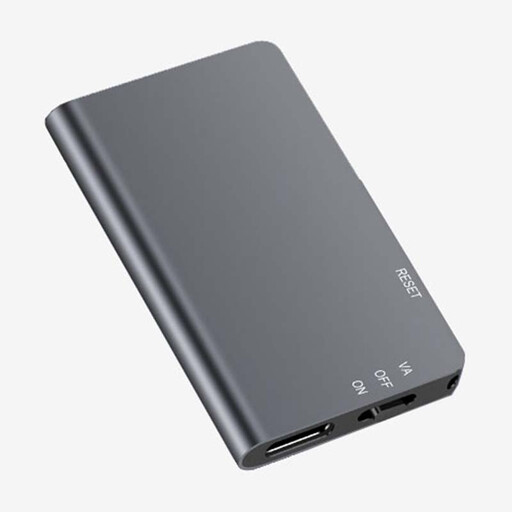
Rexsun L810 digital voice recorder, 64 GB, grey
An option if you want to record your monologue and then listen back on the device or transfer it via USB.
Product details list 64 GB of storage, WAV recording, one-button recording and headphone playback.
Joybuy
 No image available
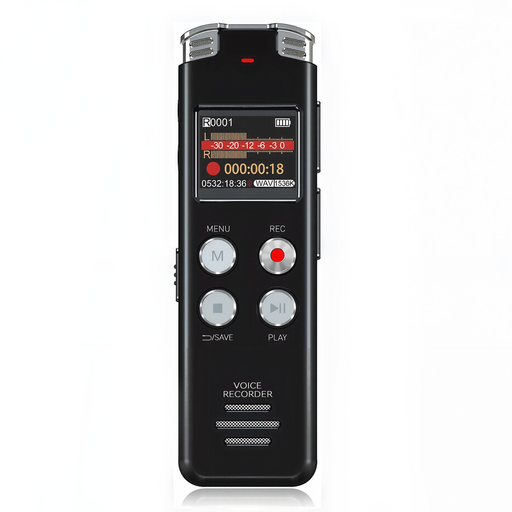
Rexsun L357 digital voice recorder, 128 GB, grey
This recorder is an option if you want to use MP3 or WAV for voice recordings and transfer files via USB-C.
Product details list 128 GB of storage and one-button recording.
Joybuy
 No image available
AI Voice Recorder, 32 GB, with case, black
An option if you’d also like to use the real-time transcription mentioned in the product title alongside voice recording.
Product details list 32 GB of storage and a four-microphone array.
Joybuy
Frequently asked questions
Does 32-bit float remove the sound of a fan?
No. Zoom and Tascam describe 32-bit float in relation to recording levels. Microphone placement and listening to a test recording are still key to balancing your voice against the fan.
How should I set up to record at the monologue location?
Place or attach the microphone close to your voice and as far from the fan as possible. Record a short section with the fan running, then listen back for consistent clarity, clothing noise and the sound of the room.
What should I check before recording a longer monologue?
Check the storage, power supply and recording start-up with a short test. Also check whether your chosen device needs a specific storage medium, and whether the format and transfer method suit how you’ll use the recording afterwards.
Can I record other people in the background in Germany?
Section 201(1) of the German Criminal Code (StGB) covers the unauthorised recording of another person’s words spoken in private. If comments like these could be captured while you’re recording your monologue, check whether recording them is permitted before you begin. The provision does not impose a blanket ban on recording your own voice.


