Solo speakers with a regular recording spot
If you’re recording prepared museum text on your own, a clear voice and good positioning matter more than having lots of tracks. A test recording will help you assess the room sound from your chosen spot.


If you’re speaking alone in a quiet room, a recorder with built-in microphones is often a good starting point. The key is to check its position with a test recording. If you already have XLR microphones or need to record voices separately, make sure the inputs are right for your setup. More tracks or 32-bit float won’t remove room echo or the extra setup involved.
If you’re recording prepared museum text on your own, a clear voice and good positioning matter more than having lots of tracks. A test recording will help you assess the room sound from your chosen spot.
If you want to connect microphones you already own or record several voices separately, check the number and type of inputs on the specific model. The number of tracks alone doesn’t tell you how many XLR microphones you can connect.
If you regularly record individual sections, make sure the process for saving, finding and transferring files works for you. Also consider the power supply, storage media and monitoring options.
| What you need | What to check before buying | Who should pay particular attention? |
|---|---|---|
| A clear voice in the room | Position the microphone securely and close to the speaker; listen back to a test recording made from your planned spot. | If I’m recording museum text on my own, I want my voice to sound clear without picking up too much room ambience. That’s why around 33% of consumers put voice and room sound first. |
| Inputs and separate tracks | Count the microphones you need to use at the same time, then check the sockets and whether the specific model provides any required microphone power. | If we want to use microphones we already own or record several voices separately, the connections need to suit our setup. For around 27% of consumers, this need for connections and tracks is the main priority. |
| Managing files reliably | Check the storage media, power supply, monitoring options and how you’ll transfer files to your computer. | If I’m recording lots of short audio-guide segments, I want to be able to save, find and share recordings easily. Around 20% of consumers focus on having a reliable, repeatable file workflow. |
| Keeping the whole setup simple | Check that the items included, the storage media you need and the positioning all work with the accessories you already have. | If I want to keep my setup as straightforward as possible, there’s more to consider than just the recording format. The accessories and preparation need to work too. Around 20% of consumers prioritise needing less setup and fewer accessories. |
The recording format doesn’t change how much room sound a poorly positioned microphone picks up. If the microphone is far from the speaker, echo and background noise can become more noticeable.
Before choosing, record a short piece of your actual text from the spot you plan to use and listen back, rather than comparing formats alone.
Poor positioning can mean extra time spent on retakes and adjustments.
The Zoom H4essential has four tracks but two XLR/TRS inputs. So the track count doesn’t tell you how many external microphones you can connect directly.
Count the microphones you need to use at the same time, then check the sockets and whether the specific model provides any power they may need.
If the connections don’t suit the microphones you already have, you may need a different device configuration or to change your setup.
A recorder on its own won’t fix poor microphone positioning or ensure you have the right accessories. In its review of the H1essential, Bonedo noted noticeable handling noise and missing accessories. This finding relates to the model tested and doesn’t apply to all recorders.
For the workflow you have in mind, check what’s included, the storage media you’ll need, the power supply and whether the recorder can be positioned securely.
Depending on the device and setup, you may need to prepare storage media, a power supply or other accessories separately.
Zoom offers handheld recorders with built-in microphones, as well as models with additional XLR/TRS inputs.
The models mentioned range from the DR-05XP, with built-in microphones, to the Portacapture X6, which has connections for external microphones.
The ICD-UX570 is a voice recorder with internal storage, while the PCM-A10 is part of a separate range designed for Linear PCM recording.
The LS-P5 is a compact Linear PCM recorder with built-in microphones and internal storage.
According to RØDE, the RØDECaster Duo can record directly to connected storage media or to a computer via USB.
The following Joybuy products are portable voice recorders for recording individual spoken commentaries and managing files as part of a regular workflow. Check that the microphone setup and file transfer options suit your home studio.
 No image available
For recording individual spoken commentaries, if the recording and file features described suit your workflow.
The product description lists 4 GB of storage and a triple-microphone system.
 No image available
For individual voice recordings, if you want to use the microphones and file transfer method described.
The product description lists 16 GB, two omnidirectional microphones, USB-C file transfer and headphone playback.
Make a test recording to check whether it sounds right in the room you plan to use.
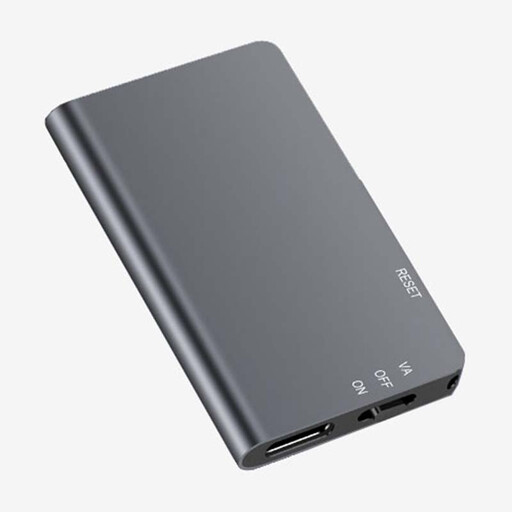 No image available
For repeated short recordings, if the recording and transfer features listed suit your file workflow.
The description lists one-button recording, WAV recording, voice-activated recording and USB-C file management.
Use a test recording to assess microphone positioning in your home studio.
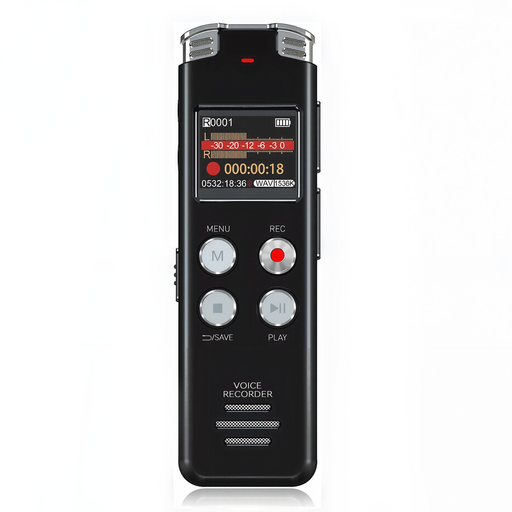 No image available
For individual commentary sections and regular recordings, provided the file features listed suit your workflow.
Features listed include MP3 and WAV formats, timestamp management, USB-C file transfer and a dynamic microphone.
A test recording will show whether speech sounds clear from your planned recording spot.
 No image available
For spoken commentaries, if a multi-microphone setup and the text processing features described suit your workflow.
The product description lists 32 GB of storage, four microphones, real-time transcription and translation.
Make a test recording to assess the sound quality in the room you plan to use.
No. First check the distance between the microphone and speaker, then listen to a recording made from your planned spot. A microphone placed too far away may pick up more room sound. 32-bit float is a recording feature, not a way to treat a room.
No, it depends on the specific model. Zoom lists two XLR/TRS inputs for the H4essential; its four tracks don’t mean it has four XLR connections. Also check whether your microphone needs power and whether the device can provide it.
Check the power supply, available storage, the file transfer method you plan to use and a test recording you’ve listened back to. RØDE describes recording directly to connected storage media or to a computer via USB with the RØDECaster Duo. Recording to a computer requires additional recording software.
Not necessarily. The Federal Ministry of Justice and the Federal Office of Justice list spoken works among the protected works covered by § 2 UrhG. § 51 UrhG permits quotations only to the extent justified by their specific purpose. For the text in question and your intended publication, check what usage rights you need or whether the requirements for an exception are met.
Processing personal data requires a relevant legal basis under the GDPR. The Federal Commissioner for Data Protection and Freedom of Information lists consent as one possible basis, but not the only one. Check the requirements for recording and using people’s voices in your specific situation beforehand.