Narration in a reverberant room
If you can choose where to speak, it’s important to keep the microphone in a stable position close to your mouth. Shure explains that a microphone can’t improve the acoustics of a room.


If you move around while cooking, a recorder with a lavalier microphone clipped close to your body could be a good fit. If you speak from a fixed spot, a handheld recorder positioned nearby may be enough. A camera-mounted shotgun microphone recorder is more suitable if you’re also recording video audio and can position the microphone close to your voice. Shure points out that neither directional pickup nor 32-bit float recording can eliminate room reverb. Also check the memory card, headphone monitoring and any extra syncing involved.
If you can choose where to speak, it’s important to keep the microphone in a stable position close to your mouth. Shure explains that a microphone can’t improve the acoustics of a room.
If you move between worktops while talking, a carefully attached lavalier microphone can help keep the distance from your voice consistent. Tascam describes the DR-10L Pro as a recorder with a lavalier microphone.
If you want to record kitchen ambience or camera audio as well as your voice, plan the microphone position and any syncing you may need to do when editing. ZOOM describes mono and stereo modes on the M3 MicTrak for different recording setups.
A good fit if: you move around while cooking or need both hands free, and can attach the microphone close to your body.
Things to consider: Clothing, attachment and cable placement can cause noise. If you record video audio separately, you may need to sync it in an extra editing step.
A good fit if: you speak from a fixed spot and can place the recorder securely close to your voice.
Things to consider: A recorder placed further away will pick up more of the room. According to the manufacturer, the built-in microphones on the Tascam DR-05XP have an omnidirectional pickup pattern.
A good fit if: you’re filming recipe videos and can position the recorder close enough to the person speaking.
Things to consider: The camera’s position determines how far the microphone is from you. Directional pickup alone can’t make up for poor positioning in a reverberant room.
| Your needs | What to check before buying | Who is it important to? |
|---|---|---|
| Voice recording in a reverberant room | Can you position the microphone close to you and keep it steady? A short test recording can help you assess the effect of the room. | If I’m speaking from a fixed spot, I want to keep as much room sound as possible out of my narration. Around 31% of consumers prioritise a recording with as little reverb as possible. |
| Hands-free speaking | Does it include a lavalier microphone, or can you connect one separately? Can you attach it securely in a suitable position? | If I’m preparing ingredients and moving around while cooking, I need a microphone position that doesn’t depend on where I’ve put down the recorder. Around 31% of consumers prioritise a hands-free setup. |
| Recording and editing | Check the file format you need, the required memory card and whether headphone monitoring is available. | If I want to edit my recording later, I need to be able to plan the test, save the file and transfer it for editing. Around 23% of consumers prioritise a straightforward recording and editing process. |
| Voice or kitchen ambience | Consider whether you need mono, stereo or selectable directional pickup settings for your recording. | If I want to record both commentary and kitchen sounds for a recipe video, I look for suitable microphone positioning and direction. Around 15% of consumers prioritise being able to switch between narration and ambient sound. |
Extra headroom and manufacturer features don’t change the reflections in an untreated room. Shure explains that a microphone can’t improve the acoustics of the space it’s used in.
First, find a good microphone position close to your voice and check it with a short test recording.
A poor recording may mean you have to record again or spend more time editing it afterwards.
Even a shotgun microphone can’t undo poor room acoustics. With a camera-mounted model, the distance from your voice depends on where you actually position it.
Plan where the speaker and camera will be before choosing between a microphone worn close to the body and a camera-mounted setup.
According to the Tascam manual, the DR-10L Pro needs a microSD card to save and play back recordings.
Check what’s included with the specific model and listen back to a test recording before you start the actual recording.
The models mentioned here offer two different approaches: the DR-10L Pro is a portable recorder with a lavalier microphone, while the DR-05XP is a handheld recorder with built-in microphones.
The H1essential is a handheld recorder with built-in X/Y microphones, while the M3 MicTrak combines a camera-mountable shotgun microphone with a recorder.
The LS-P5 is a compact standalone recorder for capturing speech and ambient sound.
The PCM-A10, documented for Germany, is a compact Linear PCM recorder with built-in stereo microphones and an input for an external microphone.
The products below are listed as portable voice recorders. Before buying, check whether you can position the microphone suitably for your speaking setup, and test the recording in your own room.
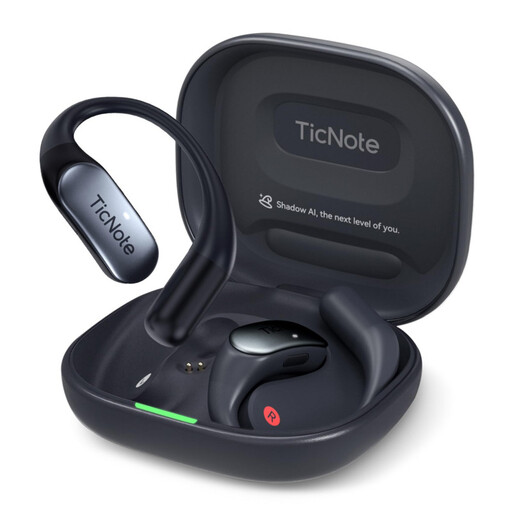 No image available
For standalone voice recording when, after the initial setup, you want to start recording with one button without needing your smartphone nearby.
32 GB of local storage, dual-microphone array, stated battery life of 5 hours and a charging case. The microphone features don’t guarantee that room reverb will be eliminated.
 No image available
For voice recording if a compact device with several built-in microphones suits the way you work.
64 GB of storage, a three-microphone system, Wi-Fi and Bluetooth. The stated microphone range doesn’t guarantee that room reverb will be reduced.
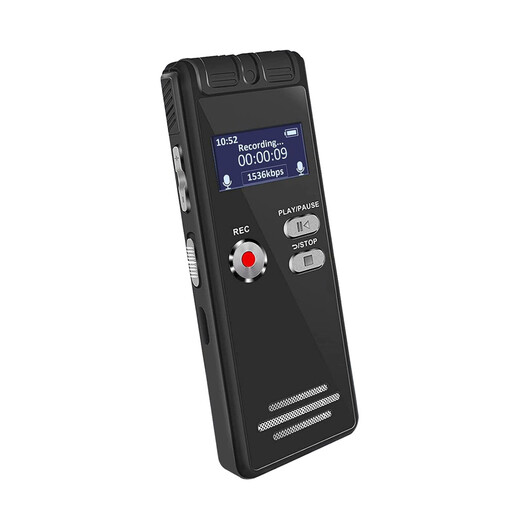 No image available
For recording from a fixed speaking position if you want to listen back through headphones afterwards.
Includes a 64 GB TF card, two omnidirectional microphones, one-click recording and headphone playback. The microphones don’t guarantee that room reverb will be eliminated.
No. According to the manufacturers, this recording mode can make it easier to manage levels, but it won’t eliminate room reverb. Shure explains that a microphone can’t improve the acoustics of the room it’s used in. Position it as close to your voice as possible and listen back to a test recording.
Make a short test recording, speaking and moving around as you would while cooking. Check that your voice is clear, listen for reverb and for any clothing or handling noise, and adjust the position or attachment if needed. This lets you test the room you’ll actually be recording in, rather than relying on a promised device performance.
According to the Tascam manual, you need a microSD card to record and play back audio. Also check what power supply you need and whether you have headphones for your setup. The included lavalier microphone doesn’t replace the memory card.
If your recorder is faulty, contact the seller and distinguish between your statutory rights and any voluntary guarantee. The Verbraucherzentrale explains that statutory consumer rights are set out in law, while a guarantee is voluntary. Check the guarantee terms separately.
If other people are speaking in the room, check before recording whether you’re allowed to record their non-public conversations. § 201 StGB concerns the unauthorised recording of another person’s non-public speech; it is not a blanket statement about every subsequent publication.