Expressive recipe narrators
If you deliver the same script both quietly and emphatically, consider the recording format, microphone distance and monitoring together. Zoom and Tascam specify 32-bit float recording for certain models.


If your voice shifts between quiet and louder passages as you record, a handheld recorder with 32-bit float recording may be a good fit. Even then, positioning and listening back are important. For short, prepared scripts, a compact voice recorder with internal storage may be enough. When kitchen noises are involved, the position of your voice and microphone is particularly important. The device features mentioned are based on manufacturers’ specifications and do not represent a comparative test of recording quality.
If you deliver the same script both quietly and emphatically, consider the recording format, microphone distance and monitoring together. Zoom and Tascam specify 32-bit float recording for certain models.
If you’re recording near appliances or other sources of noise, consider your voice, microphone position and surroundings together. Shure highlights the importance of the recording environment when choosing a microphone.
If you want to record prepared passages, listen back to them and reuse them as files, compare storage, recording format and monitoring features. Sony lists these features for the ICD-UX570.
First, consider how much your speaking volume varies and how much of the kitchen environment you want to hear in the recording. Then look at your workflow and the connections you may need.
| What matters | What to check before buying | Who is this important to? |
|---|---|---|
| Changes in speaking volume | Check the recording format of the specific model and listen to a test recording that includes your quietest and loudest passages. | If my delivery shifts sharply between a calm explanation and emphatic speech, I want to be able to judge how the test recording sounds. Around 36% of consumers say handling changes in volume is their top concern. |
| Clear speech alongside kitchen noise | Make a test recording from your intended recording position and check how you can position the recorder or microphone in relation to your voice. | If appliances or crockery are audible nearby, I want to record clear speech without losing sight of the surrounding sounds. Around 29% of consumers prioritise managing kitchen noise. |
| A quick recording and file workflow | Check the internal storage, recording format and options for monitoring and transferring files. | If I’m recording short, prepared recipe passages, I want to be able to record them quickly and find them again easily. For around 21% of consumers, a simple recording and file workflow comes first. |
| Options for adding microphones and recording equipment later | Check that the connections on the specific model suit the microphone or other audio sources you plan to use. | If I want to add a separate microphone or extra audio sources later, I need connections that work with that exact setup. Around 14% of consumers prioritise these upgrade options. |
The recording format, microphone position and surroundings each affect different aspects of a recording. Kitchen noises may still be audible.
Record both your quietest and loudest passages from your intended position, then listen back to the test recording, including any background noise.
If a passage hasn’t been recorded clearly enough to use, you may need to record it again.
Tascam describes the DR-05XP as having omnidirectional microphones and the DR-07XP as having adjustable cardioid microphones. The right positioning depends on whether you want the focus to be on your voice or on the kitchen atmosphere as well.
Before comparing models, decide how much of the surrounding noise you want in the recording, then test the microphone position where you plan to record.
Zoom publishes a list of compatible memory cards for the H1essential and lists mounts as accessories. What’s included can vary by listing.
Check what’s included with the listing you choose and confirm that any storage media you need are compatible, rather than assuming accessories are always essential.
Depending on the listing, you may need to budget for a compatible memory card or a suitable mount.
The H1essential is designed for straightforward recording with built-in X/Y microphones, while the H4essential offers extra inputs for more involved setups.
The DR-05XP has built-in microphones and an external 3.5 mm jack input. On the DR-07XP, you can adjust the microphones between AB and XY configurations.
The ICD-UX570 is a compact option for short voice recordings where internal storage and file management matter.
The LS-P5 is a compact recorder option with a built-in three-microphone system and internal storage.
This selection includes compact voice recorders for short, prepared passages and straightforward recording workflows. When recording in the kitchen, also consider microphone position and how much of the surrounding environment you can hear when you listen back.
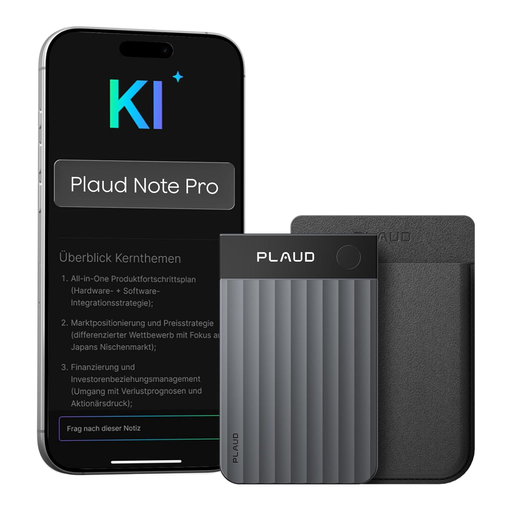 No image available
Could be suitable for short voice recordings, with internal storage and several built-in microphones.
Product specifications list 64 GB of storage, four MEMS microphones and a weight of 30 g. Described as compatible with Android and iOS.
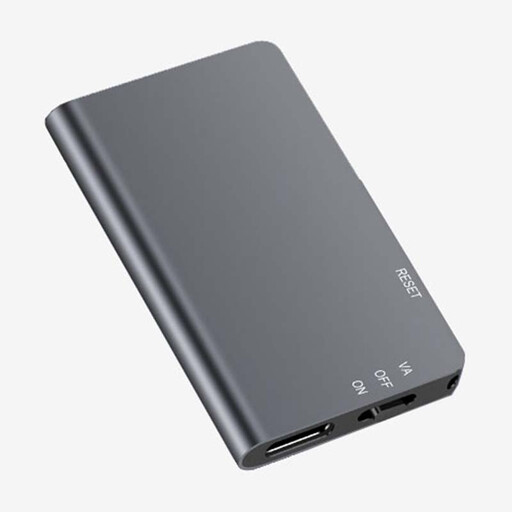 No image available
An option for short voice recordings if one-touch recording and immediate playback matter to you.
Product specifications list 64 GB of storage, WAV recording, USB-C file transfer and headphones for playback.
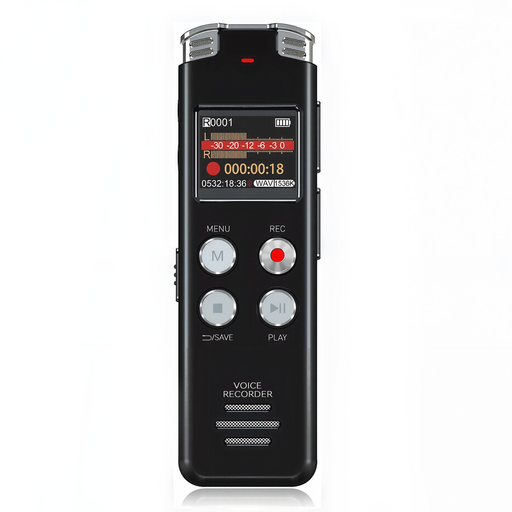 No image available
Could suit voice recordings where ease of use and finding short passages again are important.
Product specifications list 128 GB of storage, MP3 and WAV recording, file timestamps, A-B repeat and USB-C file transfer.
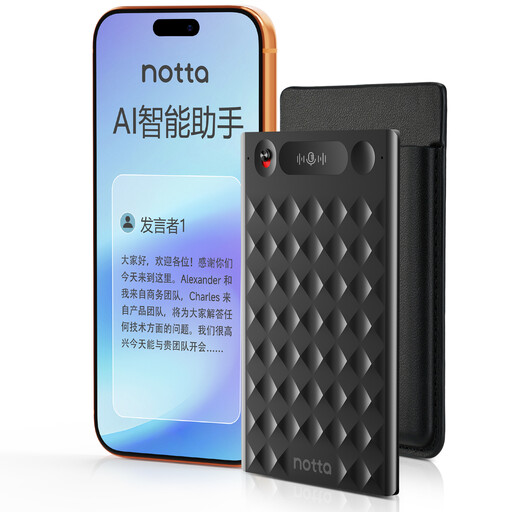 No image available
An option for voice recordings with local storage and one-touch recording.
Product specifications list 32 GB of storage, one-touch recording and a stated battery life of 30 hours. They also mention real-time transcription.
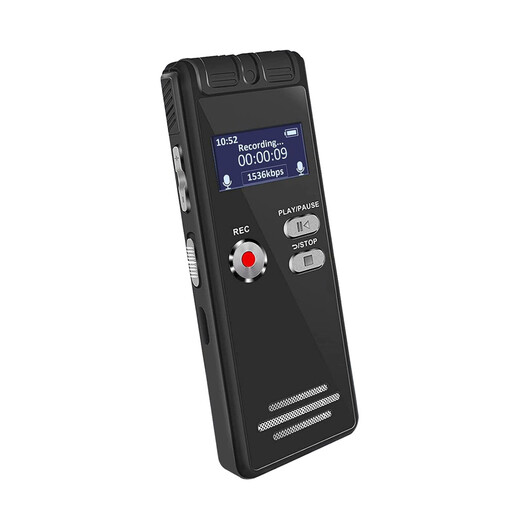 No image available
If kitchen noises may be present, positioning the recorder towards your voice is particularly important, as the product specifications say its microphones are designed for wide 360° recording.
Product specifications list 64 GB of storage, two omnidirectional microphones, one-touch recording, headphones for playback and a stated recording time of 22 hours. A memory card is listed as included.
No, the recording format alone isn’t enough. Zoom and Tascam specify it for certain models, but microphone position and the recording environment matter too. Record a test that includes your biggest changes in volume, then listen back.
For a test recording, place the recorder securely facing your voice and listen to check that speech and kitchen noises are balanced as you want them. Zoom specifies tripod mounting for the H1essential. If you’re using an external microphone, make sure its connection is compatible with the specific recorder.
Check the specific listing to see which storage media and power sources are included, and which cards are compatible with the model. Zoom publishes a list of compatible microSD cards for the H1essential.
Recording another person’s non-public spoken words on an audio device without permission is not allowed. Section 201(1) of the German Criminal Code (StGB) covers this; it applies to another person’s voice and is not a general ban on recording your own recipe narration. This information is based on the legislation published by the Federal Ministry of Justice and the Federal Office of Justice.
For online purchases, consumers generally have a 14-day right to cancel after receiving the goods. You must notify the retailer that you wish to cancel. The consumer advice centre explains this rule. The details of your specific purchase may also be relevant.